- World Population Review Newsletter
- Posts
- How Geography Breaks Nations—and Shapes Your Life
How Geography Breaks Nations—and Shapes Your Life
From islands to enclaves—how geography shapes power and cost.

Philip Saparov
March 29, 2026
In partnership with

Greetings, inquisitive mind of world events!
Some countries look simple on a map. Others are scattered across islands, enclaves, and oceans—and that changes everything.
From supply chains to everyday costs, geography quietly shapes how life works. For anyone thinking about where to live, invest, or retire, these hidden forces matter more than they seem.
Today, we explore the world’s most geographically fragmented countries—and what that means in practice.
Let’s dive in.

Tech moves fast, but you're still playing catch-up?
That's exactly why 200K+ engineers working at Google, Meta, and Apple read The Code twice a week.
Here's what you get:
Curated tech news that shapes your career - Filtered from thousands of sources so you know what's coming 6 months early.
Practical resources you can use immediately - Real tutorials and tools that solve actual engineering problems.
Research papers and insights decoded - We break down complex tech so you understand what matters.
All delivered twice a week in just 2 short emails.
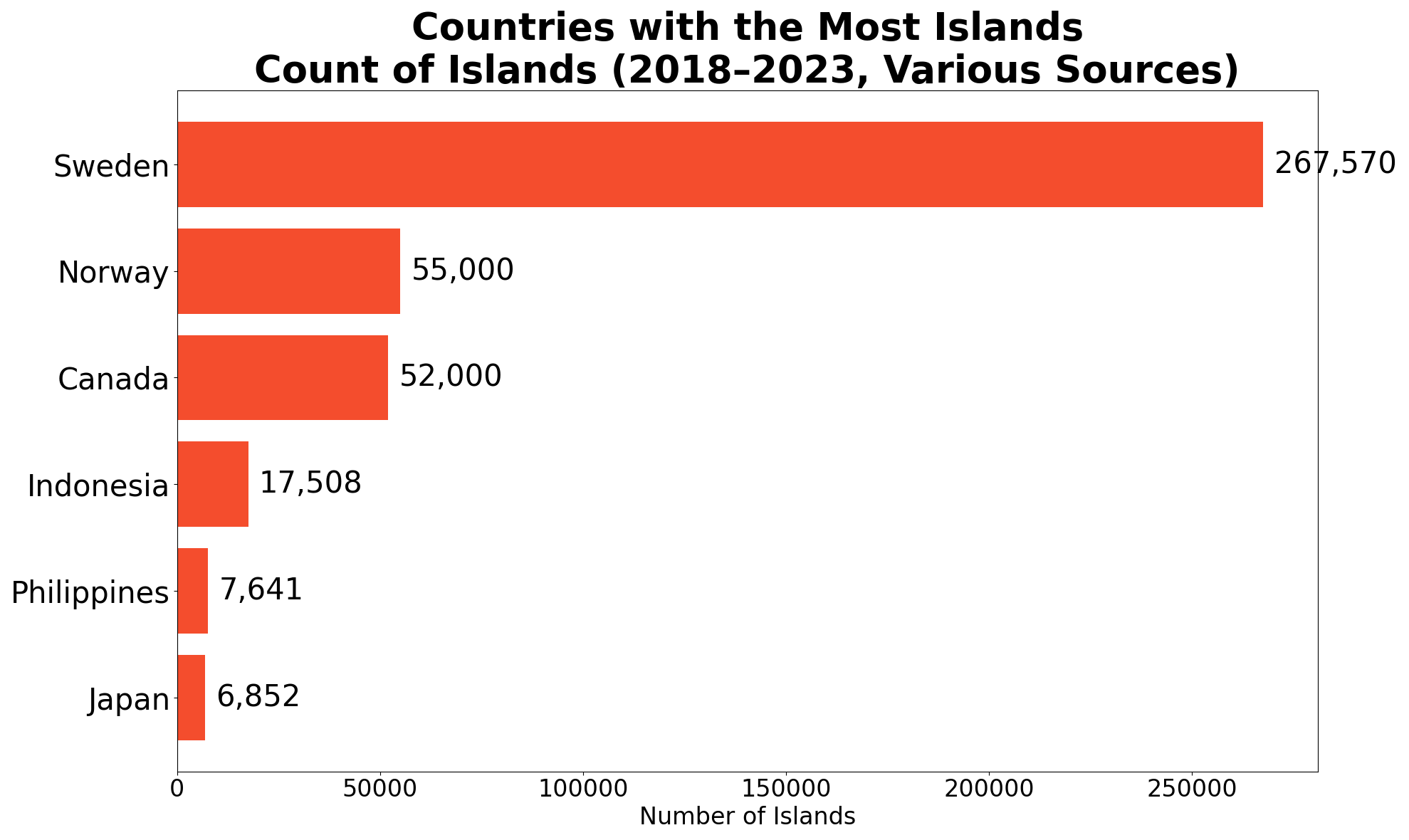
Indonesia isn’t just fragmented—it’s vast beyond easy comprehension. Stretching across more than 17,000 islands, it forms one of the most complex logistical systems on Earth.
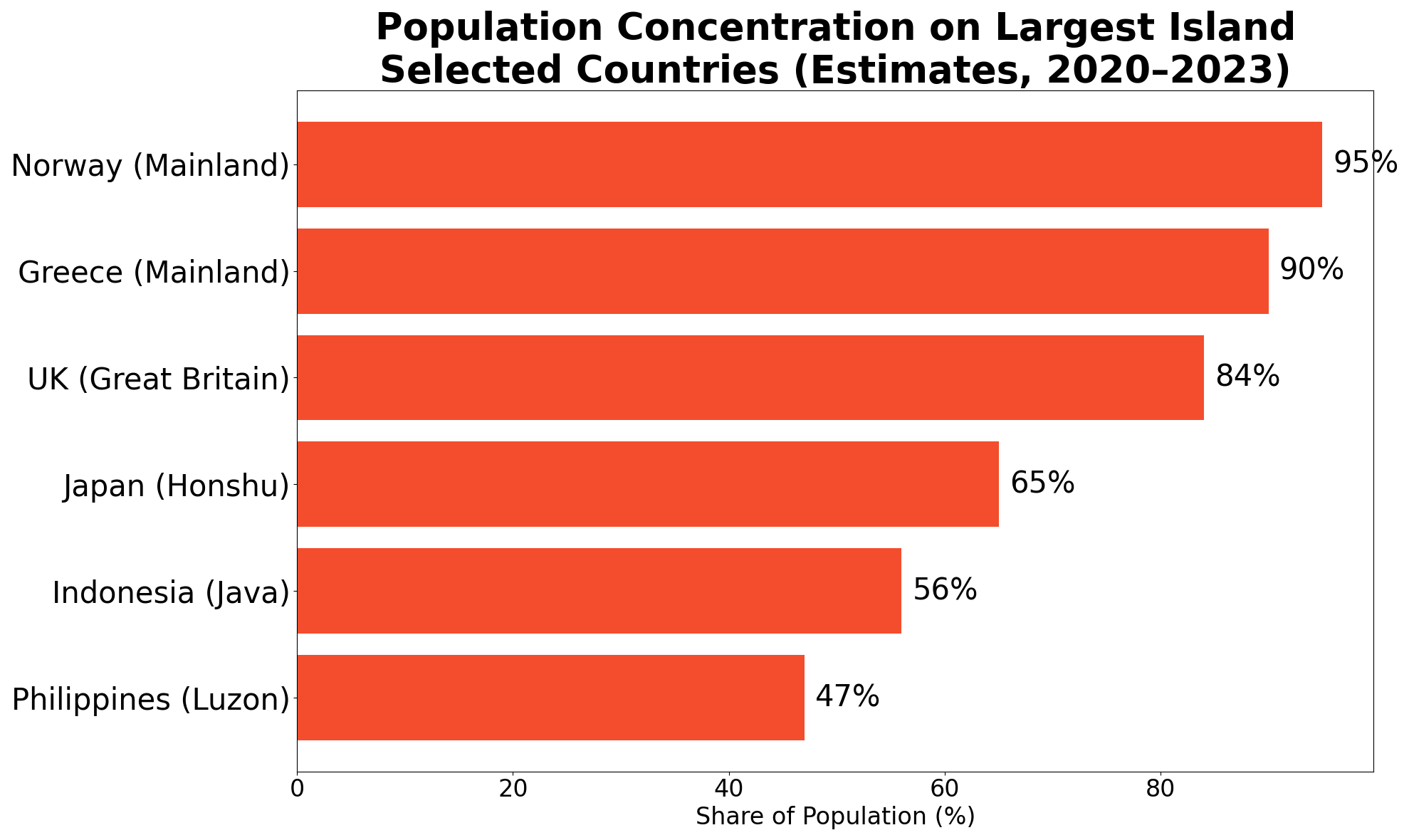
🇮🇩 Java anchors the economy, home to over half the population and most industry.
🇮🇩 Sumatra contributes heavily to natural resources, especially palm oil and coal.
🇮🇩 Papua remains remote and underdeveloped, with infrastructure still catching up.
Moving goods between these islands depends heavily on ferries, small ports, and increasingly, air cargo—raising costs and slowing distribution. Even basic goods can vary widely in price from island to island.
Putting it into perspective: Indonesia’s government is building a new capital in Borneo partly to rebalance this geographic imbalance—a rare case where fragmentation reshapes national strategy.
🔎 Fascinating fact: Shipping a container within Indonesia can sometimes cost more than sending it internationally to nearby countries.
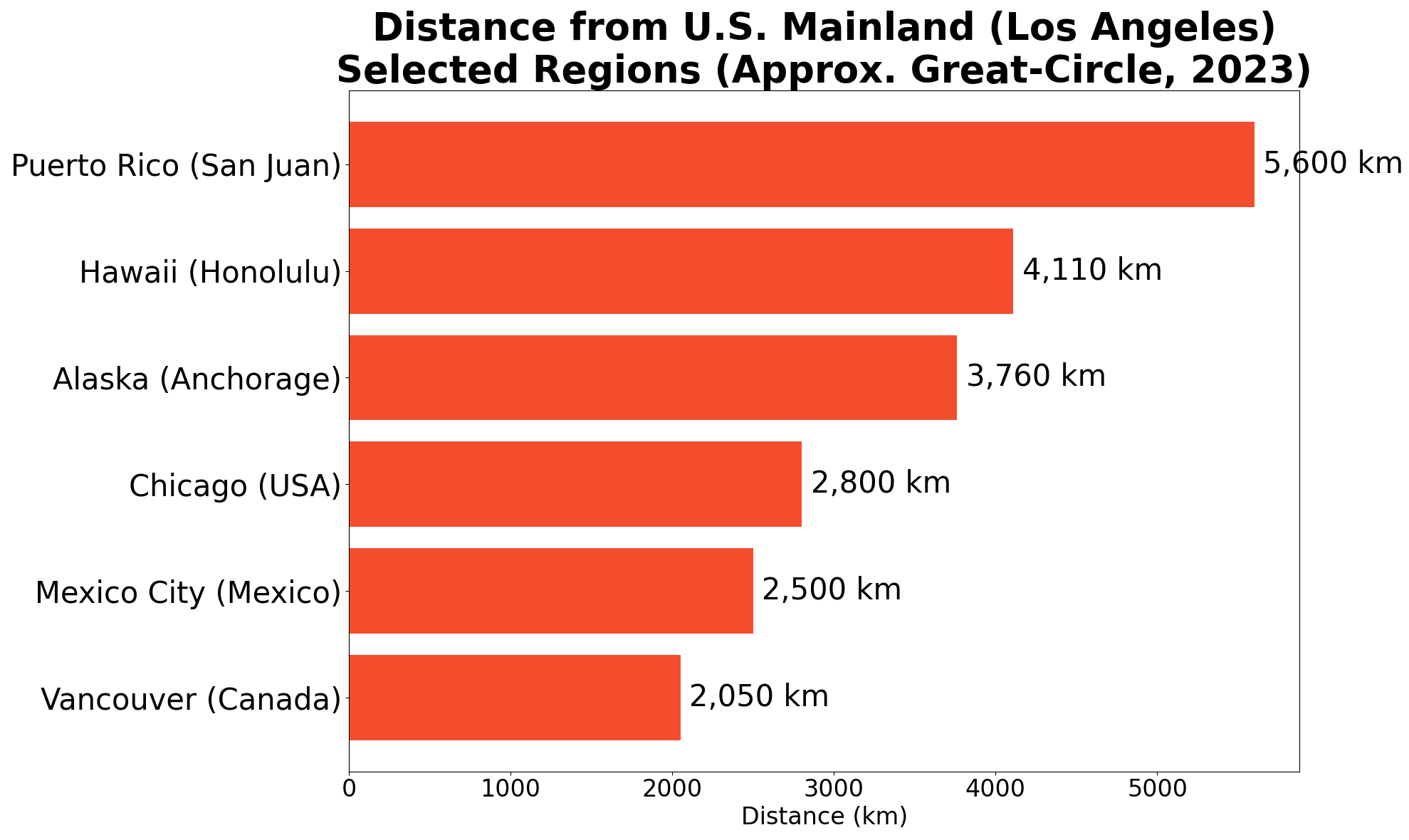
At first glance, the U.S. seems geographically unified. Look closer, and two major outliers—Alaska and Hawaii—create logistical complexity on a continental scale.
🇺🇸 Alaska is separated from the mainland by Canada, relying heavily on air and sea routes.
🇺🇸 Hawaii sits over 2,000 miles from California, making it one of the most isolated populated places on Earth.
🇺🇸 Puerto Rico & territories add another layer, dependent on maritime supply chains and federal shipping laws.
The result? Higher costs for food, fuel, and construction—especially in Alaska and Hawaii—where nearly everything must be imported.
Putting it into perspective: For residents, this fragmentation shows up in everyday life—groceries in Hawaii can cost 50–100% more than on the mainland.
🔎 Little-known insight: The U.S. Jones Act requires goods shipped between U.S. ports to use American vessels, significantly increasing costs to non-contiguous states and territories.
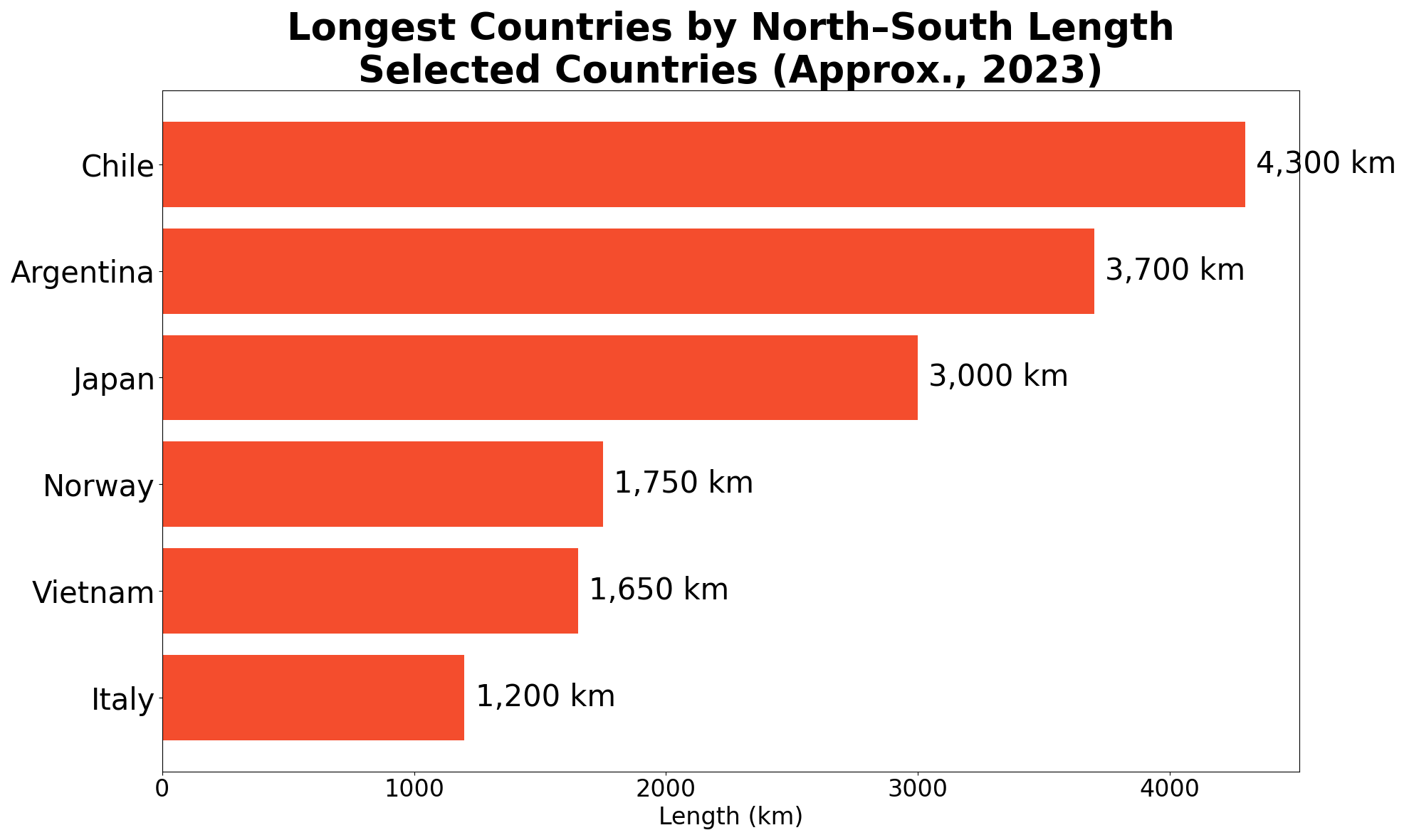
Chile looks simple—just a long strip along South America’s west coast. In reality, it’s one of the most geographically stretched nations on Earth, creating unique logistical strain.
🇨🇱 Northern Chile is dominated by the Atacama Desert, rich in minerals but harsh and remote.
🇨🇱 Central Chile holds the population core, including Santiago and key infrastructure.
🇨🇱 Southern Chile breaks into fjords, islands, and glaciers, where roads often simply end.
Transporting goods from north to south can mean crossing deserts, mountains, and fragmented waterways—sometimes requiring ships to bypass impassable terrain.
Putting it into perspective: Chile must maintain parallel infrastructure systems—roads, ports, and ferries—to stay connected.
🔎 Surprising fact: Some southern Chilean towns are more easily reached by boat than by road, despite being on the same landmass.
Stop Drowning In AI Information Overload

Your inbox is flooded with newsletters. Your feed is chaos. Somewhere in that noise are the insights that could transform your work—but who has time to find them?
The Deep View solves this. We read everything, analyze what matters, and deliver only the intelligence you need. No duplicate stories, no filler content, no wasted time. Just the essential AI developments that impact your industry, explained clearly and concisely.
Replace hours of scattered reading with five focused minutes. While others scramble to keep up, you'll stay ahead of developments that matter. 600,000+ professionals at top companies have already made this switch.
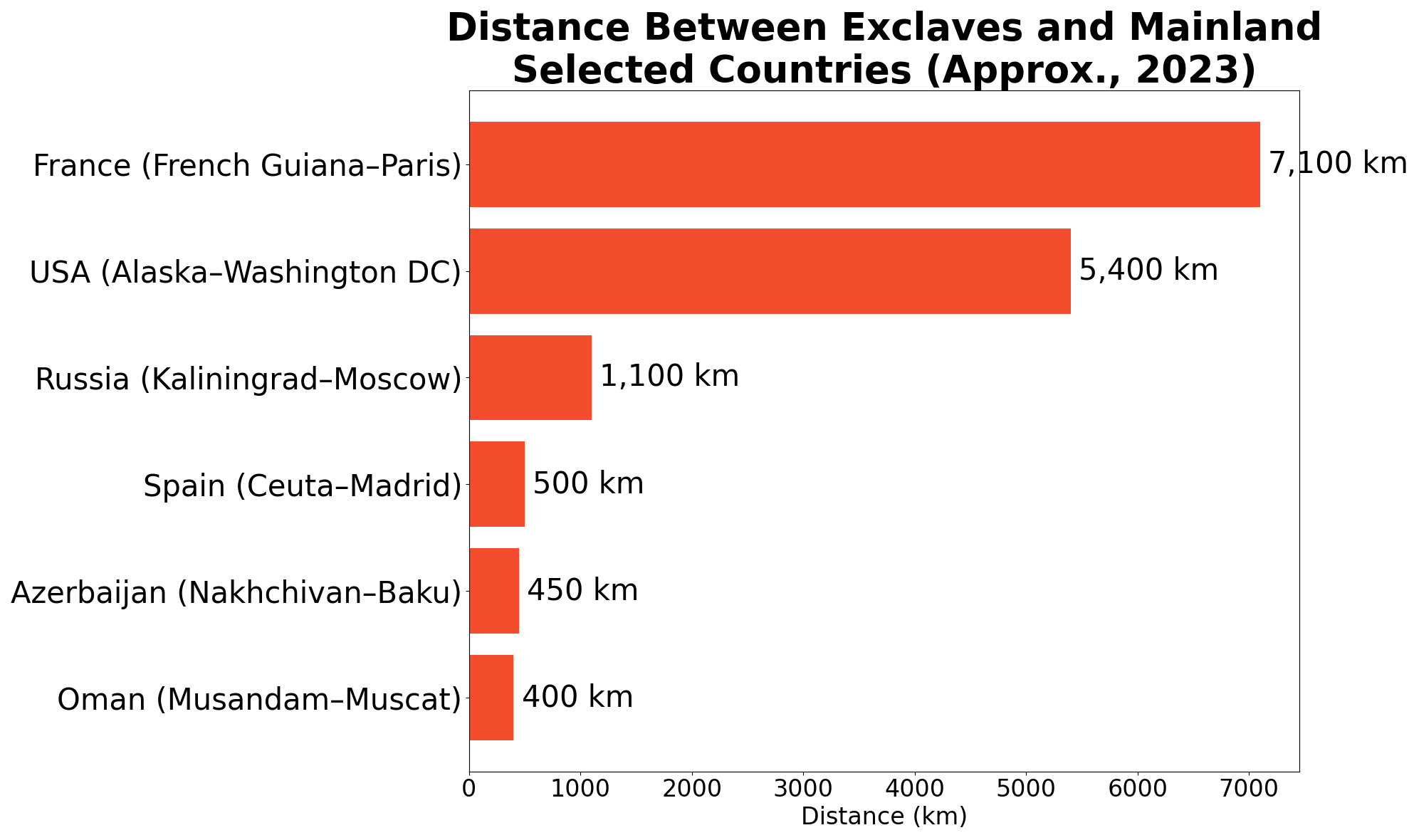
Not all fragmentation is maritime. Azerbaijan presents a classic geopolitical puzzle with its exclave, Nakhchivan.
🇦🇿 Mainland Azerbaijan connects to the Caspian Sea and major energy routes.
🇦🇿 Nakhchivan is cut off by Armenia, accessible only via Iran or air travel.
🇦🇿 Regional tensions make overland logistics politically sensitive and unpredictable.
This separation complicates everything from trade to military logistics, forcing reliance on diplomatic corridors and alternative routes.
Putting it into perspective: Fragmentation here isn’t just geographic—it’s strategic.
🔎 Historical twist: Nakhchivan’s separation dates back to Soviet-era border decisions that still shape regional tensions today.
The Philippines faces a daily logistical balancing act across more than 7,600 islands, where connectivity defines economic opportunity.
🇵🇭 Luzon drives the economy, home to Manila and major industries.
🇵🇭 Visayas acts as a central hub but depends heavily on inter-island shipping.
🇵🇭 Mindanao is resource-rich but less integrated into national supply chains.
Shipping delays, typhoons, and port congestion all disrupt the steady flow of goods—making reliability just as important as cost.
Putting it into perspective: Infrastructure investments here are less about expansion and more about connection.
🔎 Eye-opening stat: Inter-island shipping costs in the Philippines can account for up to 30% of retail prices in remote areas.
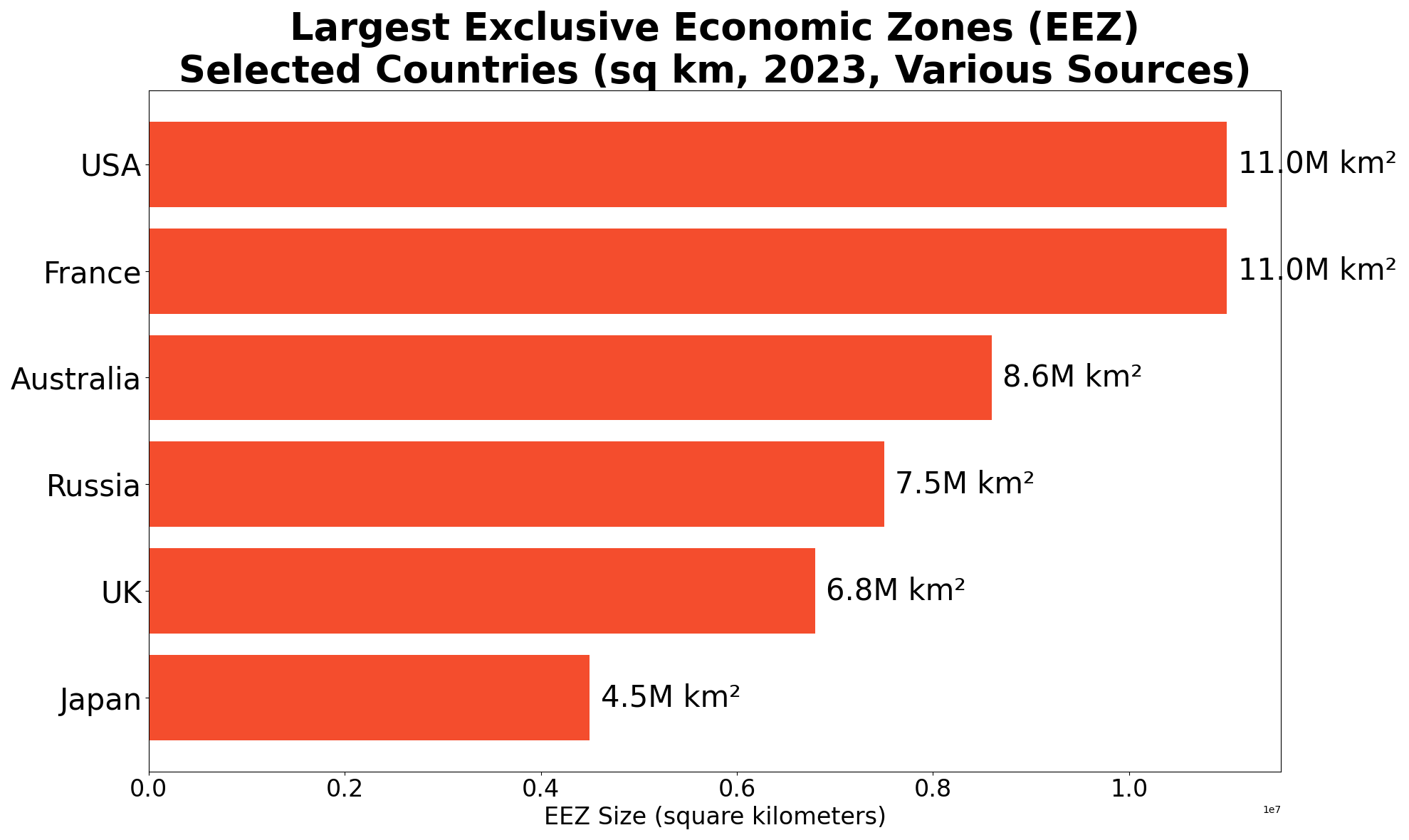
France is often seen as a unified European nation—but its overseas territories make it one of the most geographically dispersed countries in the world.
🇫🇷 Mainland France anchors politics and the economy in Europe.
🇫🇷 Caribbean territories like Guadeloupe and Martinique rely on long-distance shipping.
🇫🇷 Indian & Pacific territories (Réunion, New Caledonia, French Polynesia) span multiple oceans.
This global spread creates both opportunity and complexity—extending France’s reach while multiplying logistical challenges.
Putting it into perspective: France operates supply chains that span the globe, often requiring coordination across time zones and climates.
🔎 Unique advantage: Thanks to its territories, France has the world’s second-largest exclusive economic zone (EEZ), rich in marine resources.
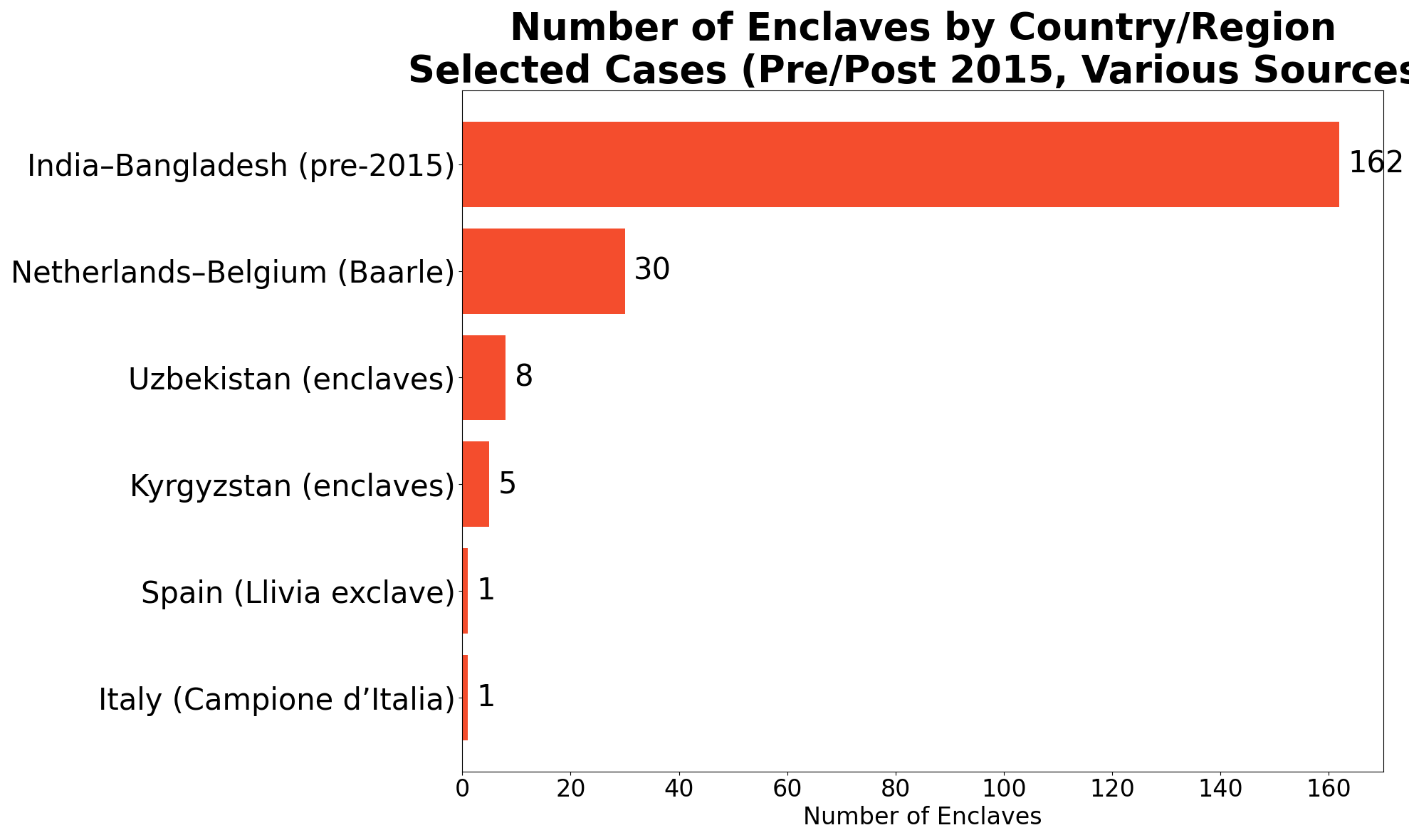
Few borders have ever been as complex as the India-Bangladesh frontier—once home to over 160 enclaves nested within each other.
🇮🇳 Indian enclaves in Bangladesh created isolated pockets of citizens without easy access to services.
🇧🇩 Bangladeshi enclaves in India mirrored the same problem in reverse.
🌍 The 2015 Land Boundary Agreement finally simplified this decades-long puzzle.
Before the agreement, residents often had to cross international borders just to reach basic infrastructure like hospitals or schools.
Putting it into perspective: This was fragmentation at its most human level—where geography directly shaped daily survival.
🔎 Remarkable fact: Some enclaves were once three layers deep—an enclave within an enclave within another country.
Geography isn’t just lines on a map—it quietly shapes how economies function and how people live.
From islands to enclaves, fragmentation creates both friction and opportunity. For anyone thinking globally, these hidden forces are worth understanding.
Stay curious—and keep exploring what shapes the world.
Warm regards,
Shane Fulmer
Founder, WorldPopulationReview.com
P.S. Want to sponsor this newsletter? Reach 142,000+ global-minded readers — click here!