- World Population Review Newsletter
- Posts
- How Nations Turn Food Into Global Power
How Nations Turn Food Into Global Power
Cuisine as an engine for exports, tourism, and GDP growth.

Philip Saparov
March 03, 2026
In partnership with

Greetings, inquisitive mind of world events!
Food isn’t just culture — it’s economics. In many countries, what’s on the plate drives tourism, shapes exports, builds global brands, and quietly moves GDP.
If you’re thinking about where to invest, retire, or build a future, follow the food. A strong culinary economy often signals resilience, opportunity, and long-term strength.
Today, we explore seven places where cuisine isn’t just identity — it’s infrastructure.
Let’s step to the table.
Become An AI Expert In Just 5 Minutes

If you’re a decision maker at your company, you need to be on the bleeding edge of, well, everything. But before you go signing up for seminars, conferences, lunch ‘n learns, and all that jazz, just know there’s a far better (and simpler) way: Subscribing to The Deep View.
This daily newsletter condenses everything you need to know about the latest and greatest AI developments into a 5-minute read. Squeeze it into your morning coffee break and before you know it, you’ll be an expert too.
Subscribe right here. It’s totally free, wildly informative, and trusted by 600,000+ readers at Google, Meta, Microsoft, and beyond.
Italian cuisine is more than romance and red sauce — it’s a pillar of national output.
Italy’s agri-food sector generates over €250 billion annually, representing roughly 15% of GDP when including agriculture, food processing, retail, and hospitality. Three pillars stand out:
Wine (the world’s largest producer by volume)
Pasta and processed foods (Barilla exports to over 100 countries)
Protected Designations (PDO/PGI) like Parmigiano Reggiano and Prosciutto di Parma
Food tourism amplifies the effect. Culinary travel accounts for a major share of Italy’s 60+ million annual visitors.
For retirees or investors, this matters. Regions like Emilia-Romagna combine culinary prestige with high living standards and resilient local economies.
A telling detail: Italy has over 300 protected food products, more than any other country — turning tradition into tradable, enforceable economic value.

Japan proves that refinement scales.
Washoku (traditional Japanese cuisine) is UNESCO-listed, but its economic impact is modern and measurable. Japan’s food-related industries — including agriculture, fisheries, food manufacturing, and dining — account for roughly 10% of GDP.
Three drivers stand out:
Seafood and high-value fish exports (bluefin tuna remains globally prized)
Premium branding (Wagyu beef and matcha command global price premiums)
Franchised dining models (ramen, sushi chains, convenience foods)
Japan’s food exports surpassed ¥1.4 trillion in recent years — a government priority sector.
For aging populations worldwide, Japan also offers a subtle insight: its cuisine aligns with longevity. Okinawa, once home to some of the highest life expectancies on earth, built its diet around vegetables, fish, and modest portions.
Interesting contrast: A single bluefin tuna once sold at Tokyo’s Toyosu Market for over $3 million — a reminder that culinary prestige can carry extraordinary economic weight.

Mexico’s cuisine is one of only a handful recognized by UNESCO as Intangible Cultural Heritage — and it underpins a massive food economy.
The agri-food sector represents about 8–9% of GDP. Mexico is:
The world’s largest exporter of avocados
A leading exporter of beer (Modelo and Corona rank globally)
A dominant supplier of tomatoes and peppers to the U.S.
Culinary tourism continues to grow, especially in Oaxaca and Mexico City.
For North American readers considering cost-of-living arbitrage, food is central. Mexico offers rich culinary access at a fraction of U.S. dining costs — while maintaining export strength that stabilizes local economies.
A striking figure: Mexico exports over 2.5 million metric tons of avocados annually — turning a once-local fruit into a global economic driver.

Your $200+ serum doesn't work. Stop pretending it does.

Expensive serums aren't required to prove efficacy. Just safety. You're funding marketing budgets. Celluma has clinical trials showing 66% wrinkle reduction in 30 days. FDA-cleared. Medical-grade wavelengths. Stimulates actual collagen production. The catch? Consistent use. Not glamorous. Just honest results you can measure.
Results vary. Consistent use required.
Thailand has done something remarkable — it intentionally exported its cuisine.
Through its “Global Thai” program, the government actively supported Thai restaurants abroad. Today, there are more than 15,000 Thai restaurants outside Thailand, acting as culinary ambassadors.
Tourism accounts for roughly 12–20% of Thailand’s GDP depending on the year — and food is central to the draw.
Three strengths:
Street food culture (Bangkok consistently ranks among top global food cities)
Rice exports (Thailand remains a top global supplier)
Processed food manufacturing for Asian markets
For retirees exploring Southeast Asia, Thailand’s culinary depth pairs with moderate living costs and developed food infrastructure.
A curious fact: Pad Thai was promoted in the 20th century as a nation-building dish — a reminder that sometimes cuisine is engineered as policy.

France treats food as both art and industry.
The broader French agri-food sector contributes over €200 billion annually. The country is:
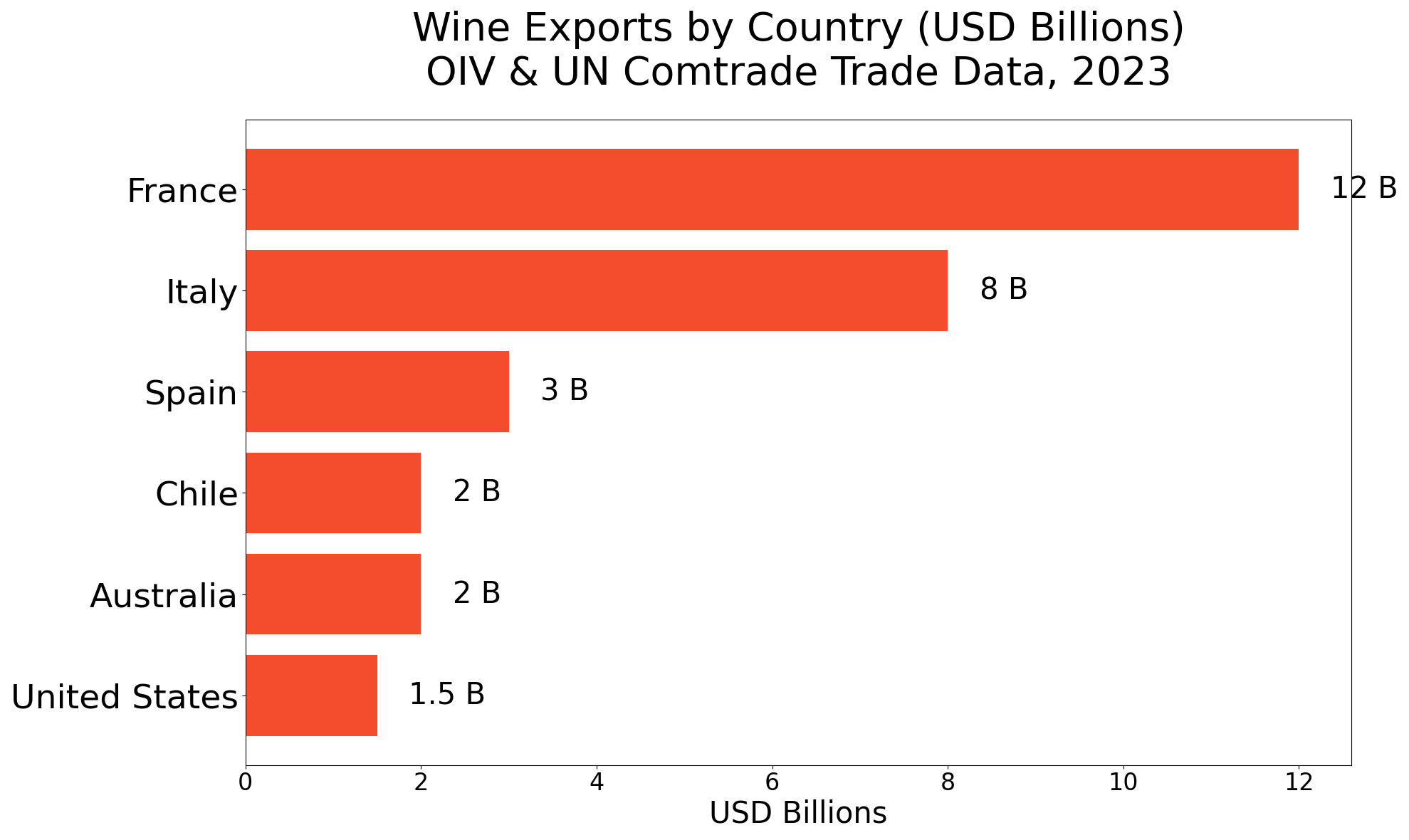
The world’s leading wine exporter by value
A dominant force in luxury foods (cheese, foie gras, pastries)
Home to Michelin — a guide that quietly influences billions in restaurant revenue
Gastronomy tourism remains strong, especially in Bordeaux, Lyon, and Provence.
For investors, France’s model is instructive: elevate quality, protect origin, and export prestige. That formula supports rural economies and urban dining alike.
Here’s perspective: France produces over 1,200 distinct types of cheese — an astonishing diversification strategy hidden in plain sight.
Few countries have tied cuisine to soft power as effectively as South Korea.
Korean food exports have surged alongside K-pop and K-drama. The government actively promotes “Hansik” globally.
Key drivers include:
Processed foods (instant noodles like Shin Ramyun are global staples)
Fermented products (kimchi exports continue rising)
Food-tech innovation and premium packaged goods
Food exports recently surpassed $10 billion annually, reflecting deliberate branding.
For families considering global education hubs, South Korea offers a technologically advanced economy with a dynamic consumer culture — and a cuisine increasingly visible worldwide.
Fun metric: Global instant noodle consumption exceeds 120 billion servings per year, and South Korea consistently ranks among the highest per capita consumers.

The U.S. food system is vast — nearly unmatched in scale.
Agriculture, food processing, retail, and food service together contribute over $1 trillion annually to U.S. GDP.
Three pillars dominate:
Agribusiness exports (corn, soybeans, beef)
Global restaurant brands (McDonald’s, Starbucks, Yum! Brands)
Processed food innovation and supply chain efficiency
American cuisine may not carry centuries of branding like Italy or France, but its strength lies in logistics and franchising.
For entrepreneurs, the U.S. model shows how food systems can scale globally through brand replication.
A striking data point: McDonald’s serves an estimated 69 million customers daily worldwide — more than the population of most countries.

Food is economics in disguise.
If you’re choosing where to invest, retire, or build a future, look at the food system. Countries that can feed themselves — and the world — tend to rest on stronger foundations.
Cuisine leaves clues.
Stay curious — and never underestimate what’s simmering beneath the surface.
Warm regards,
Shane Fulmer
Founder, WorldPopulationReview.com
P.S. Want to sponsor this newsletter? Reach 138,000+ global-minded readers — click here!