- World Population Review Newsletter
- Posts
- How the Middle Class Is Vanishing—Country by Country
How the Middle Class Is Vanishing—Country by Country
What data reveals about global wealth gaps—and who’s still thriving.

Philip Saparov
November 15, 2025
In partnership with

Greetings, sharp observer of global shifts!
The world’s middle class is thinning—and it’s not just theory. From rising rents to shrinking paychecks, the squeeze is real, and it’s changing how—and where—people live, work, and retire.
In this edition, we track the middle class’s rise and fall with hard data. Who’s losing ground fastest? Where is it holding strong—and what can we learn from it?
Let’s decode the numbers behind one of the biggest economic transformations of our time.
Become the go-to AI expert in 30 days

AI keeps coming up at work, but you still don't get it?
That's exactly why 1M+ professionals working at Google, Meta, and OpenAI read Superhuman AI daily.
Here's what you get:
Daily AI news that matters for your career - Filtered from 1000s of sources so you know what affects your industry.
Step-by-step tutorials you can use immediately - Real prompts and workflows that solve actual business problems.
New AI tools tested and reviewed - We try everything to deliver tools that drive real results.
All in just 3 minutes a day
Germany, long the gold standard of Europe’s economic model, is facing a middle-class retreat. Between 1991 and 2021, the share of Germans identifying as middle class dropped from 70% to under 64%. This shift is subtle—but devastating. Inflation, automation, and housing costs are squeezing household budgets despite strong GDP per capita.
What’s fascinating is how this erosion is happening quietly. High employment rates mask the fact that stable, upwardly mobile jobs—once the norm—are now precarious. Germany’s famed Mittelstand companies, once career engines for the middle class, are automating or offshoring.
What to watch: Germany’s housing market. With rent control laws under stress and property prices soaring, Berlin and Munich are pricing out even dual-income professionals.
📊 Unexpected insight: A recent OECD study revealed that 30% of Germans who leave the middle class never return—one of the highest rates in Western Europe.

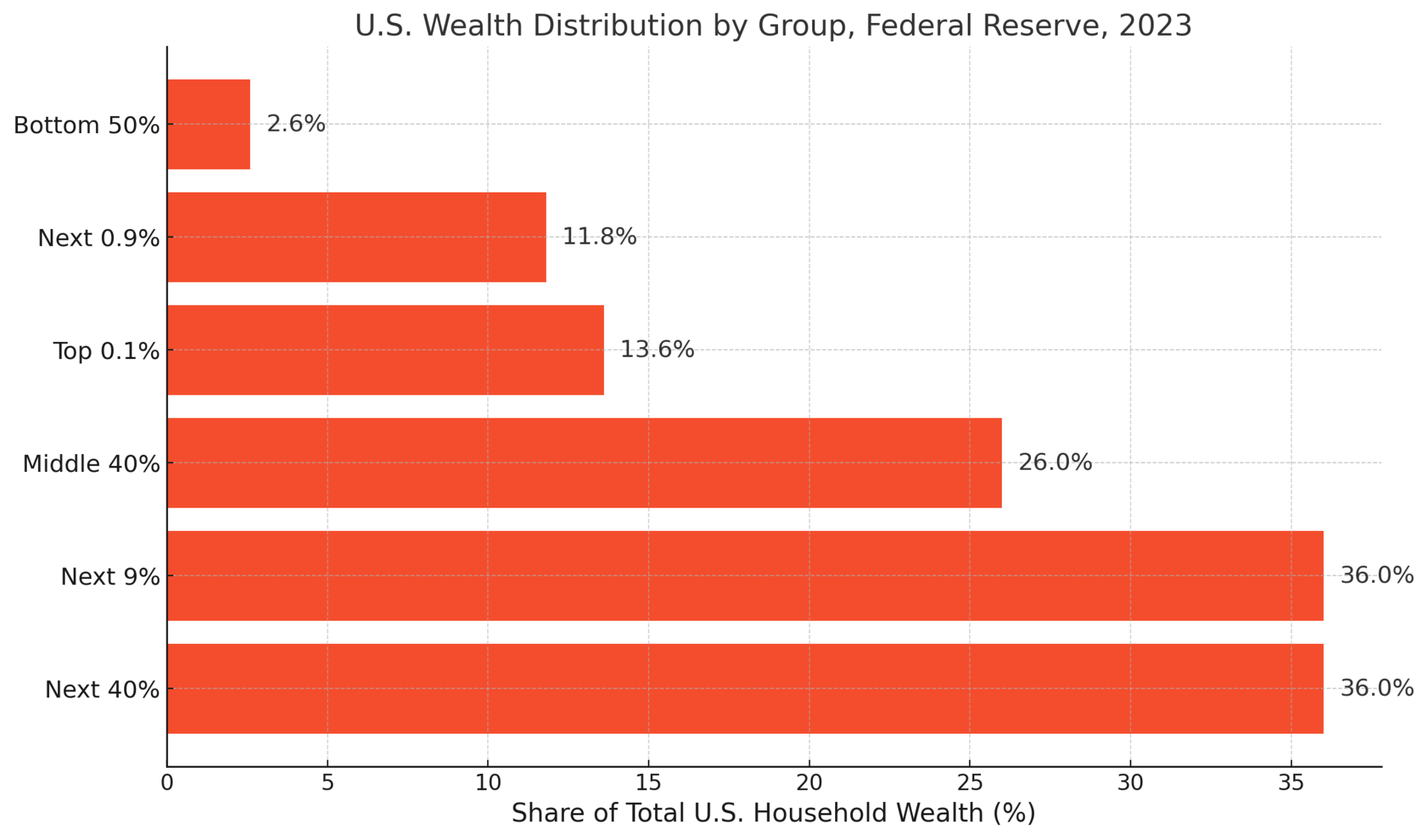
In the U.S., the shrinking middle class is no longer a theory—it’s measurable. In 1971, 61% of Americans were middle class. As of 2021, that number had slipped below 50%. More than half of the nation now resides either above or below the traditional middle.
Why? Housing, healthcare, and education costs have far outpaced wages. Even as stock markets soar and tech booms, many Americans feel they’re running faster to stay in place. The middle class is becoming more “aspirational” than attainable, especially for younger generations.
Yet paradoxically, America is also where middle-class revival experiments are underway—from guaranteed income pilots to city-led housing affordability programs.
📈 Fascinating fact: In 2023, the top 10% of U.S. earners owned nearly 70% of the nation’s wealth, up from 60% in 1989.
In countries like Brazil, Mexico, and Colombia, the middle class grew rapidly in the 2000s—but that progress is now unraveling. Pandemic shocks, inflation, and stagnant wages have pushed tens of millions back into poverty or precarity.
Latin America’s middle class has always been more vulnerable than its Western counterpart—lacking strong safety nets or asset buffers. And now, rising interest rates and weak currencies are making mortgages and consumer loans harder to sustain.
Yet there are bright spots: 🇨🇱 Chile and 🇺🇾 Uruguay, with their relatively strong institutions, are faring better, holding on to their middle-income populations despite regional turbulence.
💡 Little-known insight: Brazil’s middle class shrank by nearly 10 million people between 2019 and 2022—erasing a decade of gains.


The best HR advice comes from those in the trenches. That’s what this is: real-world HR insights delivered in a newsletter from Hebba Youssef, a Chief People Officer who’s been there. Practical, real strategies with a dash of humor. Because HR shouldn’t be thankless—and you shouldn’t be alone in it.
China lifted hundreds of millions into the middle class in just one generation. But that remarkable ascent is now hitting a plateau. Youth unemployment has soared past 20%, property developers are in crisis, and consumer confidence is shaky.
The traditional Chinese middle-class formula—owning a home, investing in education, saving for the future—is under pressure. Rising living costs in Tier 1 cities like Beijing and Shanghai mean that upward mobility is slowing, and a "lie flat" movement (opting out of economic hustle) is gaining cultural traction.
Yet China still houses the world’s largest middle class by headcount—estimated at 400 million people.
🏠 Unexpected twist: The average home in Shenzhen now costs 57 times the average annual income—surpassing even San Francisco’s housing affordability crisis.

India’s middle class has been hailed as the engine of the nation’s future. But recent data complicates the picture. Depending on the definition, estimates range from 80 million to 350 million—less than one-third of the population. Much of India’s “middle class” operates without formal contracts, healthcare, or pension coverage.
What’s more, inflation and a weak rupee are stretching budgets. Urban middle-class families spend disproportionately on education and private healthcare—areas that should be public goods.
Still, India remains one of the few large economies where the middle class could grow significantly in the next two decades—if employment and affordability trends improve.
🔍 Surprising fact: In 2024, India surpassed China as the world’s most populous country—but its per capita income is still only 17% of China’s.

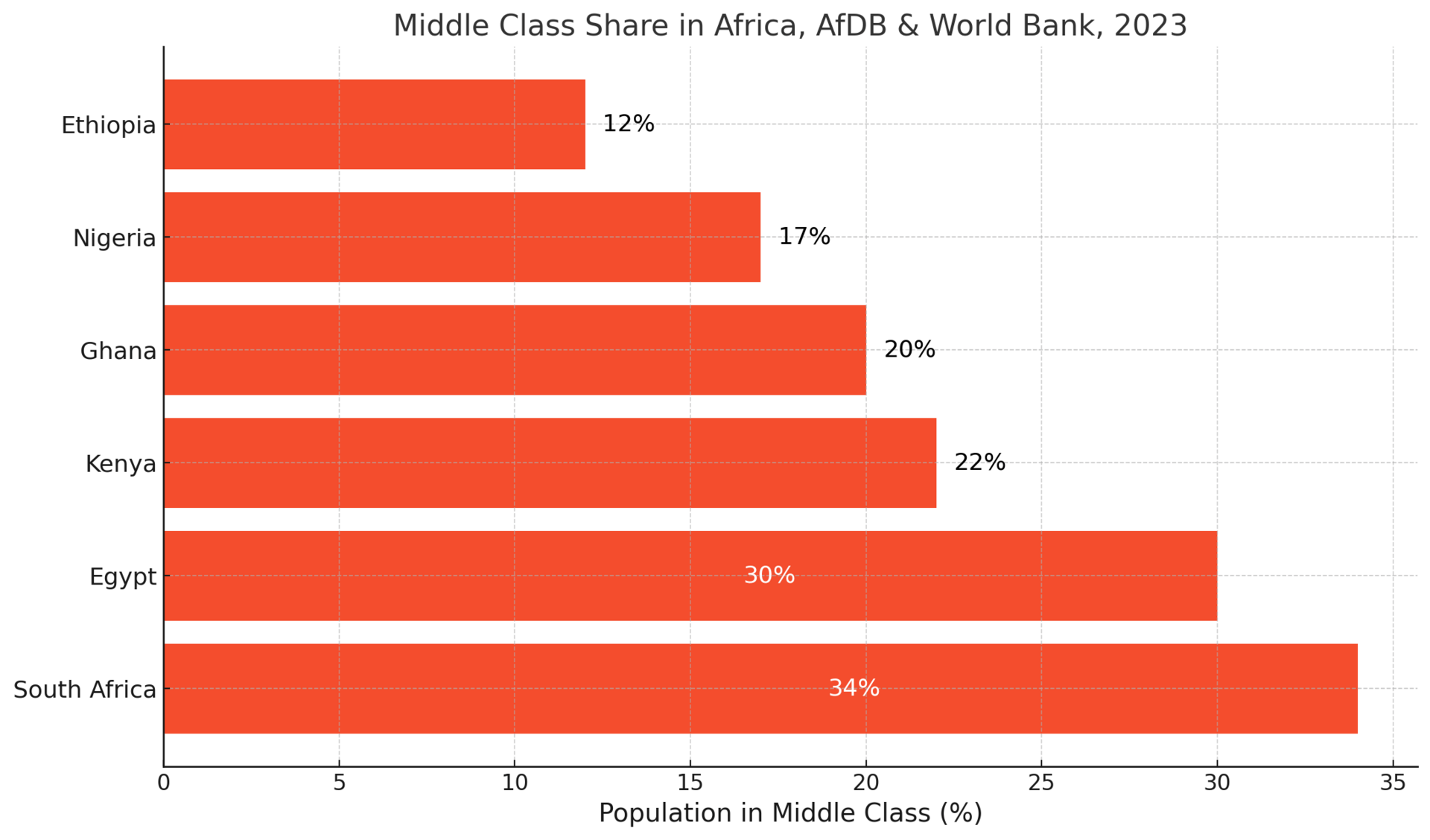
Africa’s middle class has long been framed as “emerging,” but definitions often mislead. Many “middle-class” Africans live on just $2–10 a day—a vulnerability threshold rather than true economic security.
In 🇳🇬 Nigeria, 🇿🇦 South Africa, and 🇰🇪 Kenya, inflation and unemployment have eroded purchasing power. Even in countries with fast GDP growth, like 🇪🇹 Ethiopia or 🇷🇼 Rwanda, inequality and informality dilute the benefits of that expansion.
Still, a young population and mobile technology adoption could reshape Africa’s economic path—potentially leapfrogging old models with digital-first finance, healthcare, and education.
📉 Startling stat: South Africa’s real median household income has fallen by 20% since 2011—despite being the continent’s most industrialized economy.
Not all is lost. A few countries have managed to preserve a strong, stable middle class—and their policy choices offer lessons.
🇸🇪 Sweden, 🇳🇴 Norway, 🇩🇰 Denmark
Strong unions, progressive taxation, and robust public services have kept inequality low and social mobility high.
🇨🇦 Canada
With universal healthcare and relatively affordable higher education, Canada’s middle class remains one of the most satisfied globally—though housing affordability is an emerging threat.
🇰🇷 South Korea
Despite rapid modernization, Korea has sustained a large middle class thanks to high education levels, national savings culture, and export-led growth—though youth job precarity is rising.
🌟 Inspiring insight: Sweden’s top 10% hold just 47% of total wealth, compared to 70% in the U.S.—a reminder that smart policy can tame inequality.

As the middle class crumbles in some regions and rises in others, the ripple effects are global.
For those paying attention, this shift is more than a warning—it’s a roadmap. It shows where risks are rising… and where new opportunities might take root.
Stay sharp. Stay mobile. Stay ahead.
Warm regards,
Shane Fulmer
Founder, WorldPopulationReview.com
P.S. Want to sponsor this newsletter? Reach 138,000+ global-minded readers — click here!