- World Population Review Newsletter
- Posts
- How the World Is Quietly Turning to Side Hustles
How the World Is Quietly Turning to Side Hustles
From extra cash to survival strategy in a changing global economy.

Philip Saparov
April 15, 2026
In partnership with

Greetings, inquisitive mind of world events!
Not long ago, one job was enough. Today, that assumption is fading fast. Rising costs and shifting work have turned side hustles from optional extras into something far more essential.
Across the world, people aren’t just earning more—they’re earning differently, building multiple streams to stay secure and flexible. Some do it by choice, others out of necessity—but the pattern is global.
Where is this shift happening fastest? And what might it mean for your own financial future?
Let’s explore.
100 Genius Side Hustle Ideas

Don't wait. Sign up for The Hustle to unlock our side hustle database. Unlike generic "start a blog" advice, we've curated 100 actual business ideas with real earning potential, startup costs, and time requirements. Join 1.5M professionals getting smarter about business daily and launch your next money-making venture.
In the world’s largest economy, side hustles are no longer a niche—they’re mainstream. Roughly 40% of Americans report having a secondary income stream, driven by rising living costs and economic uncertainty.
The landscape is broad:
Freelancing platforms like Upwork and Fiverr enable knowledge workers to monetize skills globally.
The gig economy (Uber, DoorDash) offers flexible but often unpredictable income.
Digital entrepreneurship—YouTube, newsletters, e-commerce—has exploded post-2020.
For many, a side hustle isn’t about ambition—it’s about resilience. Healthcare costs, housing prices, and retirement concerns push even high earners to diversify income.
Putting it into perspective: If you're considering relocating or investing, the U.S. offers unmatched infrastructure for side income—but also reveals a key truth: even in wealthy nations, financial security increasingly requires multiple streams.
🔎 Unexpected stat: The median side hustle in the U.S. generates about $810 per month—enough to cover a car payment or a significant portion of rent.
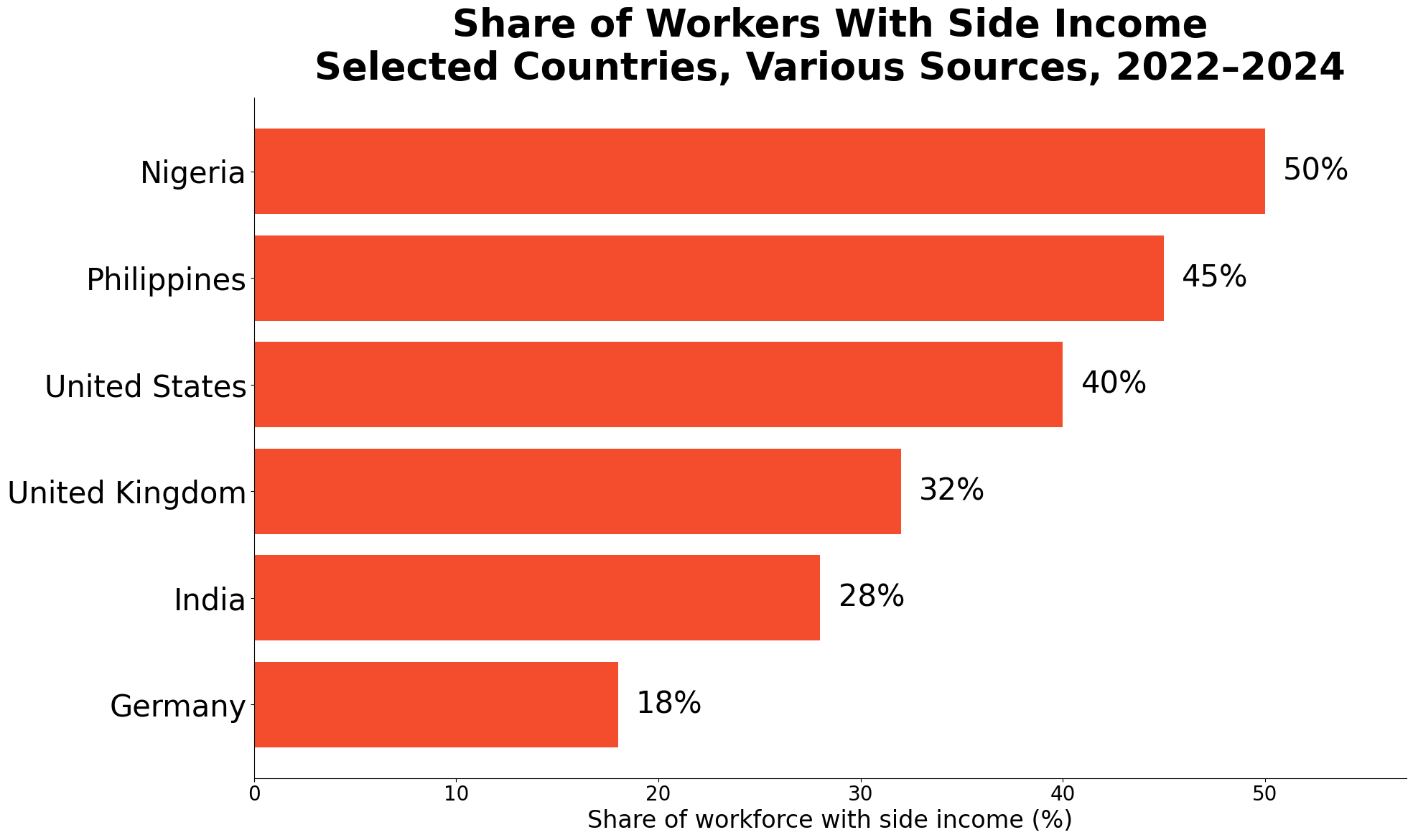
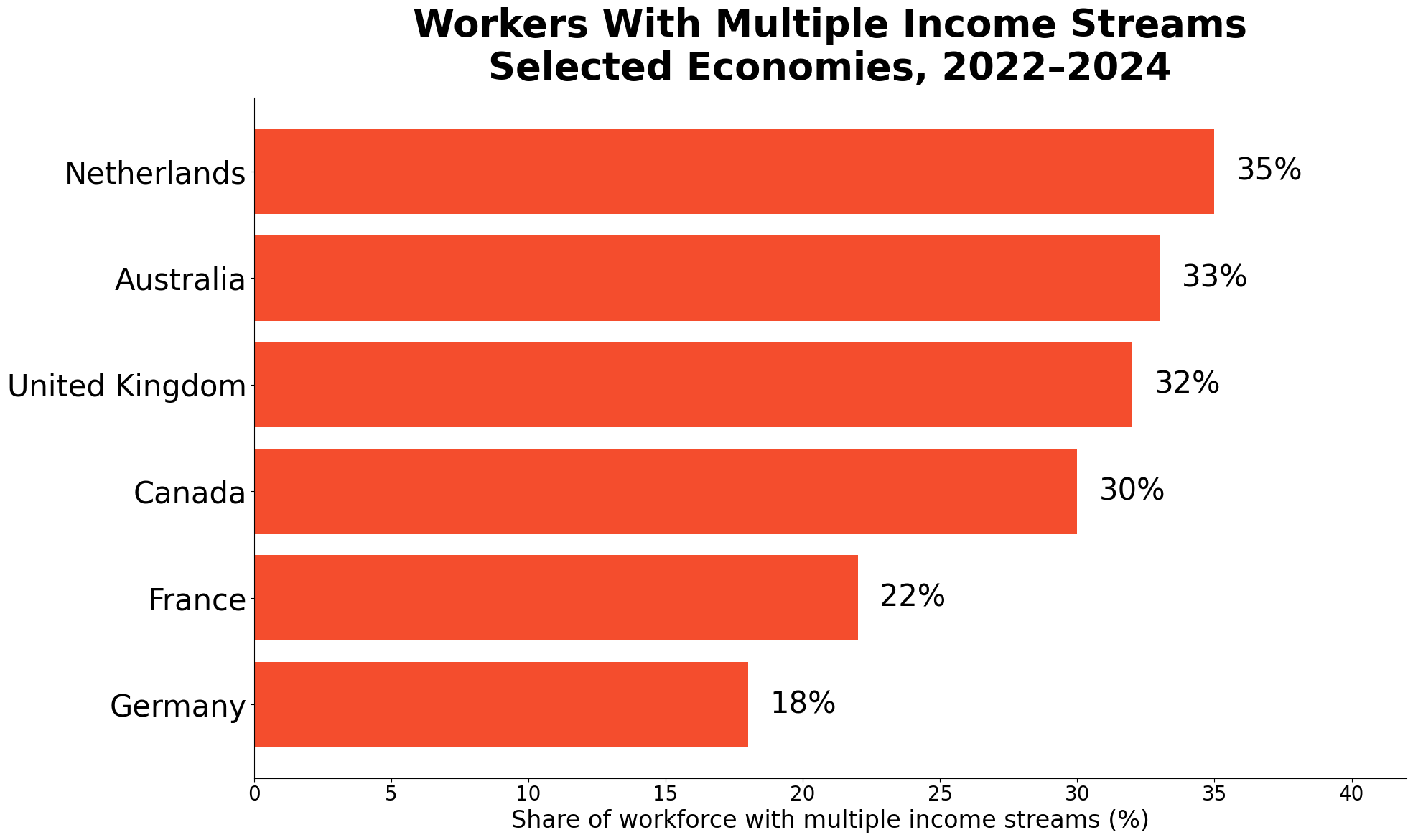
In the UK, side hustles are evolving into something more structured: the “portfolio career.” Nearly 1 in 3 workers now earn income from multiple sources.
Three trends stand out:
Professionals (consultants, marketers, educators) increasingly take on freelance contracts alongside full-time roles.
Property-related income—renting spare rooms or short-term lets—remains a staple.
Creative pursuits (writing, design, digital products) are becoming monetized at scale.
Unlike the U.S., the UK’s side hustle culture leans less toward gig work and more toward skill-based income diversification.
Putting it into perspective: For readers thinking about semi-retirement or relocation, the UK offers a model where experience—not just time—can be monetized repeatedly.
🔎 Fascinating detail: The term “portfolio career” originated in the UK in the 1990s—but only in the last five years has it become a mainstream reality.
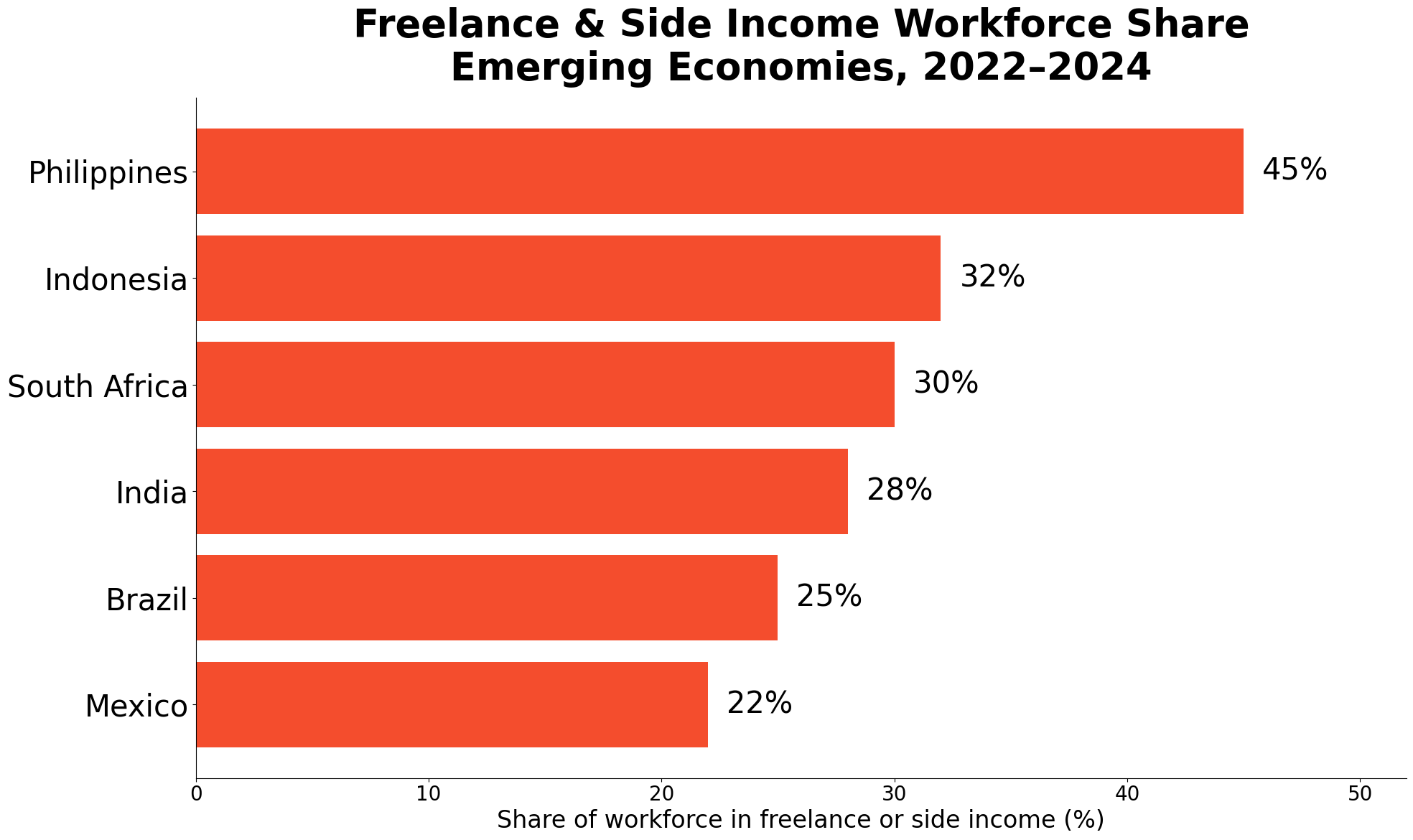
In India, side hustles are often a gateway—not a supplement. With a young population and rapidly digitizing economy, millions use secondary income streams to climb the economic ladder.
Key drivers include:
Freelance tech and IT services exported globally.
Online education and tutoring, fueled by high academic demand.
Social commerce—selling via WhatsApp, Instagram, and local platforms.
Unlike Western markets, where side hustles often cushion risk, in India they frequently represent opportunity and upward mobility.
Putting it into perspective: For global investors or remote workers, India’s workforce signals a powerful shift—talent is no longer geographically constrained.
🔎 Little-known insight: India is now one of the largest suppliers of freelance labor globally, with millions earning in foreign currencies—often from their homes.
Homes Printed in 24 Hours

Azure Printed Homes combines 3D printing, automated steel-truss production, and modular construction to build affordable homes quickly.
$5M+ revenue in 2024 and $62M in pipeline orders.
The future of housing is being manufactured.
Few countries have embraced side hustles as effectively as the Philippines. Thanks to strong English proficiency and a service-oriented workforce, online freelancing has become a national economic pillar.
Top income streams include:
Virtual assistance and administrative support.
Content writing, digital marketing, and customer service.
Remote technical roles in development and design.
For many Filipinos, side hustles are not secondary—they are the primary income source, often replacing traditional employment.
Putting it into perspective: If you’re exploring outsourcing, remote hiring, or even relocation, the Philippines offers one of the most mature digital labor markets in the world.
🔎 Surprising fact: Freelancers in the Philippines can earn 2–3x the local average wage through international clients—without ever leaving the country.
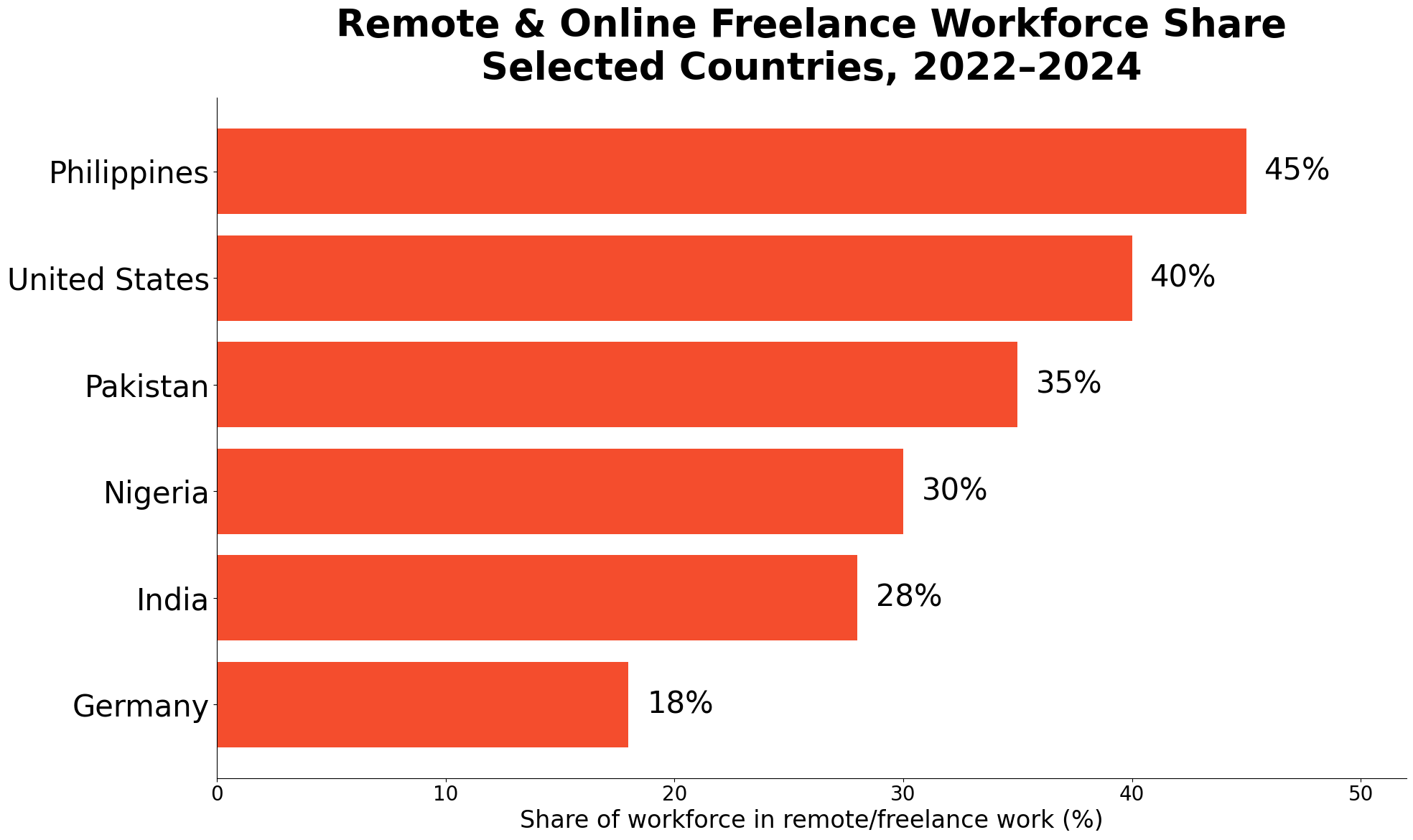
In Nigeria, side hustles are less about choice and more about necessity. With high inflation and currency volatility, relying on a single income stream is often not viable.
Common side hustles include:
Import/export trading and small-scale commerce.
Cryptocurrency and digital finance activities.
Creative industries—music, design, and content creation.
Nigeria’s entrepreneurial energy is remarkable, driven by necessity but powered by innovation.
Putting it into perspective: For observers of global economic resilience, Nigeria demonstrates how adversity often accelerates entrepreneurial thinking.
🔎 Striking reality: In some urban areas, it’s common for individuals to maintain three or more active income streams just to stabilize purchasing power.
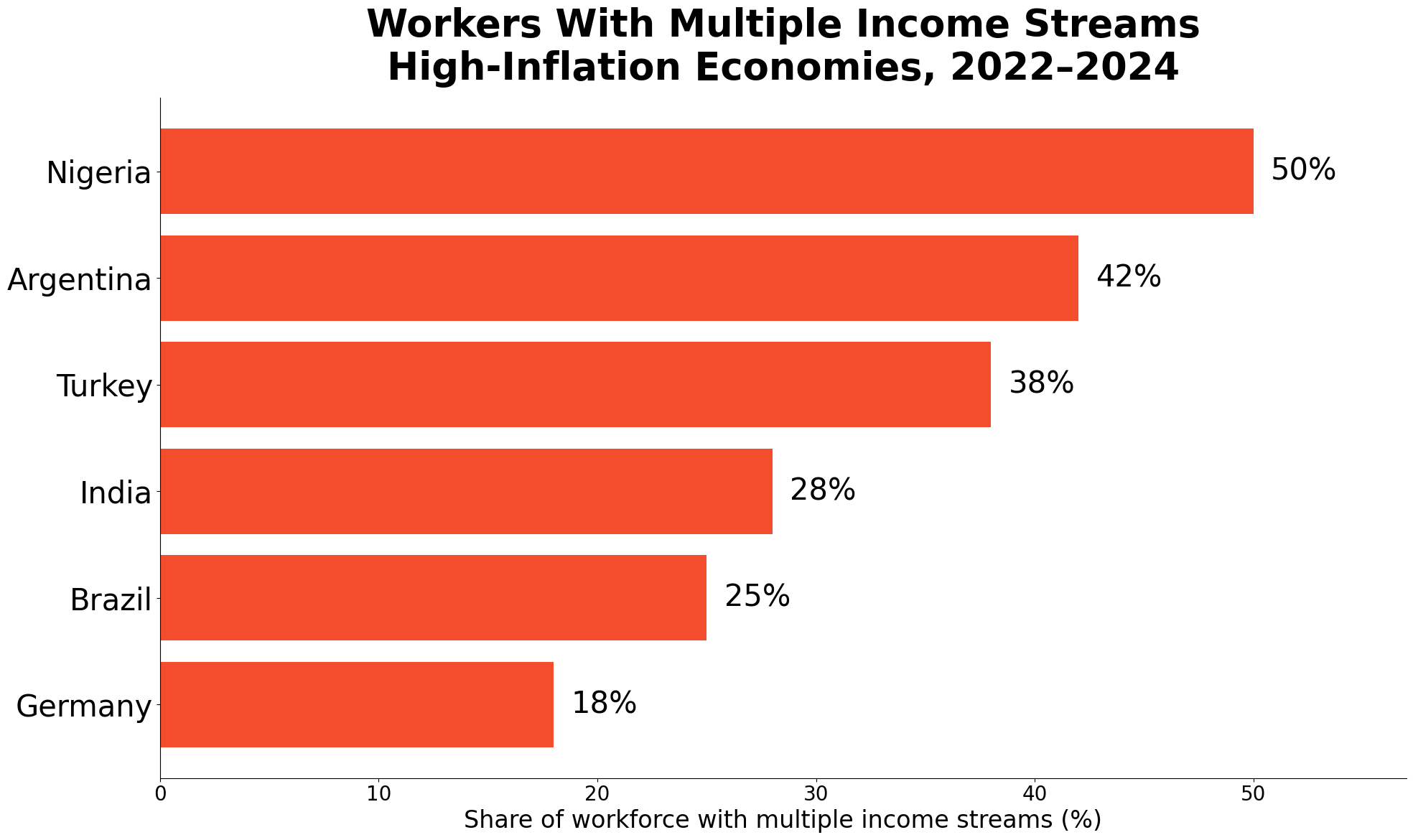
Germany presents a more cautious approach. Side hustles are growing, but regulatory structures and cultural norms still favor stable, full-time employment.
That said, change is underway:
Freelancing in tech, consulting, and engineering is rising.
E-commerce and digital products are gaining traction.
Remote work is loosening traditional employment rigidity.
German workers tend to approach side hustles methodically—focusing on long-term viability rather than quick income.
Putting it into perspective: For those valuing stability, Germany shows that income diversification can coexist with strong labor protections.
🔎 Interesting note: German law often requires employees to disclose side hustles to employers—a reminder that not all markets are equally flexible.
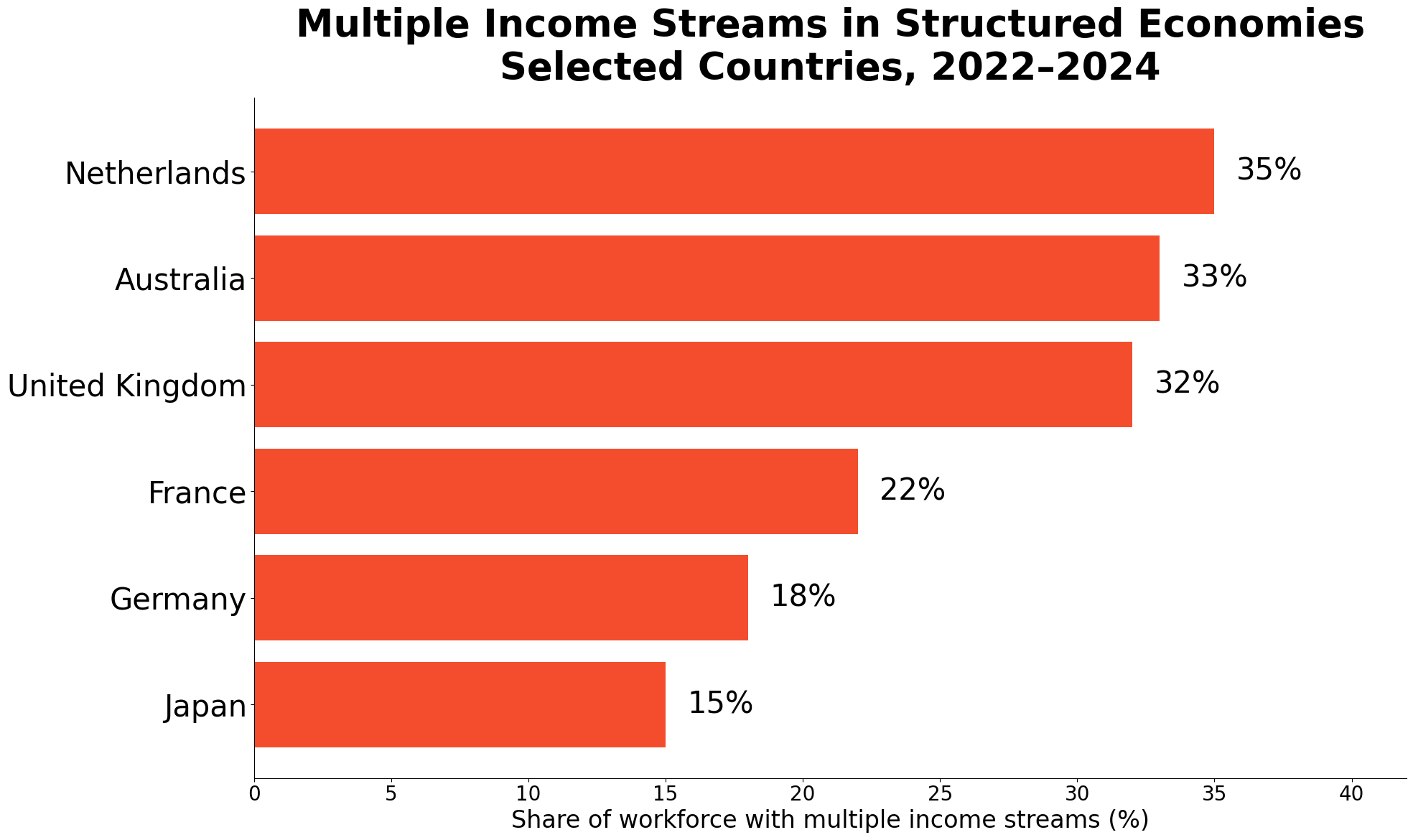
Zooming out, a clear pattern emerges: the concept of a “side hustle” is evolving into something more fundamental—an income stack.
Across regions:
Digital platforms are lowering barriers to entry.
Remote work is globalizing opportunity.
Economic uncertainty is driving diversification.
Increasingly, people are combining:
Active income (job)
Semi-passive income (freelance, consulting)
Passive income (investments, digital assets)
Putting it into perspective: The question is no longer “Should you have a side hustle?”—but “How diversified is your income?”
🔎 Future projection: By 2030, it’s expected that a majority of workers globally will earn from more than one source—a structural shift in how income works.
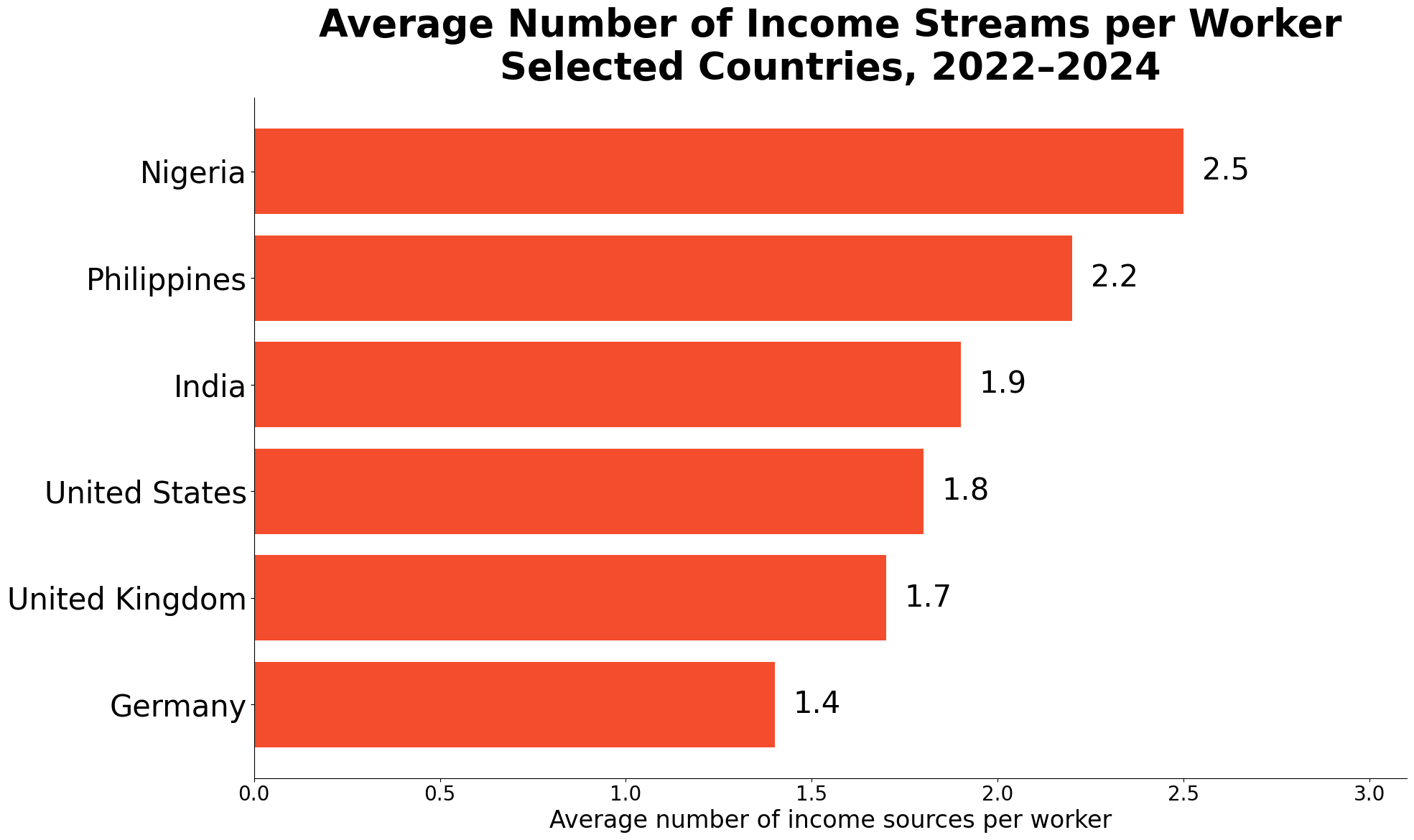
The world is quietly rewriting the rules of earning.
What was once considered extra income is becoming essential. What was once temporary is becoming permanent. And what was once local is now global.
For those willing to adapt, this shift offers something powerful: flexibility, resilience, and control over your financial future.
Stay informed, stay adaptive—and keep building your edge in a changing world.
Warm regards,
Shane Fulmer
Founder, WorldPopulationReview.com
P.S. Want to sponsor this newsletter? Reach 144,000+ global-minded readers — click here!