- World Population Review Newsletter
- Posts
- Kids and Cash: How Countries Invest to Win
Kids and Cash: How Countries Invest to Win
From preschools to paid leave, who’s really backing the next generation?

Philip Saparov
December 15, 2025
In partnership with

Greetings, thoughtful traveler of tomorrow!
Want to know what a nation truly values? Follow the money—straight to its children.
From playgrounds to paid leave, from preschools to public policy, how a country treats its youngest citizens reveals its priorities—and predicts its future.
In this edition, we spotlight seven nations shaping the next generation through bold investment in youth. The contrasts are striking. The takeaways? Eye-opening.
Let’s dive in.
One major reason AI adoption stalls? Training.
AI implementation often goes sideways due to unclear goals and a lack of a clear framework. This AI Training Checklist from You.com pinpoints common pitfalls and guides you to build a capable, confident team that can make the most out of your AI investment.
What you'll get:
Key steps for building a successful AI training program
Guidance on overcoming employee resistance and fostering adoption
A structured worksheet to monitor progress and share across your organization
When it comes to child welfare, the Nordic nations aren’t just ahead of the curve—they wrote the manual. Countries like Sweden, Denmark, and Norway consistently top global rankings for child well-being, and it's no accident. Their governments pour public funds into early childhood education, generous parental leave, and youth services that promote long-term societal health.
🧸 In Sweden, parents get up to 480 days of paid leave per child—split between both parents, encouraging gender equality. Denmark invests heavily in daycare and preschool programs, often covered up to 90% by the state. Norway offers universal access to childcare and even child-specific savings accounts funded partly by oil revenues.
🔎 Unexpected twist: In Denmark, children begin formal schooling at age 6—but spend earlier years in “forest schools,” where play, exploration, and social skills come before academics.
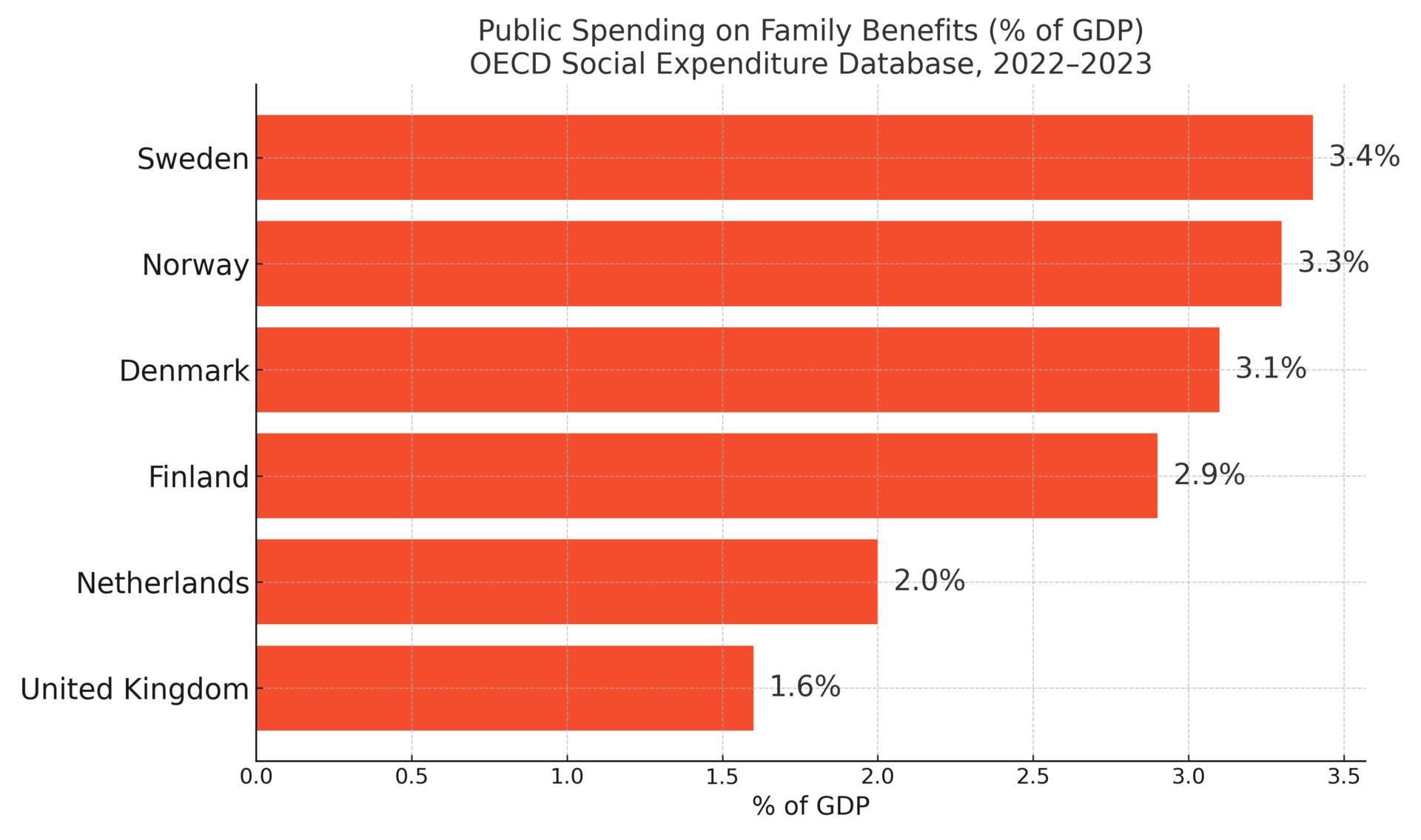
Often overlooked in discussions of family-friendly policy, France spends more on family benefits than nearly any other country in the OECD—about 3.6% of its GDP. The state’s holistic approach weaves together subsidized childcare, universal preschool, and cash allowances for families with children.
🏫 French families can access Écoles Maternelles—free, high-quality preschools available from age 3, with near-universal participation. Working parents benefit from subsidized crèches (infant care centers) and complément de libre choix de mode de garde, a cash payment to help with caregiver costs.
Putting It Into Perspective: France's model supports both child development and maternal employment. For readers weighing a European relocation, it’s a compelling combination of culture, care, and quality of life.
👶 Fascinating stat: France’s female labor force participation rate (age 25–54) is among the highest in Europe, largely due to affordable childcare.

In the United States, raising children is an expensive endeavor—without the robust public support systems seen in many peer nations. American families shoulder most of the burden, especially in areas like childcare, which can rival the cost of college tuition.
💵 While federal programs like Head Start and Child Tax Credits exist, they are often means-tested, fragmented, or politically contested. Unlike much of Europe, universal paid parental leave remains elusive. Yet, there are pockets of innovation: states like California and New York offer paid family leave, and some cities provide free pre-K.
Putting It Into Perspective: For retirees or remote workers considering relocation within the U.S., understanding local differences in family policy may influence where children or grandchildren thrive most.
💡 Surprising insight: In some U.S. states, infant care costs more than average in-state college tuition—a sobering signal of systemic imbalance.

When AI Outperforms the S&P 500 by 28.5%

Did you catch these stocks?
Robinhood is up over 220% year to date.
Seagate is up 198.25% year to date.
Palantir is up 139.17% this year.
AltIndex’s AI model rated every one of these stocks as a “buy” before it took off.
The kicker? They use alternative data like reddit comments, congress trades, and hiring data.
We’ve teamed up with AltIndex to give our readers free access to their app for a limited time.
The next top performer is already taking shape. Will you be looking at the right data?
Past performance does not guarantee future results. Investing involves risk including possible loss of principal.
Facing one of the world’s lowest birthrates, Japan has dramatically increased spending on families and children in recent years. From free preschool for all children aged 3–5 to cash incentives for childbirth, the government is trying to reverse demographic decline through policy.
📈 In 2023, Japan pledged to double its budget for child-related programs, expanding after-school programs, reducing education fees, and increasing child allowances. But cultural factors—long work hours, high housing costs, and rigid gender roles—still challenge uptake.
Putting It Into Perspective: Japan is a fascinating case of policy chasing a problem that policy alone might not solve. For global trend-watchers, it’s a real-time experiment in how nations respond to population collapse.
📉 Powerful contrast: Japan spends more per capita on the elderly than children by a margin of over 2:1—a ratio it's now trying to rebalance.

Germany’s child spending is pragmatic and structured—designed not just to support families but to ensure equitable development. Parents receive Kindergeld, a monthly child allowance that continues into early adulthood if children remain in school or training.
🎓 Public schooling is free, including vocational training programs that bridge education and employment. Germany also offers Elterngeld, which pays parents a percentage of their income for up to 14 months after childbirth if both take some leave—promoting shared caregiving.
Putting It Into Perspective: Germany’s education-to-career pipeline may appeal to readers with older children seeking structured, debt-free academic and trade paths.
📘 Little-known perk: Many international students study in Germany tuition-free—even at top universities—thanks to state funding.

In the United Arab Emirates, rapid modernization has been paired with a growing focus on child development. The government launched the Emirati Children’s Day to spotlight youth priorities, expanded healthcare access, and created programs to support children of determination (those with disabilities).
🧬 The UAE's Early Childhood Development Policy spans health, nutrition, safety, and education. Though still developing compared to European leaders, the country's per-child investment is on the rise—especially in urban centers like Dubai and Abu Dhabi.
Putting It Into Perspective: For expats considering relocation to the Gulf, the UAE offers increasingly family-friendly policies—and an intriguing mix of tradition and innovation.
🌍 Fascinating move: The UAE plans to measure national success not just by GDP—but by child development indicators.

The economic case for investing in children is now widely accepted. Nobel laureate James Heckman demonstrated that early childhood programs yield returns of up to 13% per year through better education, health, and productivity outcomes.
🌱 High-investment countries tend to have higher social mobility, better health indicators, and more stable long-term growth. The race to equip the next generation is increasingly seen as a geopolitical strategy—competing not just for capital, but for human potential.
Putting It Into Perspective: For readers investing in global trends—whether via markets, real estate, or family planning—the nations prioritizing children today may be tomorrow’s most resilient societies.
💥 Striking fact: According to UNICEF, every $1 invested in early childhood development can yield up to $17 in economic returns over time.

From Nordic social safety nets to Japan’s policy pivots and the U.S.'s state-led experiments, how nations treat their youngest citizens is a lens into future strength.
Whether you're raising children, advising younger generations, or simply mapping where the world is headed, understanding how countries invest in youth is critical.
Stay curious. Stay strategic. The next generation is already shaping the next economy.
Warm regards,
Shane Fulmer
Founder, WorldPopulationReview.com
P.S. Want to sponsor this newsletter? Reach 140,000+ global-minded readers — click here!