- World Population Review Newsletter
- Posts
- The Countries Where Homes Turn Deadly Hot
The Countries Where Homes Turn Deadly Hot
Why indoor heat risk is rising faster than you think.

Philip Saparov
February 25, 2026
In partnership with

Greetings, thoughtful guardian of your home and future.
We read about record-breaking heat every summer. But here’s the question that really matters: How hot does your home get after sunset? For millions, the greatest climate risk isn’t outside — it’s trapped indoors in buildings designed for a cooler world.
Today, we examine the countries where indoor heat exposure is rising fastest.
Let’s step inside.
The Lithium Boom Is Heating Up

Lithium stock prices grew 2X+ from June to January. $ALB climbed 227%. $LAC hit 151%. $SQM, 159%. But the real winner may be a private stock, EnergyX. Their tech can recover 3X more lithium than traditional methods, leading General Motors to invest. Now they’re preparing to unlock up to 9.8M tons of lithium. Buy private EnergyX shares alongside 40k+ people before EnergyX’s share price increases after 2/26.
This is a paid advertisement for EnergyX Regulation A offering. Please read the offering circular at invest.energyx.com. Under Regulation A, a company may change its share price by up to 20% without requalifying the offering with the Securities and Exchange Commission.
Extreme heat is no longer seasonal in India — it is structural.
India regularly records temperatures above 45°C (113°F), but the deeper risk lies in housing. Rapid urbanization has pushed millions into concrete-dense neighborhoods with limited airflow. In lower-income housing, metal roofs and minimal insulation can raise indoor temperatures above outdoor readings.
Three factors drive India’s indoor heat exposure:
Massive urban density (Delhi, Ahmedabad, Mumbai)
Limited access to air conditioning (AC ownership remains below 10–15% in many regions)
Growing heatwaves lasting weeks, not days
Cities like Ahmedabad now run heat action plans, including cool-roof initiatives that coat rooftops with reflective paint — a low-cost intervention shown to reduce indoor temperatures by 2–5°C.
A telling statistic: India has experienced some of the longest heatwave durations on record in the past decade — and nighttime temperatures increasingly stay above 30°C (86°F), preventing the body from recovering.

If daytime heat strains the body, nighttime heat exhausts it.
Pakistan frequently faces “wet-bulb” temperature events — a dangerous mix of heat and humidity that limits the body’s ability to cool through sweat. Cities like Karachi and Jacobabad have recorded wet-bulb temperatures approaching 35°C, a theoretical threshold for human survival over prolonged exposure.
Housing vulnerability amplifies the risk:
Rapid urban growth
Limited insulation standards
Frequent electricity shortages during peak demand
Air conditioning offers relief — when the grid holds. But rolling blackouts during heatwaves create a double threat: extreme heat with no mechanical cooling.
In 2015, a Karachi heatwave led to more than 1,200 deaths, many indoors. Investigations revealed that prolonged power outages during peak heat were a central factor.
The lesson is clear: exposure isn’t just about climate — it’s about infrastructure resilience.

At first glance, the U.S. appears protected. Over 85% of households have air conditioning.
But reliance creates a hidden vulnerability.
The southern U.S. — especially Arizona, Texas, Nevada, and Florida — has seen rapid population growth in some of the hottest metro areas in the country. Phoenix now averages more than 100 days per year above 100°F (38°C).
The risk factors:
Heavy AC dependency
Aging power grids under stress
Expanding suburban sprawl with heat-retaining materials
When power fails — even briefly — indoor temperatures can spike rapidly in sealed homes designed for mechanical cooling.
In 2023, parts of Arizona recorded nighttime lows above 95°F (35°C) for multiple consecutive days. Without cooling, indoor temperatures can exceed 100°F within hours.
The U.S. challenge isn’t lack of cooling — it’s over-reliance on energy-intensive systems in a warming climate.

Will Your Retirement Income Last?

A successful retirement can depend on having a clear plan. Fisher Investments’ The Definitive Guide to Retirement Income can help you calculate your future costs and structure your portfolio to meet your needs. Get the insights you need to help build a durable income strategy for the long term.
Europe is warming faster than the global average — and southern Europe feels it most.
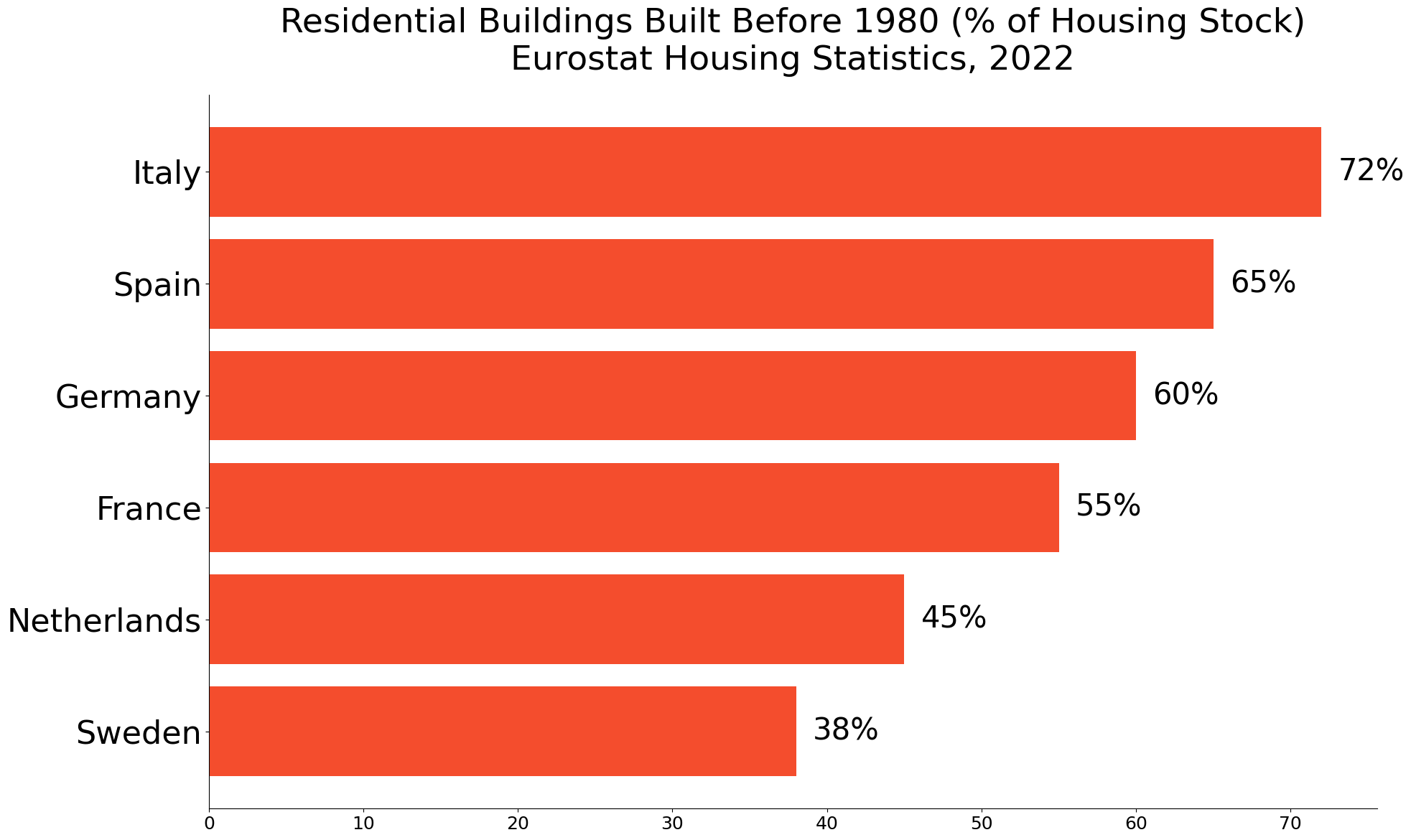
Spain has endured increasingly intense heatwaves, with temperatures surpassing 47°C (116°F) in recent years. But much of Spain’s housing stock was built decades ago, before extreme heat became routine.
Key vulnerabilities include:
Older masonry buildings that trap heat
Limited AC adoption historically (though rising rapidly)
Large elderly populations, especially in rural regions
Spain has one of the highest proportions of residents over 65 in Europe — a demographic particularly vulnerable to heat stress.
During the 2022 European heatwave, Spain recorded thousands of excess heat-related deaths, many among elderly individuals in private residences.
A revealing shift: AC installation rates in Spain have surged in the past five years — an indicator that climate adaptation is accelerating, but unevenly.
In Egypt, extreme heat is nothing new — but urban scale is.
Cairo, one of the world’s largest cities, combines desert heat with dense construction. Informal housing developments often lack insulation, green space, or airflow planning.
Exposure drivers include:
High summer temperatures frequently exceeding 40°C (104°F)
Urban heat island effects
Limited widespread residential cooling in lower-income areas
The government has invested heavily in new desert cities with more modern infrastructure — yet much of the population remains in older districts.
An often overlooked factor: as climate change increases humidity along the Nile Delta, perceived heat stress rises even when air temperature remains constant.
Egypt’s long-term adaptation challenge lies not in surviving heat — but in modernizing housing at scale.

Nigeria is one of the fastest-growing countries in the world — and one of the hottest.
Lagos and northern cities like Kano regularly face extreme heat events. Yet residential air conditioning remains inaccessible to much of the population due to cost and electricity constraints.
Key exposure elements:
Rapid population growth
Expanding informal housing
Grid instability
Low AC penetration
Unlike aging Europe, Nigeria’s vulnerability intersects with a youthful population and urban expansion. As millions move into cities over the next two decades, housing design decisions made now will shape heat exposure for generations.
A striking projection: By 2050, Nigeria is expected to be the third most populous country in the world — meaning more people will live in high-heat zones than ever before.
Urban design may prove more important than climate itself.

Australia understands heat. Homes traditionally feature ventilation, shading, and outdoor living spaces.
Yet extreme events are intensifying. Western Sydney has recorded temperatures above 48°C (118°F). Prolonged heatwaves now last longer and begin earlier in the season.
Modern suburban development has introduced new challenges:
Dark roofing materials
Reduced tree cover
Large detached homes with high cooling demand
Air conditioning usage is widespread, but electricity demand spikes during heatwaves strain networks.
One fascinating contrast: Traditional Queenslander homes — elevated with cross-ventilation — often remain cooler than modern, sealed suburban builds.
Australia’s experience highlights a broader truth: sometimes older architectural wisdom outperforms newer construction in a warming world.

Extreme heat isn’t just weather — it’s personal.
If you’re weighing retirement, relocation, or property decisions, ask the practical questions: Is air conditioning common? Is the grid reliable? Are nights getting hotter?
Headlines track global averages. But your real risk comes down to one thing: how hot your home feels after sunset.
Stay informed. Stay prepared.
Warm regards,
Shane Fulmer
Founder, WorldPopulationReview.com
P.S. Want to sponsor this newsletter? Reach 138,000+ global-minded readers — click here!