- World Population Review Newsletter
- Posts
- The Dental Divide: What Teeth Reveal About Nations
The Dental Divide: What Teeth Reveal About Nations
Oral health gaps expose surprising truths about wealth, culture, and care.

Philip Saparov
November 28, 2025
In partnership with

Greetings, seeker of hidden truths behind the smile.
What if your teeth could tell the story of your country? From sugar habits to healthcare access, oral health reveals far more than just hygiene—it exposes inequality, prosperity, and policy.
In this edition, we unpack what your mouth might be saying about your nation.
Let’s bite in.
Tackle your credit card debt by paying 0% intro APR until 2027

Did you know some credit cards can actually help you get out of debt faster? Yes, it sounds crazy. But it’s true.
The secret: Find a card with a “0% intro APR" period for balance transfers or purchases. This could help you fund a large purchase or transfer your debt balance and pay it down as much as possible during the intro period. No interest means you could pay off the debt faster.
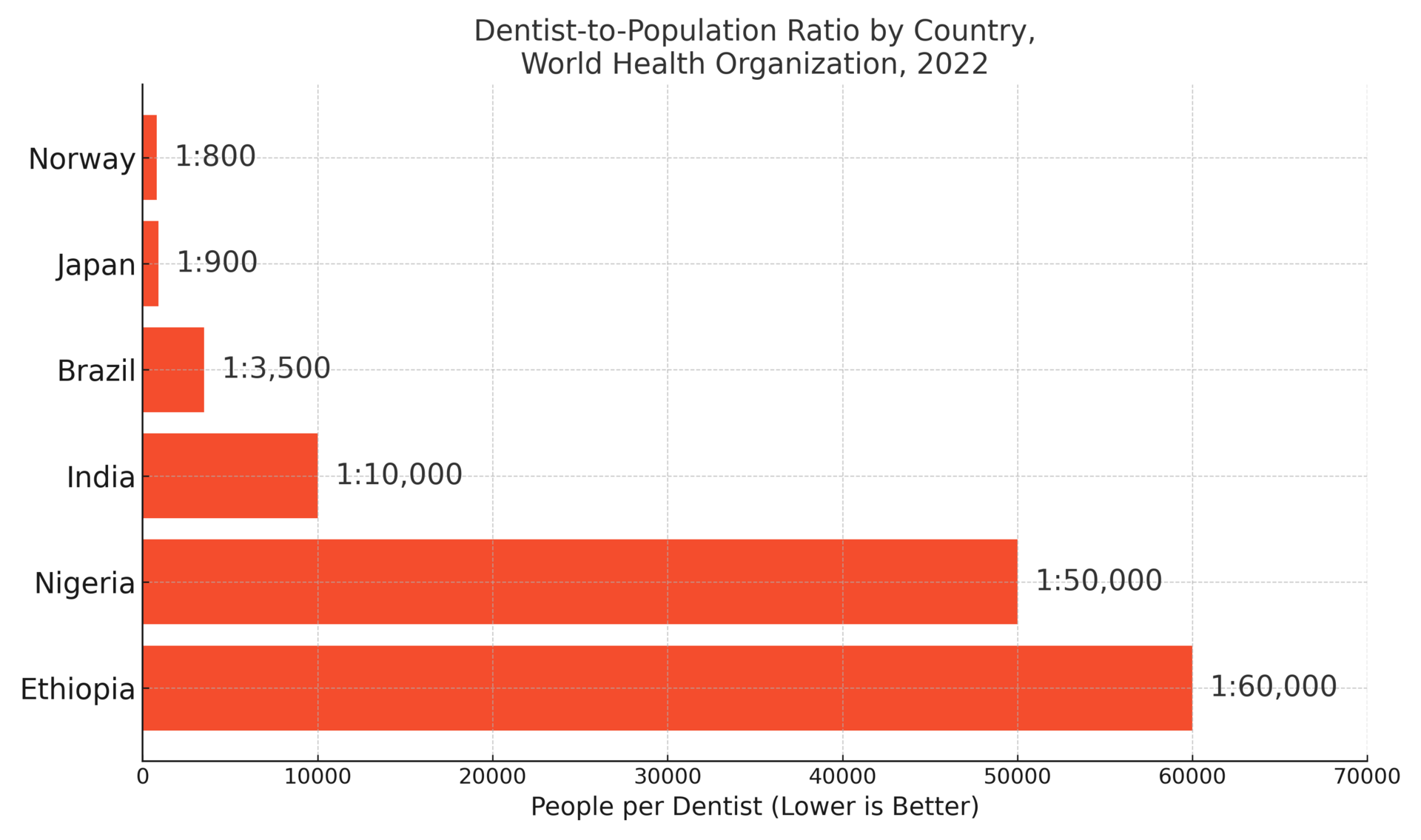
In many low-income countries, a dentist’s chair is less a place of routine care and more a last resort. Poor infrastructure, lack of insurance, and minimal public awareness mean oral diseases go untreated—causing pain, stigma, and even life-threatening infections.
🇳🇬 Nigeria faces a dentist-to-patient ratio of roughly 1:50,000, leaving vast rural areas entirely underserved.
🇧🇩 Bangladesh suffers a similar shortage, with basic dental care often limited to extractions by untrained practitioners.
🇪🇹 In Ethiopia, children in rural regions are five times more likely to suffer from untreated dental decay than their urban peers.
🦷 A striking fact: In sub-Saharan Africa, over 80% of oral diseases remain untreated—making it one of the region’s most neglected public health issues.
Sugar is sweet, but the global dental damage it leaves behind is anything but. Rising sugar consumption, especially in developing economies, is driving tooth decay rates even as access to care lags far behind.
🇲🇽 In Mexico, per capita sugar consumption has nearly doubled since the 1990s, and childhood cavities have surged in tandem.
🇮🇳 India is now the world’s largest sugar consumer by volume—yet public oral health spending is less than $1 per person per year.
🇵🇭 The Philippines faces a dual crisis: high soda consumption and poor fluoride access, resulting in over 90% of 6-year-olds with cavities.
🍭 Did you know? Tooth decay is the most common noncommunicable disease on Earth—and its root cause, sugar, is often cheaper than clean water in many regions.

In certain nations, a healthy smile is nearly universal—thanks to proactive public policy, widespread dental coverage, and early education.
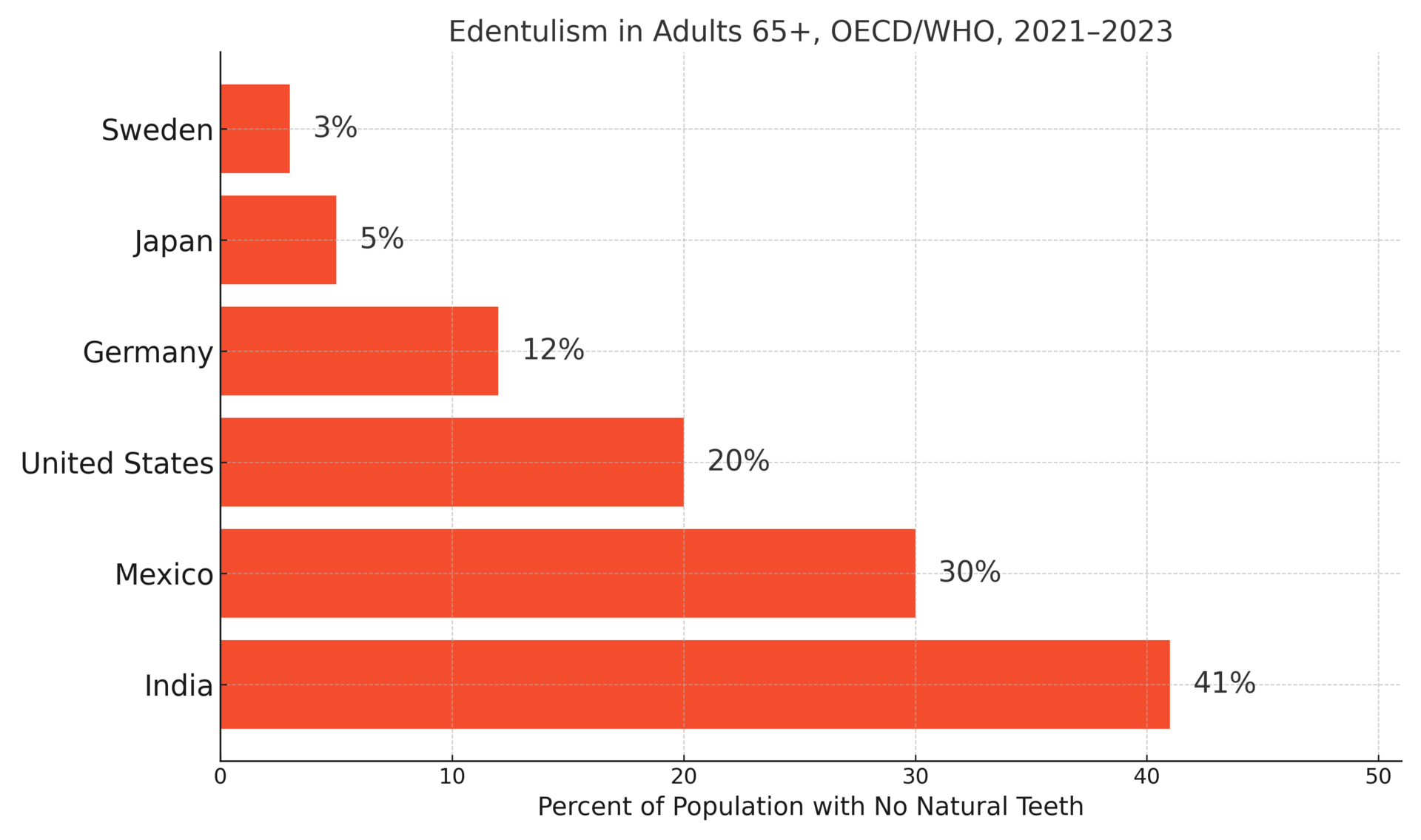
🇸🇪 Sweden offers free dental care for children and subsidized care for adults, resulting in some of the world’s lowest cavity rates.
🇯🇵 Japan’s mandatory dental checkups in schools ensure early intervention—contributing to the highest global average number of remaining natural teeth at age 80.
🇩🇪 Germany includes comprehensive dental coverage in public insurance, emphasizing preventive care over reactive treatment.
🧼 Fascinating stat: In Sweden, only 3% of adults over 65 have lost all their teeth—compared to over 20% in the U.S.

The best marketing ideas come from marketers who live it. That’s what The Marketing Millennials delivers: real insights, fresh takes, and no fluff. Written by Daniel Murray, a marketer who knows what works, this newsletter cuts through the noise so you can stop guessing and start winning. Subscribe and level up your marketing game.
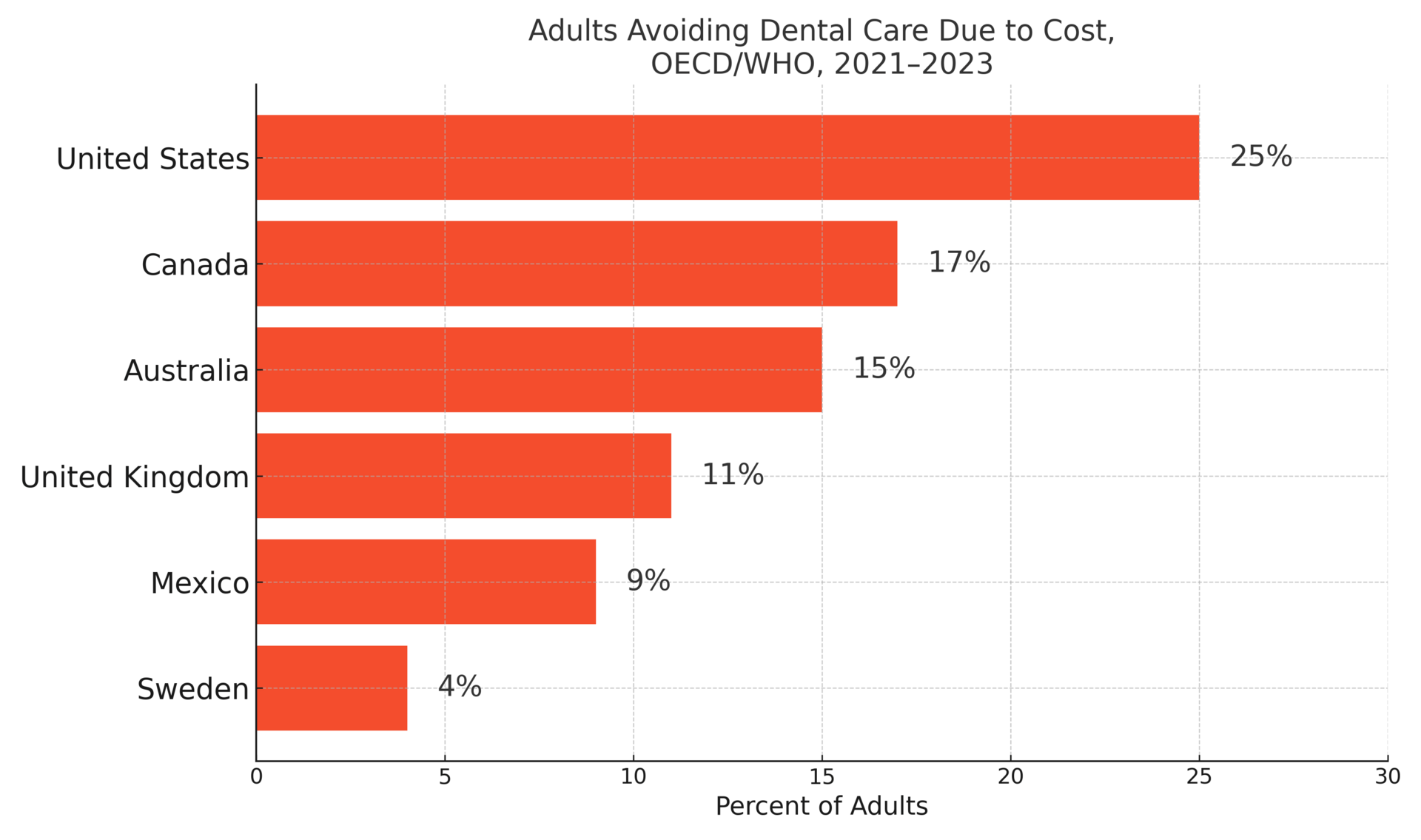
The U.S. is famous for its sparkling smiles—but behind the gloss lies a sharp divide. Dental care is largely privatized, often unaffordable without insurance, and not universally included in Medicare or Medicaid.
💸 Average cost of a dental crown: over $1,000
🚫 One in four U.S. adults avoids dental visits due to cost
😬 Black and Hispanic Americans are twice as likely to suffer from untreated cavities
Yet cosmetic dentistry is booming—$15B+ in 2023—with veneers, whitening, and aligners seen as status symbols.
📊 Curious contrast: The U.S. spends more on dental care per capita than any other nation, yet ranks 36th in access and outcomes.
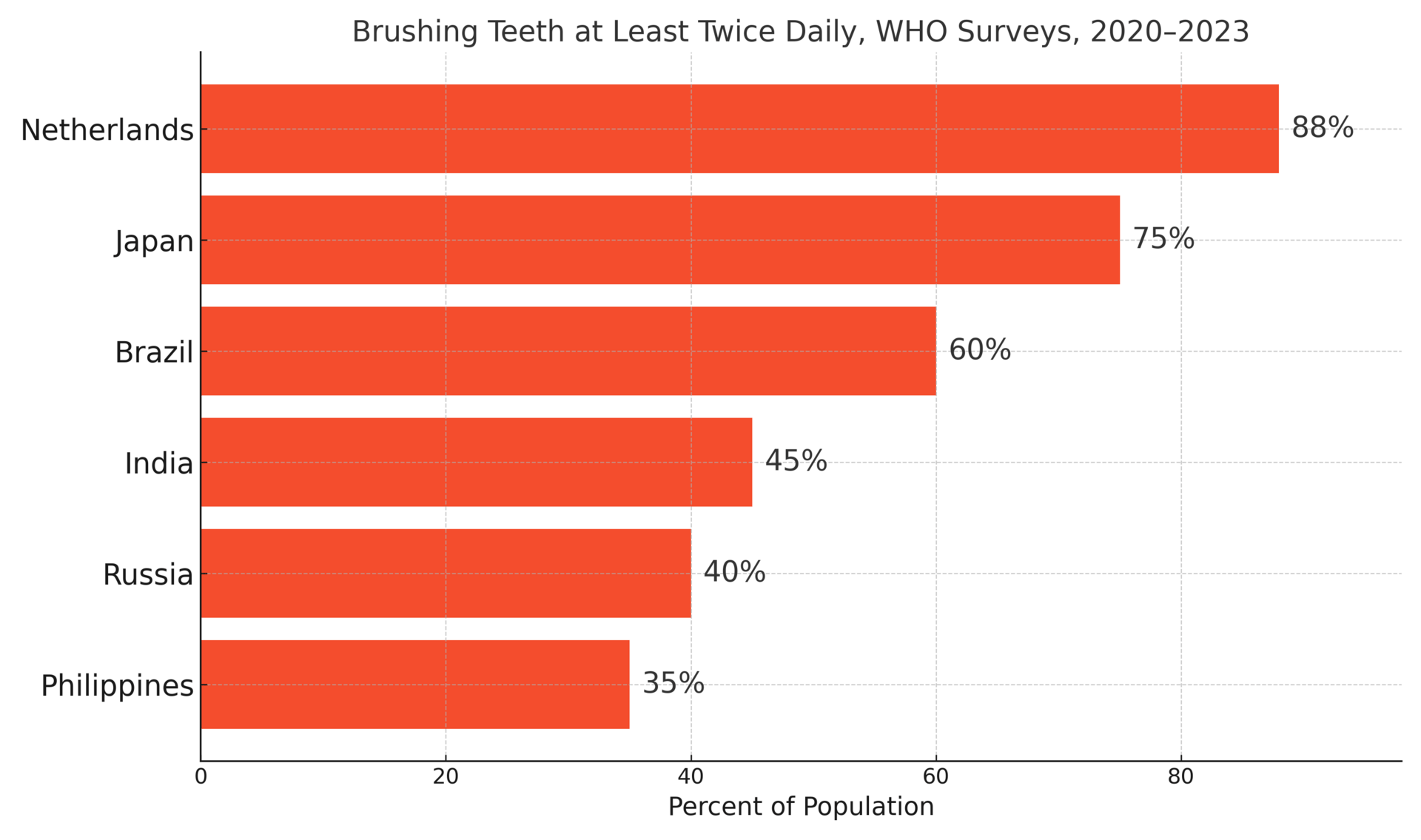
What we consider “good oral hygiene” isn’t universal—it’s culturally shaped. Across continents, different habits, tools, and taboos influence dental health outcomes.
🪥 In India, neem sticks have been used for centuries to clean teeth and fight bacteria—though adoption of commercial toothpaste is rising.
🦷 In Japan, dental clinics offer aesthetic tooth sharpening, or "yaeba," as a beauty trend.
🧂 In Russia, rinsing with saltwater is a traditional remedy still widely practiced, especially in older generations.
🔍 Unique insight: In many cultures, the value of a smile isn't just aesthetic—it's social. Studies show that in East Asia, people are more likely to cover their mouths when laughing, reflecting different norms around oral display and modesty.
Dental decay is the most common chronic disease in children globally—more prevalent than asthma or obesity. And yet, most of it is preventable.
🇬🇧 In England, over 40,000 children a year undergo tooth extractions under general anesthesia—the number one reason for child hospital admissions.
🇪🇬 In Egypt, over 70% of 5-year-olds have cavities, often untreated due to lack of pediatric dental coverage.
🇧🇷 In Brazil, sugar-heavy diets and poor access in favelas lead to early decay and pain-related school absenteeism.
📚 Critical fact: Poor oral health in childhood is strongly linked to lower academic performance and reduced lifetime income.

As longevity rises, so too does the need to retain natural teeth well into old age. But advances in dental tech and AI may soon shift the global curve.
🔬 AI-driven imaging is being used in South Korea and Germany to predict and prevent future dental issues before symptoms arise.
🧬 In Singapore, biotech startups are developing remineralization gels that may one day reverse early-stage decay.
📱 Mobile dentistry is expanding in rural Kenya, where drones now deliver dental supplies to clinics that were once unreachable.
🌐 Eye-opener: The World Health Organization has declared oral health a global health priority for the first time in 2023—opening new doors for policy, funding, and innovation.
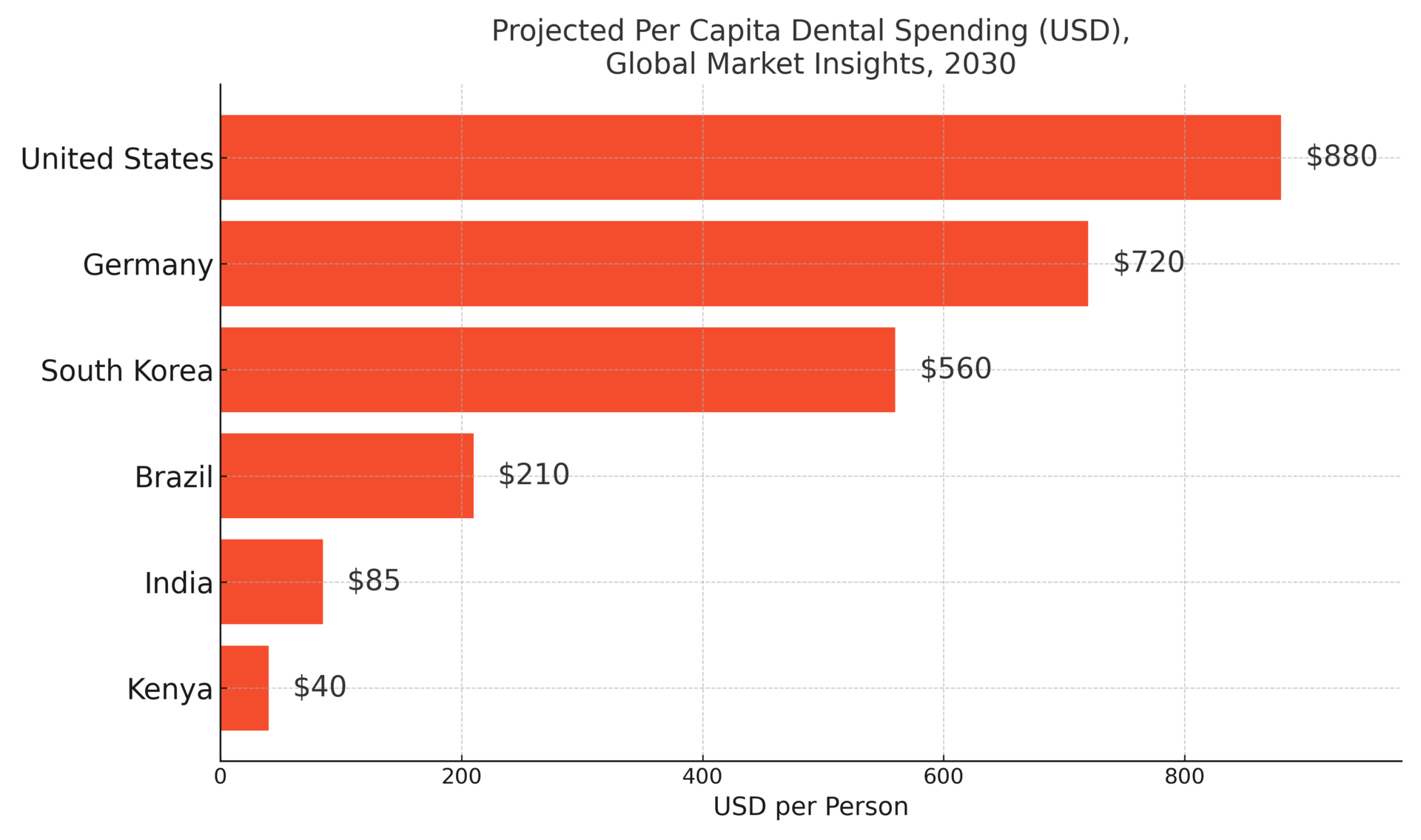
Teeth don’t lie. They tell the truth about wealth, access, culture—and who gets left behind. As we’ve seen, your dental fate often depends less on your toothbrush… and more on your zip code.
Understanding these patterns is a lens for smarter choices about where to live, how to age, and what systems we trust.
The mouth, it turns out, speaks volumes.
Stay curious. Stay informed. The data is smiling back.
Warm regards,
Shane Fulmer
Founder, WorldPopulationReview.com
P.S. Want to sponsor this newsletter? Reach 139,000+ global-minded readers — click here!