- World Population Review Newsletter
- Posts
- The Geography of Solitude—And What It Says About Us
The Geography of Solitude—And What It Says About Us
From Tokyo to Texas, solitude reveals how the world really lives.

Philip Saparov
December 14, 2025
In partnership with

Greetings, seeker of quiet truths in a noisy world.
Solitude isn’t just a state of mind—it’s a global pattern. From the one-room lives of Tokyo to the family-filled homes of Naples, how much time people spend alone reveals hidden truths about culture, aging, safety, and even digital connection.
In this edition, we uncover the world’s solitude hotspots—and cold spots. Who’s dining solo? Who’s aging in silence? And what do these patterns say about where we’re all headed?
If you're choosing where to live, invest, or simply wondering what the future of connection looks like… read on.
Let’s begin.
Stay up-to-date with AI

The Rundown is the most trusted AI newsletter in the world, with 1,000,000+ readers and exclusive interviews with AI leaders like Mark Zuckerberg, Demis Hassibis, Mustafa Suleyman, and more.
Their expert research team spends all day learning what’s new in AI and talking with industry experts, then distills the most important developments into one free email every morning.
Plus, complete the quiz after signing up and they’ll recommend the best AI tools, guides, and courses – tailored to your needs.
Finland isn’t just cold—it’s also the global capital of solitude. People here spend more time alone than in any other country, averaging over 7 hours per day in solitary time. Why? It’s not due to unhappiness, but rather a strong cultural value on personal space and self-sufficiency.
Finnish society supports solitude with smart design: homes are often built for single occupancy, and the public embraces silent commuting and solo sauna sessions. Loneliness, as experienced in many Western cultures, is not a stigma here—it's a lifestyle.
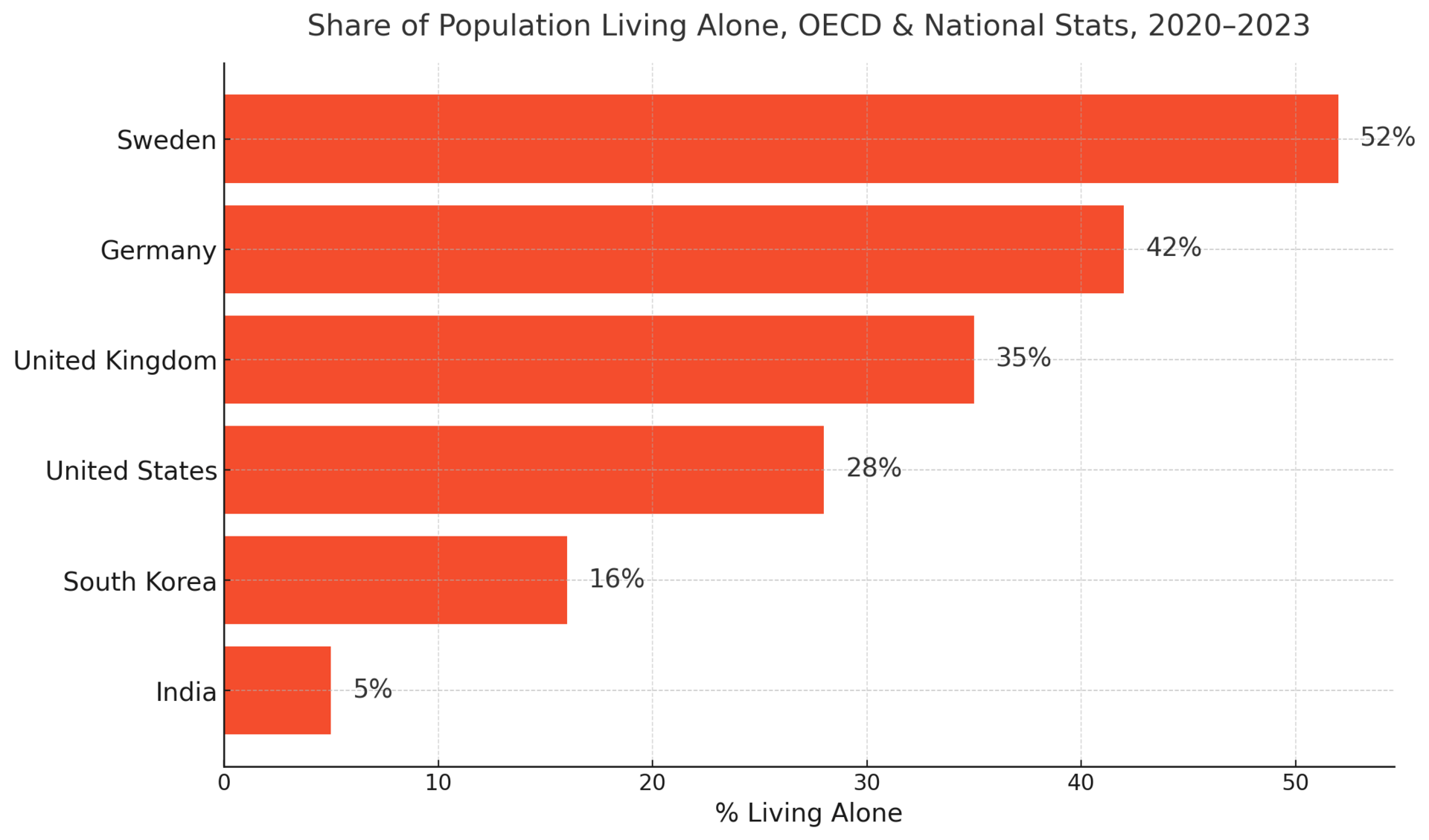
🇯🇵 Japan and 🇸🇪 Sweden also rank high, though for slightly different reasons. In Japan, an aging population and rising singlehood fuel increasing rates of solitary living. In Sweden, generous social policies enable people to afford living alone—over 50% of households are single-occupant.
🔍 Curious Fact: In Finland, there’s a word for the bliss of being alone in nature—metsänpeitto, or "forest cover," describing the healing power of isolation in the woods.

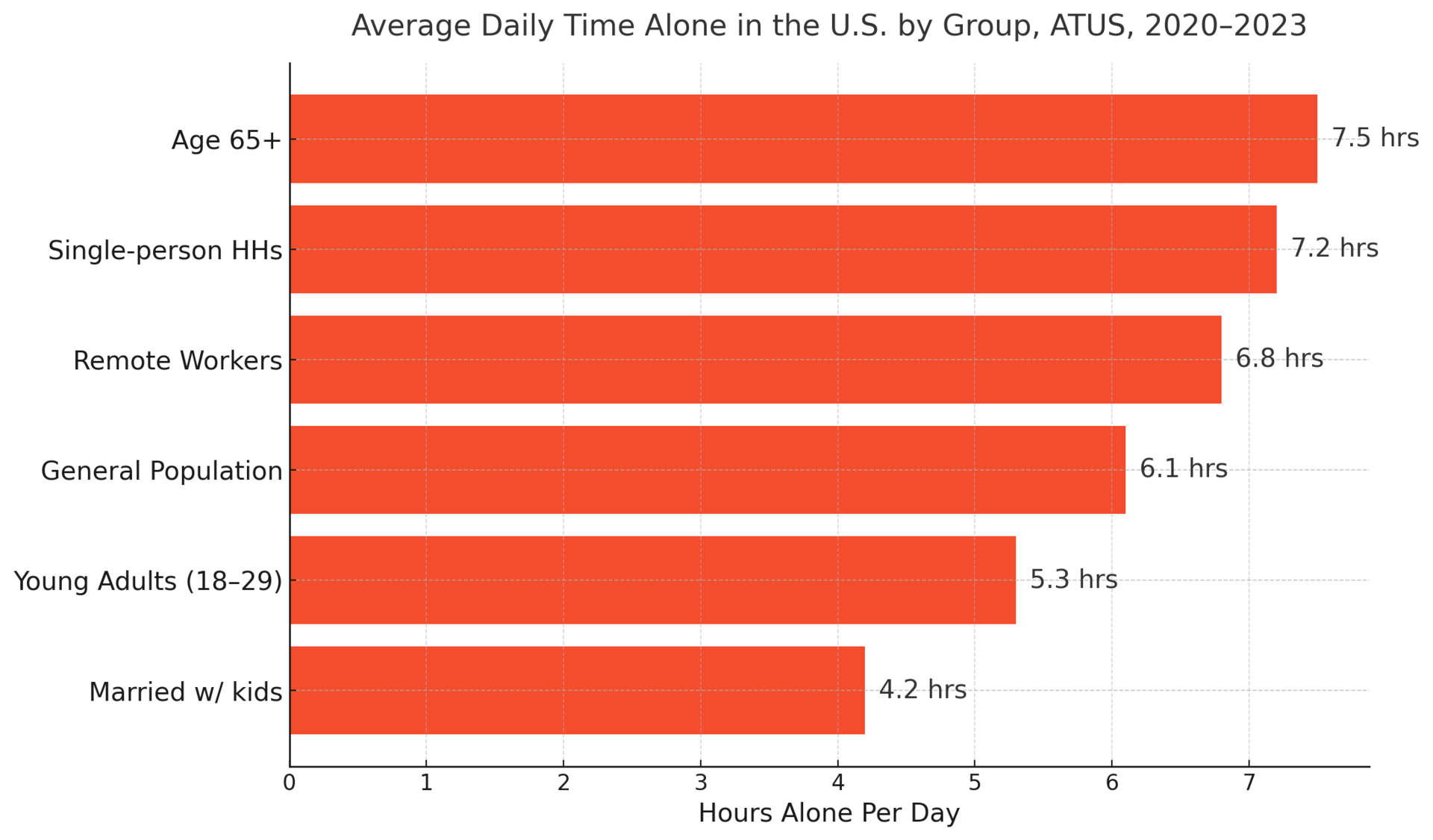
In the U.S., time spent alone has soared in recent decades. On average, Americans now spend over 6 hours a day in solitude—more than any time in recorded history. But this isn't just about preference. It’s tied to increasing screen time, remote work, and the country’s growing number of single-person households (now over 28%).
Among older adults, the trend is even more striking. Baby boomers are aging into solo retirement, often far from family or community networks. Meanwhile, younger Americans face housing costs that make roommates common—but these relationships are often transient, leading back to solitary living.
By contrast, Latino and immigrant communities tend to experience less solitude, thanks to multi-generational households and tightly knit social networks.
📊 Did you know? The U.S. Surgeon General recently declared loneliness an “epidemic,” linking it to higher risks of stroke, heart disease, and dementia.
Japan’s solitude is unlike anywhere else. It’s not just the elderly living alone—it's young people too. The country is witnessing a rise in hikikomori—individuals, often under 40, who withdraw from social life for months or even years.
This is fueled by intense academic and work pressure, declining birthrates, and a society that’s both highly structured and deeply isolating. Over 1.5 million people are estimated to be long-term social recluses.
At the same time, Japan is a leader in compact single-person living. Urban apartments as small as 90 square feet are designed for solo occupancy, and "table-for-one" dining has become a normalized experience.
🧠 Hidden Insight: Japan now has special companies that specialize in “lonely deaths” (kodokushi)—handling the estates of people who pass away unnoticed, often for weeks.

Stop guessing. Start scaling.

See the top-performing Facebook ads in your niche and replicate them using AI. Gethookd shows you what’s actually working so you can increase ROI and scale ad spend with confidence.
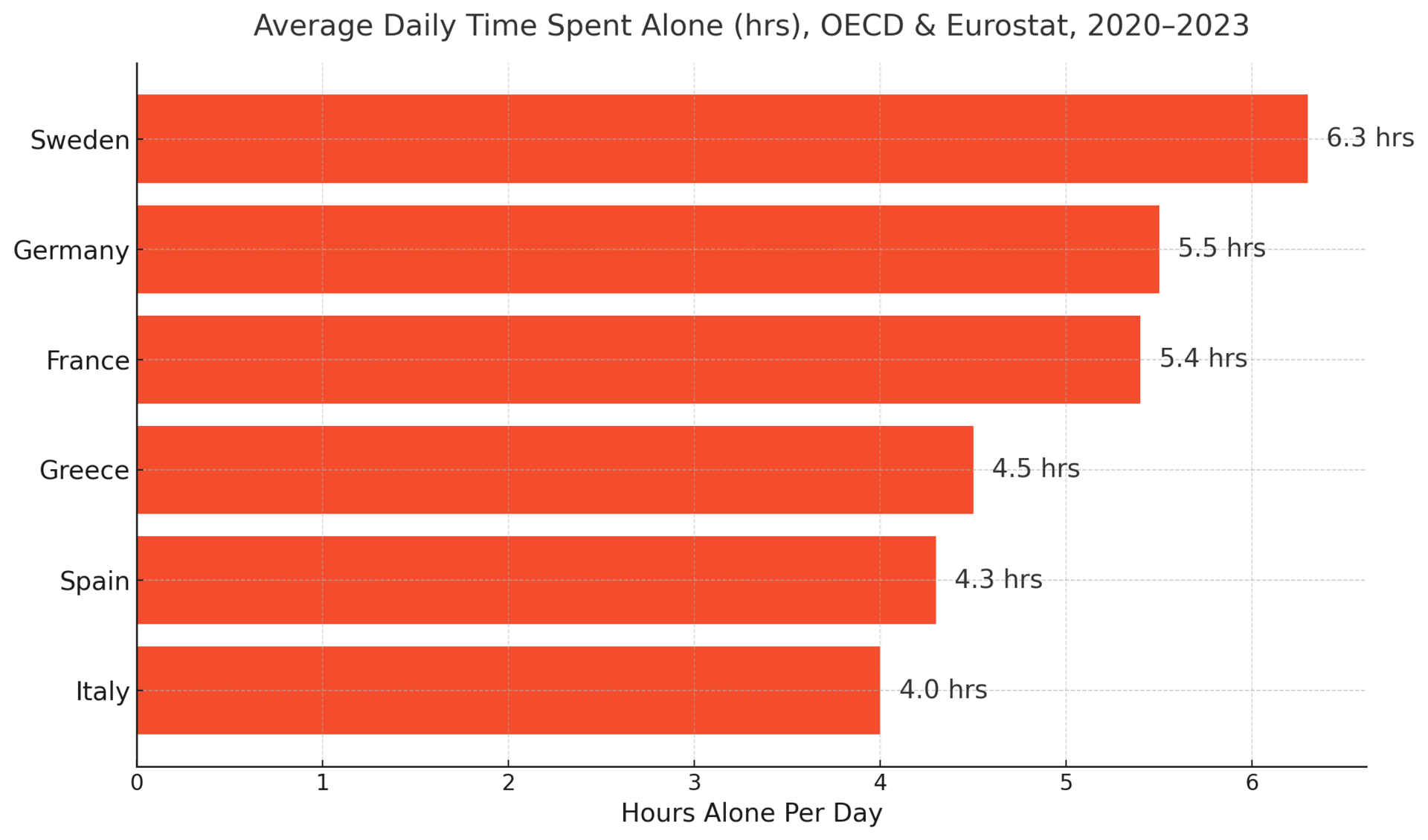
In contrast to the solitude of the north, countries like Italy, Spain, and Greece are havens of connection. Here, daily life revolves around communal meals, multigenerational homes, and neighborhood interaction.
Southern Europeans average 2–3 hours less time alone per day than their Nordic counterparts. The difference is cultural but also structural—urban design encourages public gathering, and aging parents often live with adult children.
Economic factors also play a role. High youth unemployment leads many young adults to stay at home longer, and caregiving is often handled within the family, not outsourced to institutions.
🍷 Interesting twist: In Italy, “la passeggiata”—the evening walk—is still a widespread ritual where townspeople stroll and socialize daily. It’s a living antidote to solitude.
Today, solitude doesn’t always mean isolation. With smartphones and social media, one can be physically alone yet constantly connected—blurring traditional metrics of solitude.
This is particularly evident in countries with high digital penetration like 🇰🇷 South Korea, where solo dining (honbap) is trending, yet social media engagement remains among the world’s highest.
But screen-based connection isn’t a perfect substitute. Research shows that heavy digital interaction often correlates with higher feelings of loneliness, especially among teens and older adults. The illusion of company can paradoxically deepen the experience of being alone.
📱 Eye-opening fact: The average global user now spends over 6.5 hours per day online—more time than spent sleeping in some regions.

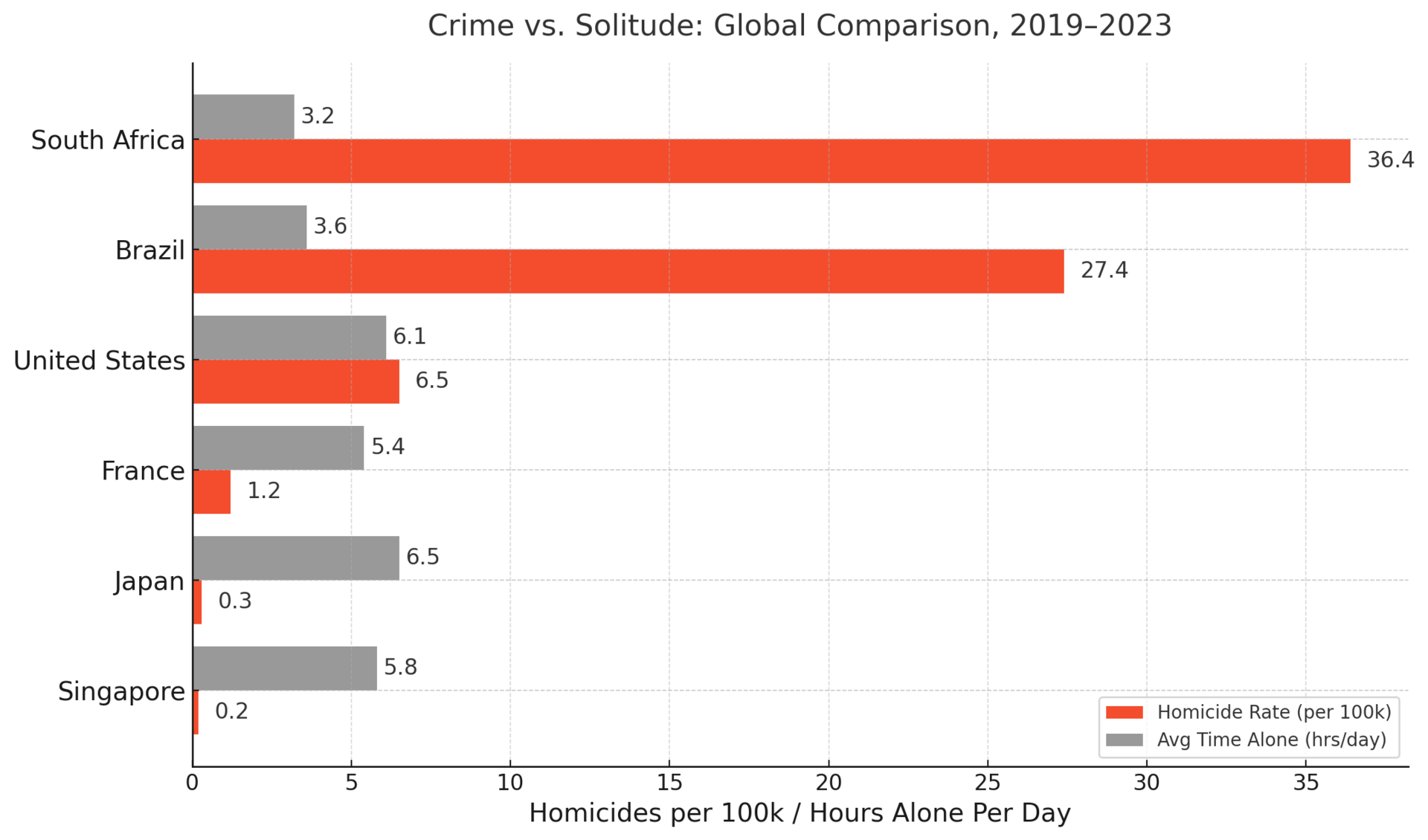
One overlooked factor driving solitude: safety. In countries with high crime rates or unstable infrastructure, people spend more time indoors—and often alone.
In 🇿🇦 South Africa, concerns about urban violence lead many to limit social outings, especially after dark. In 🇧🇷 Brazil, gated communities and home security systems reinforce private, inward lifestyles.
Conversely, in nations where safety is perceived as high—such as 🇩🇰 Denmark or 🇨🇭 Switzerland—people are more likely to participate in communal life, even late into the evening.
🧭 Counterintuitive insight: Some of the safest countries in the world also report the highest rates of solo living—suggesting that the freedom to be alone is, in part, a privilege of feeling secure.
The rise of solitude is not just a statistic—it’s a signal. As populations age, fertility declines, and cities densify, solo living is becoming not just common, but normal.
Cities are responding with new models: co-living spaces for young professionals, micro-apartments for retirees, and third spaces like cafes and libraries to provide gentle community.
Even in developing countries, urbanization is reshaping traditional social ties, making solitude more accessible—and sometimes, more prevalent.
🏙️ Fascinating forecast: By 2050, it’s projected that 1 in 3 urban dwellers worldwide will live alone, marking a historic shift in how humans inhabit the world.
From the forest saunas of Finland to the night walks of Italy, solitude takes many forms—and each tells a story about how people live, connect, and age.
Whether solitude is chosen, imposed, or simply a part of modern life, understanding its global patterns helps us navigate a changing world with more intention.
As always, we’ll continue exploring the human experience, one data point at a time.
Stay curious—and stay connected.
Warm regards,
Shane Fulmer
Founder, WorldPopulationReview.com
P.S. Want to sponsor this newsletter? Reach 140,000+ global-minded readers — click here!