- World Population Review Newsletter
- Posts
- The Global Retreat from Marriage
The Global Retreat from Marriage
How family decline is reshaping economies and futures.

Philip Saparov
February 23, 2026
In partnership with

Greetings, inquisitive observer of human destiny!
Marriage built civilizations. Now, across much of the world, it’s losing ground.
Why does that matter? Because when marriage shifts, so do housing markets, retirement systems, tax bases, and your children’s future.
Today, we examine where it’s fading fastest — and what that means for stability, opportunity, and long-term planning.
The family map is changing. Let’s look closely.
Meet America’s Newest $1B Unicorn

A US startup just hit a $1 billion private valuation, joining billion-dollar private companies like SpaceX, OpenAI, and ByteDance. Unlike those other unicorns, you can invest.
Over 40,000 people already have. So have industry giants like General Motors and POSCO.
Why all the interest? EnergyX’s patented tech can recover up to 3X more lithium than traditional methods. That's a big deal, as demand for lithium is expected to 5X current production levels by 2040. Today, they’re moving toward commercial production, tapping into 100,000+ acres of lithium deposits in Chile, a potential $1.1B annual revenue opportunity at projected market prices.
Right now, you can invest at this pivotal growth stage for $11/share. But only through February 26. Become an early-stage EnergyX shareholder before the deadline.
This is a paid advertisement for EnergyX Regulation A offering. Please read the offering circular at invest.energyx.com. Under Regulation A, a company may change its share price by up to 20% without requalifying the offering with the Securities and Exchange Commission.
In Northern Europe, marriage hasn’t disappeared—but it has been redefined.
Sweden, Norway, and Denmark now report that more than half of births occur outside marriage. Cohabitation is mainstream. In Sweden, long-term cohabiting couples often receive legal recognition similar to marriage.
The shift here is not anti-family—it’s anti-formality. Commitment without ceremony is socially accepted.
Yet here’s the nuance: these countries also rank high in child well-being, safety, and gender equality. Strong safety nets cushion family transitions.
📊 Fascinating fact: Sweden’s fertility rate sits near 1.5 children per woman—well below replacement—despite generous parental benefits. Even when the state supports families, marriage itself does not automatically rebound.

In Southern Europe, the retreat is more severe.
Italy, Spain, and Portugal now post some of the lowest marriage and fertility rates in the world, often near 1.2 children per woman.
Economic insecurity, youth unemployment, and high housing costs delay both marriage and parenthood. Many delays quietly become permanent.
Unlike Scandinavia, cohabitation has grown—but not enough to offset birth declines.
The result? Rapid population aging and shrinking workforces.
🔎 Striking projection: Italy’s population could fall by millions by 2050. Fewer marriages today translate directly into fewer taxpayers tomorrow—a demographic reality that will shape pension systems across Europe.

3. 🇰🇷🇯🇵🇨🇳 East Asia: The Marriage Strike
In East Asia, marriage decline has become a demographic emergency.
South Korea’s fertility rate has dropped below 0.8 children per woman, the lowest among developed nations. Japan sees nearly one-third of adults in their 30s unmarried. China recently recorded its lowest number of marriages since records began.
In these societies, childbirth outside marriage remains rare. So when marriage falls, births collapse.
Governments are offering cash incentives, housing support, and tax breaks. Cultural shifts, however, move slowly.
🐾 Telling symbol: In parts of Seoul, pet strollers now rival baby strollers in sales—a small but powerful reflection of shifting priorities.

Will Your Retirement Income Last?

A successful retirement can depend on having a clear plan. Fisher Investments’ The Definitive Guide to Retirement Income can help you calculate your future costs and structure your portfolio to meet your needs. Get the insights you need to help build a durable income strategy for the long term.
Marriage in America is not disappearing—it is dividing.
College-educated Americans still marry at relatively high rates and enjoy lower divorce levels. Meanwhile, marriage has declined sharply among working-class communities.
The median age at first marriage is now about 30 for men and 28 for women—the highest in U.S. history. Nearly 40% of births occur outside marriage.
Marriage has increasingly become a financial milestone rather than a starting point.
📈 Revealing statistic: Children of married college graduates are far more likely to grow up in two-parent households than those without college-educated parents—a widening “marriage gap” with long-term economic effects.

Across Latin America, marriage is declining—but family bonds remain strong.
Brazil, Colombia, and Chile report high rates of cohabitation and non-marital births—often exceeding 60%. Informal unions are culturally normalized.
However, legal protections can be weaker, especially regarding inheritance and property rights.
Urbanization and women’s workforce participation continue to reshape expectations.
🏙️ Noteworthy trend: In Brazil’s largest cities, civil marriage registrations have dropped sharply in the past decade, mirroring urban lifestyle changes and rising living costs.

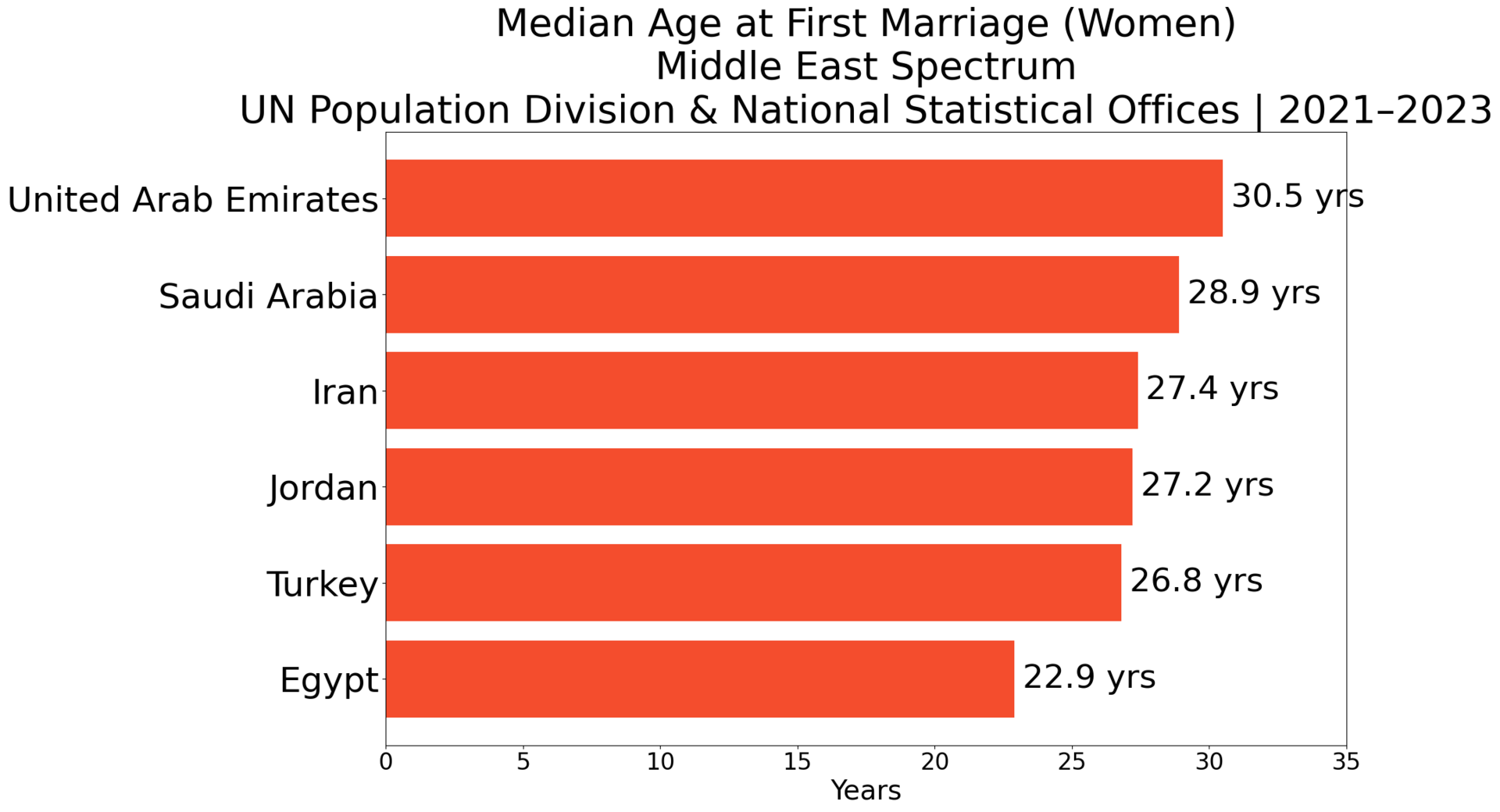
Marriage remains culturally central across much of the Middle East—but change is emerging.
In Iran and Turkey, the average age at first marriage has risen significantly over the past two decades. Economic strain and housing costs delay family formation.
In Gulf countries, high wedding expenses can discourage early marriage.
Childbearing remains closely tied to marriage norms, so any decline carries substantial social consequences.
📱 Subtle shift: Several countries have introduced culturally compliant matchmaking apps—a digital adaptation of an ancient institution.
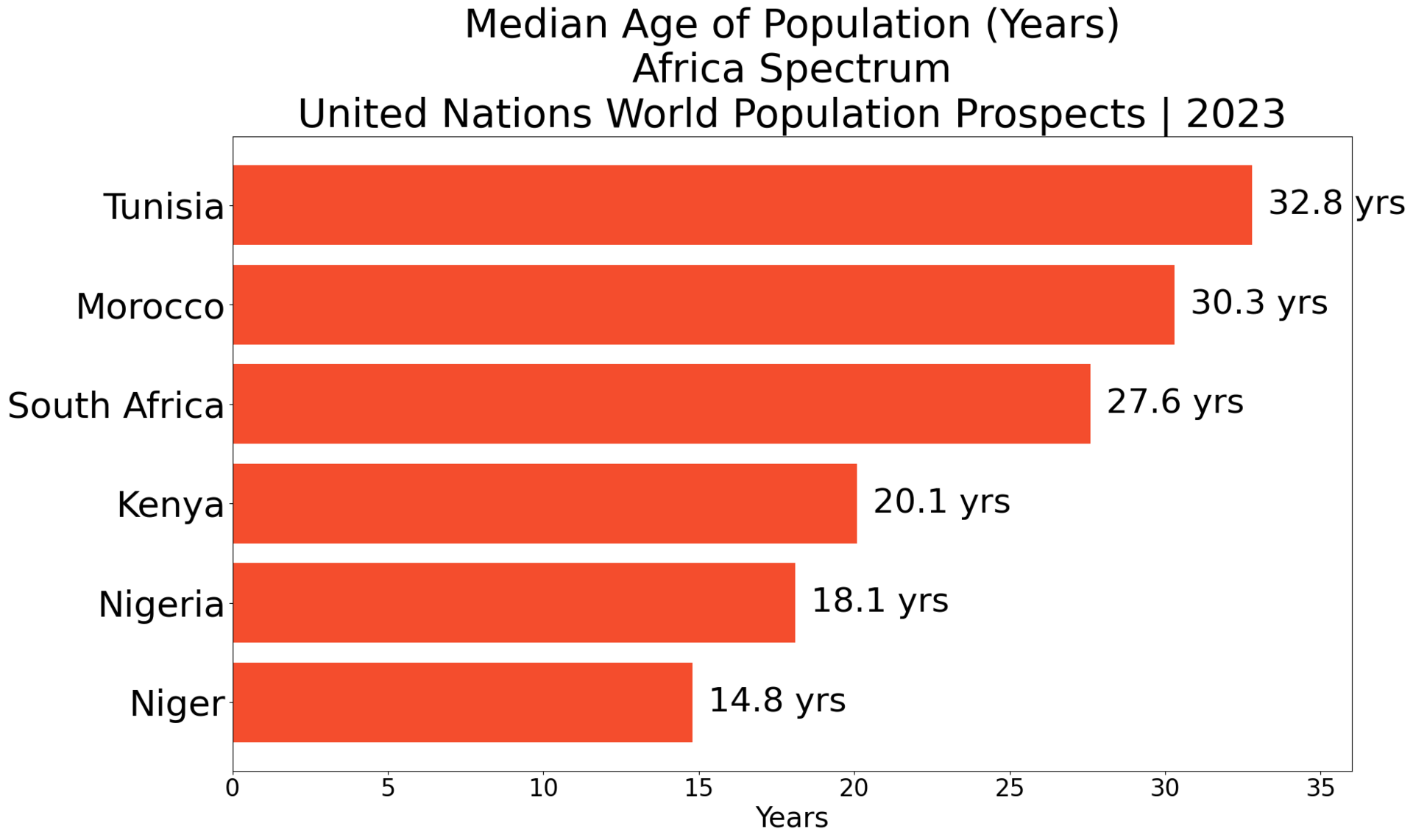
Sub-Saharan Africa remains the world’s youngest region, and marriage is still widespread—but evolution is visible.
South Africa has seen a sharp drop in marriage rates over the past two decades, alongside rising cohabitation. Nigeria and Kenya show slower change, but urban centers reflect later marriages and growing independence among women.
Unlike aging Europe or East Asia, Africa’s demographic momentum remains strong.
🌍 Forward-looking insight: By 2050, one in four people on Earth will live in Africa. If marriage norms shift there as they have elsewhere, the global family structure could transform within a single generation.
Marriage isn’t just cultural — it’s economic.
When it declines, fertility falls, populations age, housing shifts, and pension systems strain.
For anyone planning retirement or long-term investments, family stability isn’t sociology — it’s demographic risk management.
The world isn’t abandoning partnership. It’s redefining it.
And where that redefinition leads will shape the decades ahead.
Warm regards,
Shane Fulmer
Founder, WorldPopulationReview.com
P.S. Want to sponsor this newsletter? Reach 137,000+ global-minded readers — click here!