- World Population Review Newsletter
- Posts
- The Price of 'I Do': Where Weddings Cost a Fortune
The Price of 'I Do': Where Weddings Cost a Fortune
Cultural traditions driving massive economic impact—country by country.

Philip Saparov
November 29, 2025
In partnership with

Greetings, curious mind of meaning and money!
Weddings aren’t just about vows and veils—they’re billion-dollar reflections of culture, class, and identity.
This week, we reveal where love comes with the heaviest price tag—and where couples tie the knot for surprisingly little. From $100,000 spectacles to modest civil ceremonies, wedding costs tell a deeper story about how societies celebrate, spend, and signal status.
Let’s dive into the global price of “I do.”
The daily health habit you’ll actually stick with…

This time of year, it’s SO hard to stay in control of your health.
Holiday travel (and meals!), big family gatherings, dark and cold days, it’s easy to skip that workout, sleep in later than you should, or have just one more cookie.
That’s why you need a daily health habit that’s easy to stick with.
Meet AG1: With just one quick scoop every morning, you’ll get over 75 ingredients that help support your immune health, gut health, energy, and close nutrient gaps in your diet.
Right now is the best time to get started - with every new subscription, they are giving away $126 in free gifts for the holidays.
Give AG1 a try today and take control of your health this holiday season.
In India, weddings are a full-scale production—blending deep tradition with spectacular pageantry. It’s not uncommon for families to spend 20% of their lifetime earnings on a single wedding.
The average Indian wedding cost is around $15,000, but for many, expenses soar into six or seven figures. Multi-day ceremonies, gold jewelry, designer clothing, and enormous guest lists (500+ people is normal) fuel the industry.
Weddings here are not just personal—they're a $50 billion sector, employing millions in catering, hospitality, and fashion.
🔍 Unexpected insight: Indian weddings contribute nearly 1.5% of the nation’s GDP, rivaling some entire industries.

American weddings are the second most expensive globally, averaging $30,000, with wide variance based on location. In states like New York and Massachusetts, that figure can top $46,000.
Venue costs dominate the budget, followed by photography, entertainment, and attire. The rise of “Pinterest-perfect” and “Instagrammable” weddings continues to inflate expectations—and prices.
At the same time, elopements and “micro weddings” are rising as couples push back against the pressure to overspend.
💡 Noteworthy stat: About 28% of U.S. couples go into debt for their wedding—often at the expense of homeownership or investment goals.
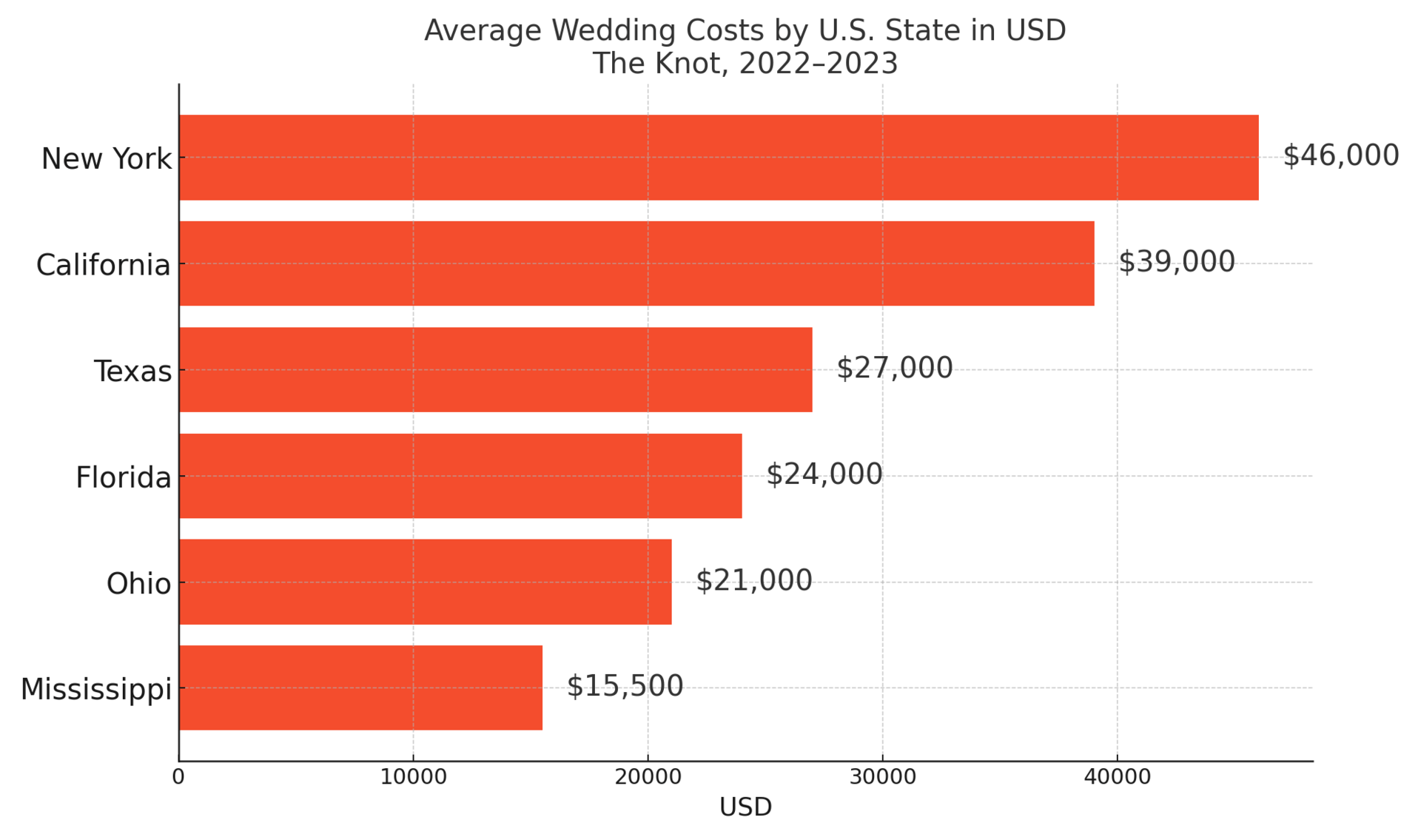
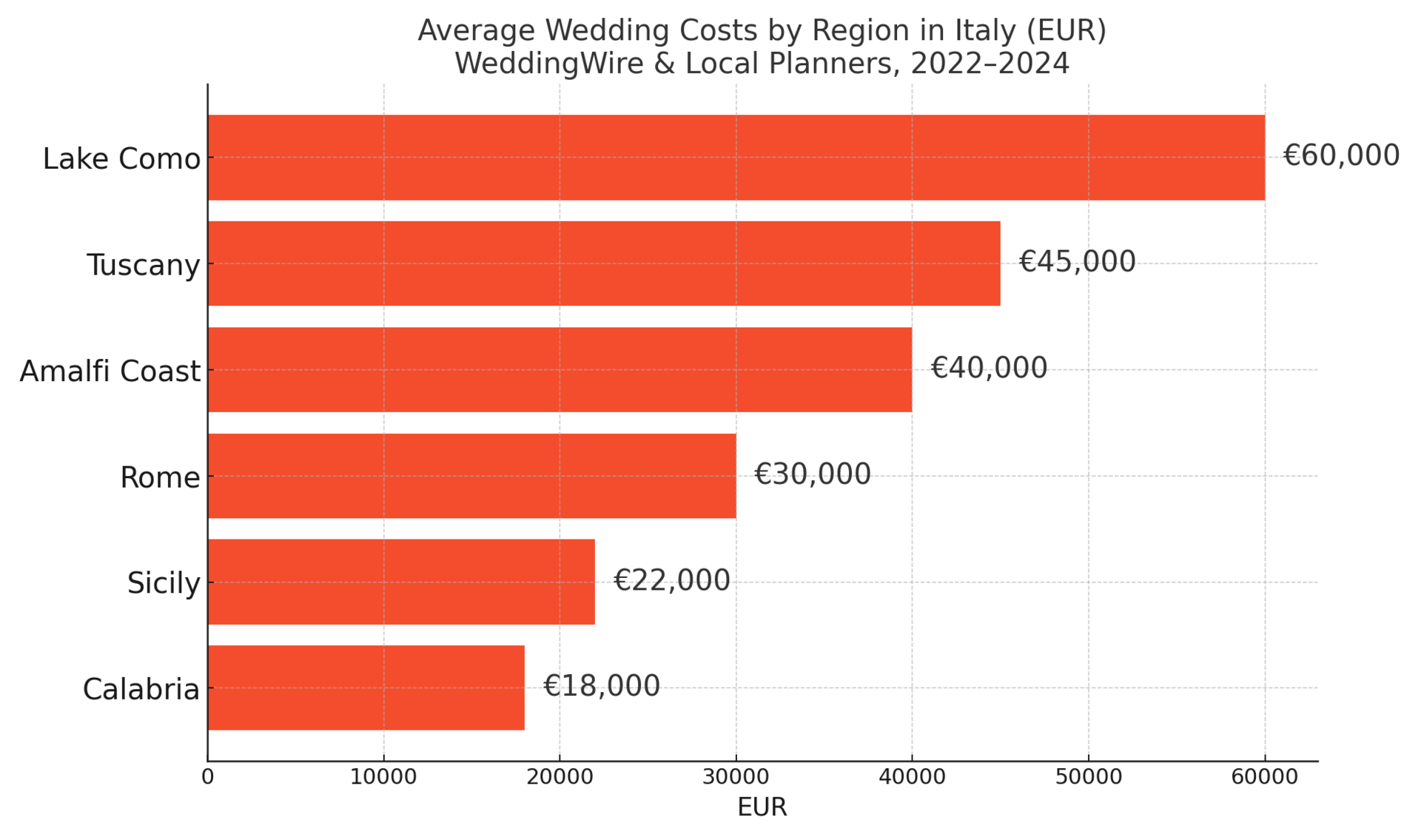
Italy blends timeless beauty with luxurious celebration. While the average wedding costs €25,000, ceremonies in dream locations like Tuscany or Lake Como often cross €50,000.
Traditional elements—like multi-course banquets, regional wines, and live bands—are often paired with spectacular settings, creating once-in-a-lifetime experiences that double as family reunions and tourism.
📌 Cultural gem: In some areas, guests still pin money onto the bride’s dress—an old-world gesture that helps offset wedding costs.
Tackle your credit card debt by paying 0% intro APR until 2027

Pay introductory no interest until 2027 with some of the best hand-picked credit cards this year. They are perfect for anyone looking to pay down their debt, and not add to it!
Click here to see what all of the hype is about.
Japanese weddings are a study in elegance and ritual. The average cost is around ¥3.3 million (about $22,000–25,000), often split between a Shinto ceremony and a hotel reception.
Guest lists are smaller, but expectations are high: from tailored invitations to multicourse kaiseki meals, every moment is polished and symbolic.
🎎 Interesting twist: Guests gift money in goshugi-bukuro envelopes—often ¥30,000 (~$200)—a formal tradition that helps offset the hosts’ expenses.

Weddings in Nigeria are rich in symbolism and celebration. Many couples hold two full-scale events: a traditional ceremony with tribal customs and a Western-style white wedding.
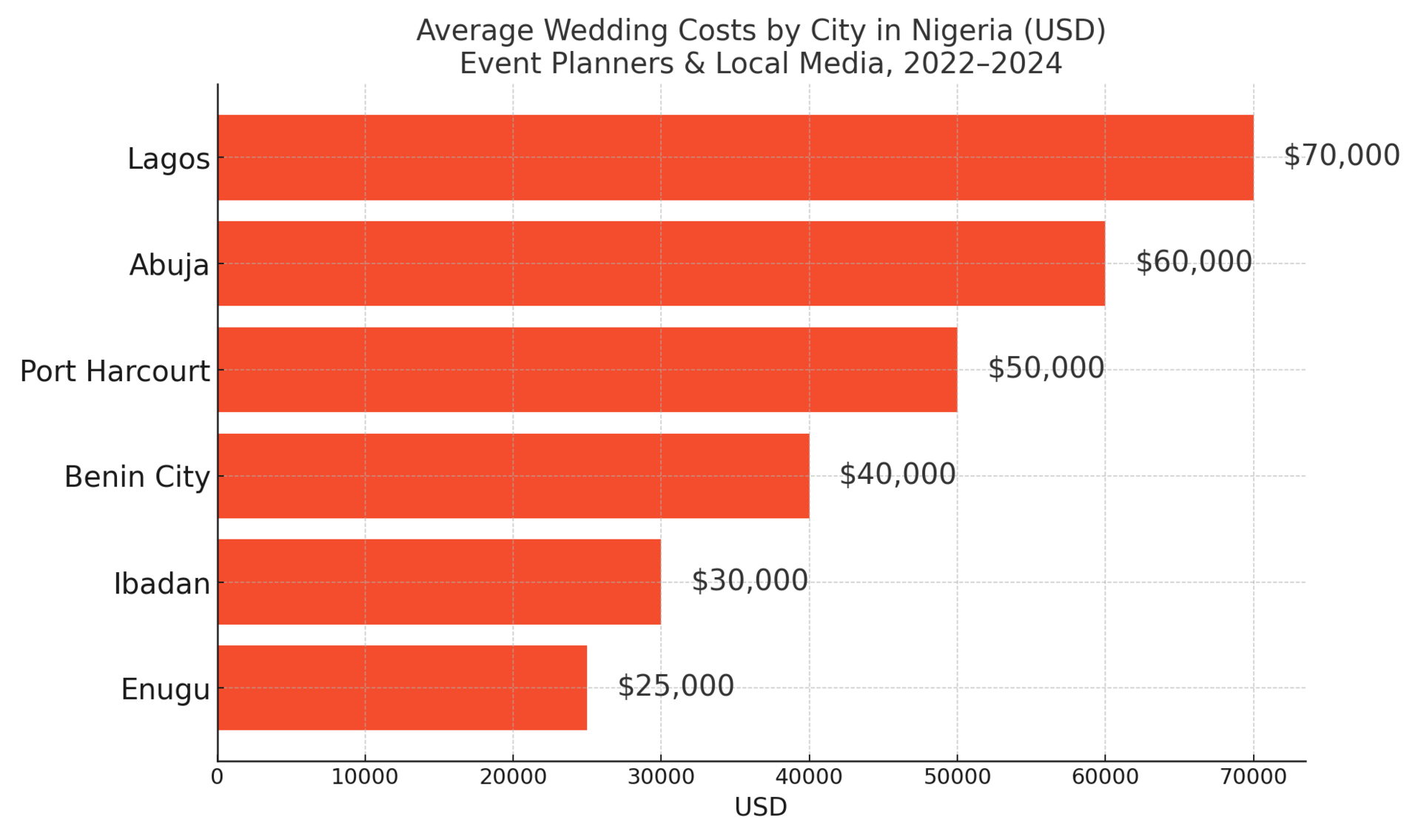
Affluent families often spend $50,000–100,000 or more. Music, fashion, food, and venue décor are central to the experience, which is often filmed and streamed to thousands.
The country’s vibrant wedding scene has grown into a $3+ billion industry, fueling fashion designers, event planners, musicians, and content creators.
🎤 Surprising trend: Wedding reality shows—featuring real Nigerian couples—now draw audiences across the continent and diaspora.
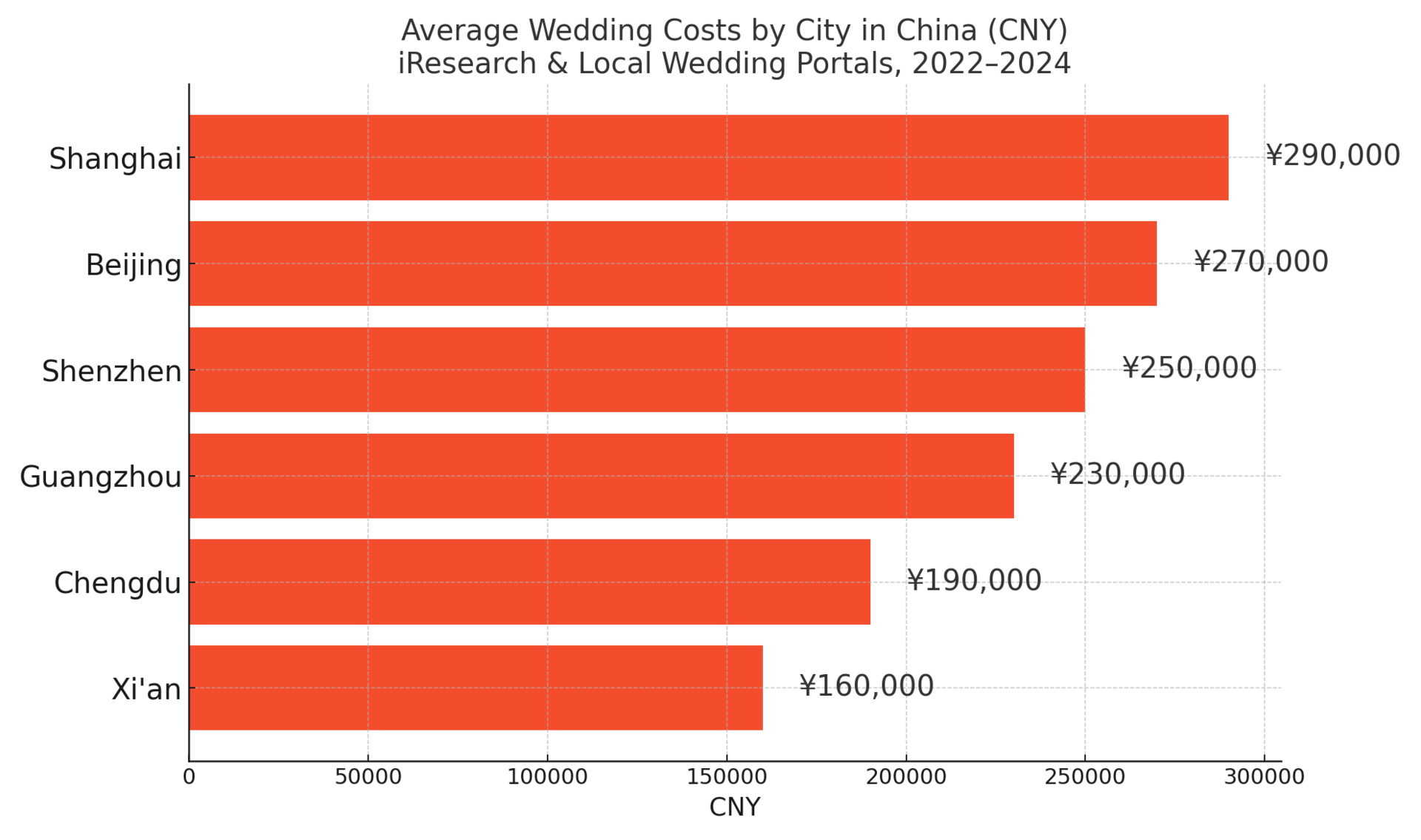
Modern Chinese weddings reflect rising prosperity and social status. Average costs have jumped to ¥200,000 (~$27,000)—a tenfold increase over the past 20 years.
Big-city weddings often include luxury cars, custom dresses, five-star hotel receptions, and elaborate photography sessions (sometimes abroad).
Dowry customs like the caili—gifts from the groom’s family to the bride’s—are still prevalent and expensive.
💰 Did you know? In some regions, dowries exceed $30,000, a prerequisite for marriage and a growing pressure point for young men.
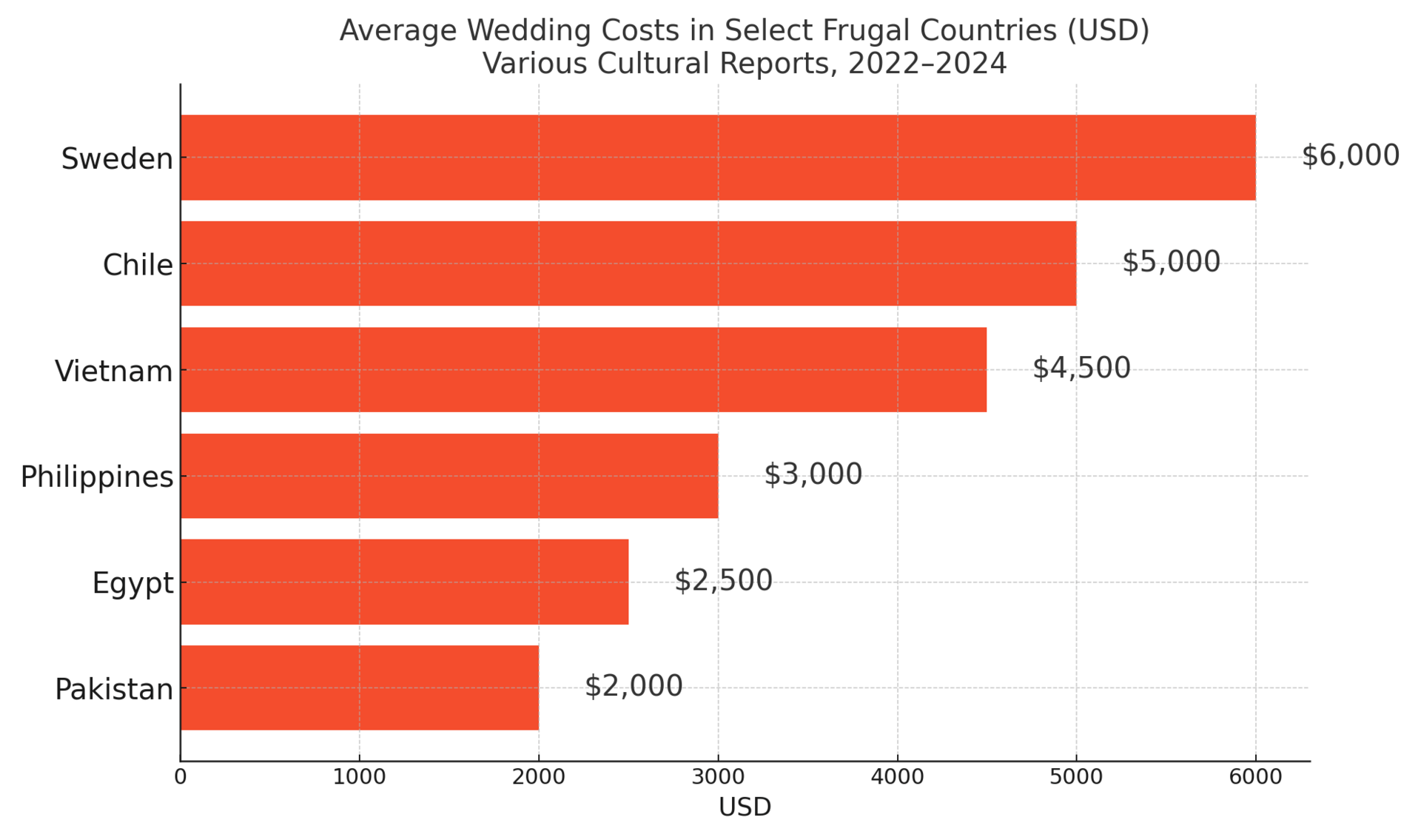
While many countries go big, others opt for simplicity without sacrificing meaning. Here are three standouts:
🇨🇱 Chile: Modest weddings averaging $4,000–5,000 are the norm. Many are held in homes or community centers with homemade meals.
🇵🇭 Philippines: Average spending is under $3,000. Churches often waive fees, and wedding items are reused or handed down.
🇸🇪 Sweden: True to its minimalist ethos, Sweden’s average wedding cost is about $6,000, often held in nature or civic spaces.
🌱 Surprising policy: In Sweden, civil weddings are offered for free—removing cost and religion as barriers to marriage.
From $5,000 village vows to $500,000 villa extravaganzas, weddings say more than “I do.” They reveal what cultures truly value—family, status, tradition, and money.
Some nations spend big to show love. Others spend small to keep it real. Either way, the global wedding economy is a mirror of shifting priorities and cultural identity.
So whether you're planning, investing, or simply observing—this isn’t just about weddings. It’s about how the world celebrates what matters most.
Warm regards,
Shane Fulmer
Founder, WorldPopulationReview.com
P.S. Want to sponsor this newsletter? Reach 139,000+ global-minded readers — click here!