- World Population Review Newsletter
- Posts
- The Strange Reason the World Won’t Go to Bed
The Strange Reason the World Won’t Go to Bed
From screens to cities, modern life is pushing sleep later worldwide.

Philip Saparov
April 21, 2026
Sponsored by

Greetings, inquisitive mind of global rhythms!
Nights are getting longer, and not in a good way. Around the world, people are going to bed later, sleeping less, and waking up more drained.
Sleep shapes your health, your energy, even where you might want to live or retire. And quietly, the rules are changing.
In this edition, we uncover how the world’s sleep patterns are drifting—and what that means for how you live, work, and plan ahead.
Let’s dive in.
Making Hydraulics Obsolete

Every excavator, forklift, and crane on the planet runs on hydraulic fluid. It leaks. It fails. It burns through 60% of the energy you put into it. That's been true for a hundred years.
RISE Robotics built Beltdraulics™ to fix all of that. Their patented actuator swaps out hydraulic cylinders for a fluid-free electric system that runs up to 3X faster and cuts operating costs by 50%. No oil. Full digital control. Built-in sensors that hydraulic systems can't touch.
The U.S. military is already a customer. MIT-founded. $9.3M in revenue. 20+ patents protecting the core technology. Dylan Jovine of ‘Behind the Markets’ said RISE “has all the little ingredients to be one of those really big winners.” His readers have been backing it ever since.
You can invest today through the community round on Wefunder.
For most of human history, sleep followed the sun. Today, it follows the screen.
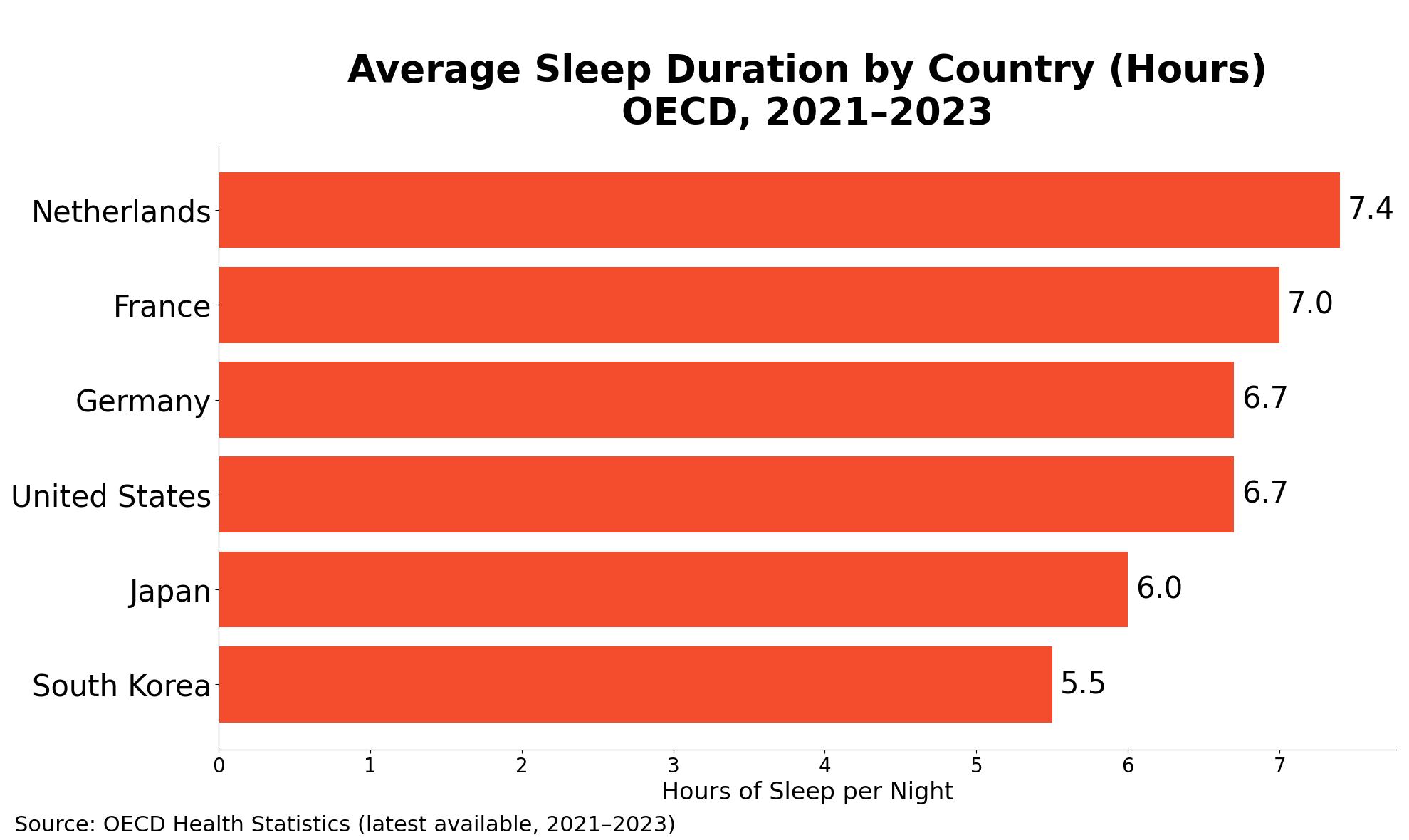
Across developed nations, average bedtimes have shifted 1–2 hours later over the past few decades. The OECD and national health surveys show consistent trends: people are going to bed later but not waking proportionally later—shrinking total sleep time.
🇺🇸 In the United States, adults now average just under 7 hours of sleep, down from over 8 hours in the mid-20th century.
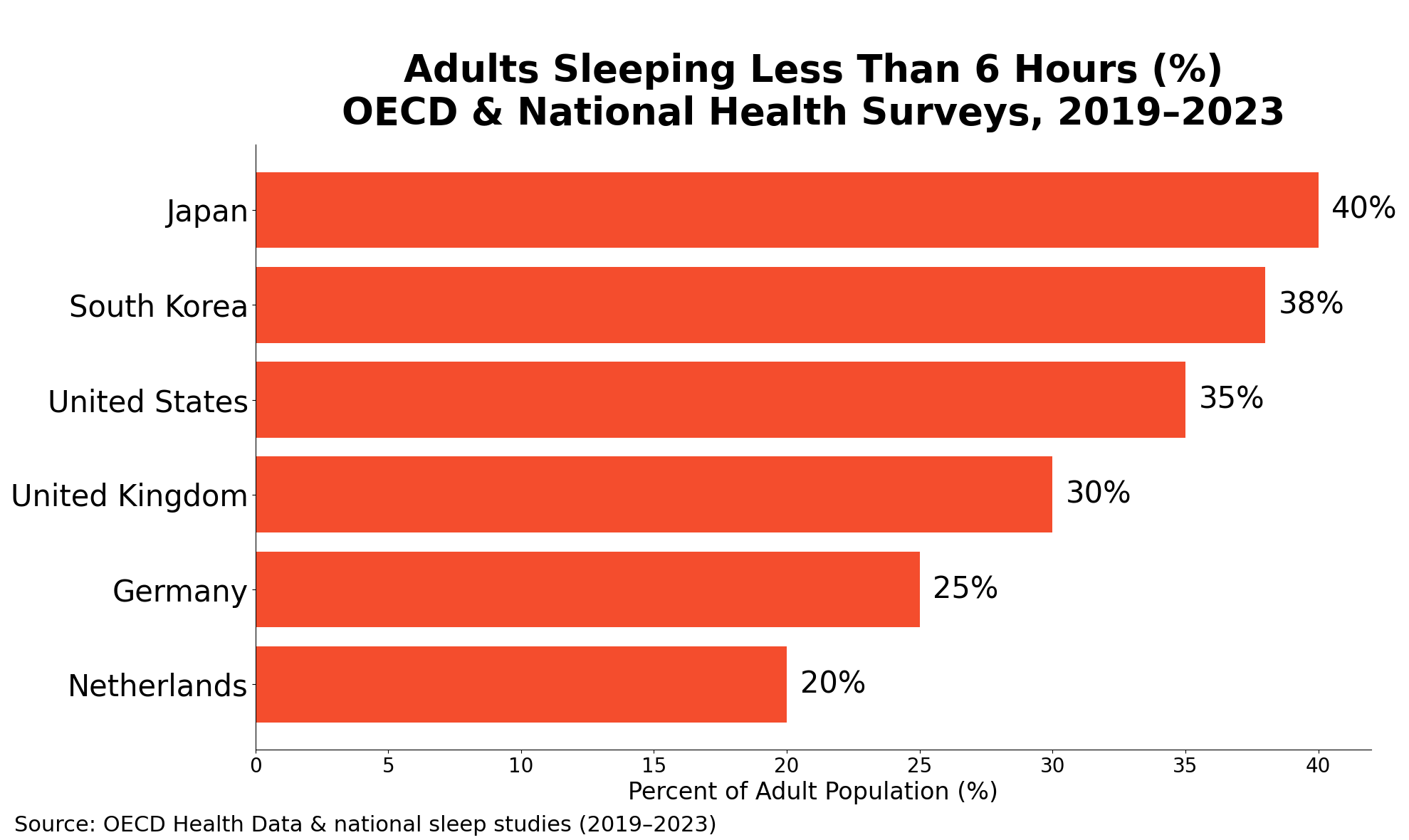
🇯🇵 Japan consistently ranks among the shortest sleepers globally, with many adults averaging closer to 6 hours.
🇫🇷 France, once known for long sleep durations, has seen steady declines as digital habits expand.
Putting It Into Perspective: Less sleep doesn’t just mean fatigue—it’s linked to higher risks of heart disease, cognitive decline, and reduced longevity.
🔎 Curious insight: A 2023 global survey found that over 60% of adults say they go to bed later than they intend—suggesting modern life is overriding biological rhythms.
Urbanization has fundamentally reshaped when we rest.
In major global cities, nightlife, work schedules, and 24-hour services push activity deep into the night. Artificial light and constant connectivity blur the line between day and night.
🌆 New York operates on a near 24/7 cycle, with late-night work and entertainment driving bedtimes past midnight for many professionals.
🌃 Seoul is famous for its “midnight culture,” where restaurants, gyms, and cafés stay open well into the early morning hours.
🌉 Dubai’s heat-driven lifestyle shifts activity to nighttime, especially during summer months.
Putting It Into Perspective: For those considering relocation, urban sleep patterns matter. Cities with intense late-night cultures often come with higher stress, noise, and reduced sleep quality.
🔎 Unexpected detail: Satellite data shows that global nighttime light exposure has increased by over 50% since the 1990s—literally making the planet brighter at night.
If one force defines modern sleep timing, it’s the glow of screens.
Smartphones, tablets, and TVs emit blue light that suppresses melatonin—the hormone that signals sleep. The result? Delayed sleep onset, even when you feel tired.
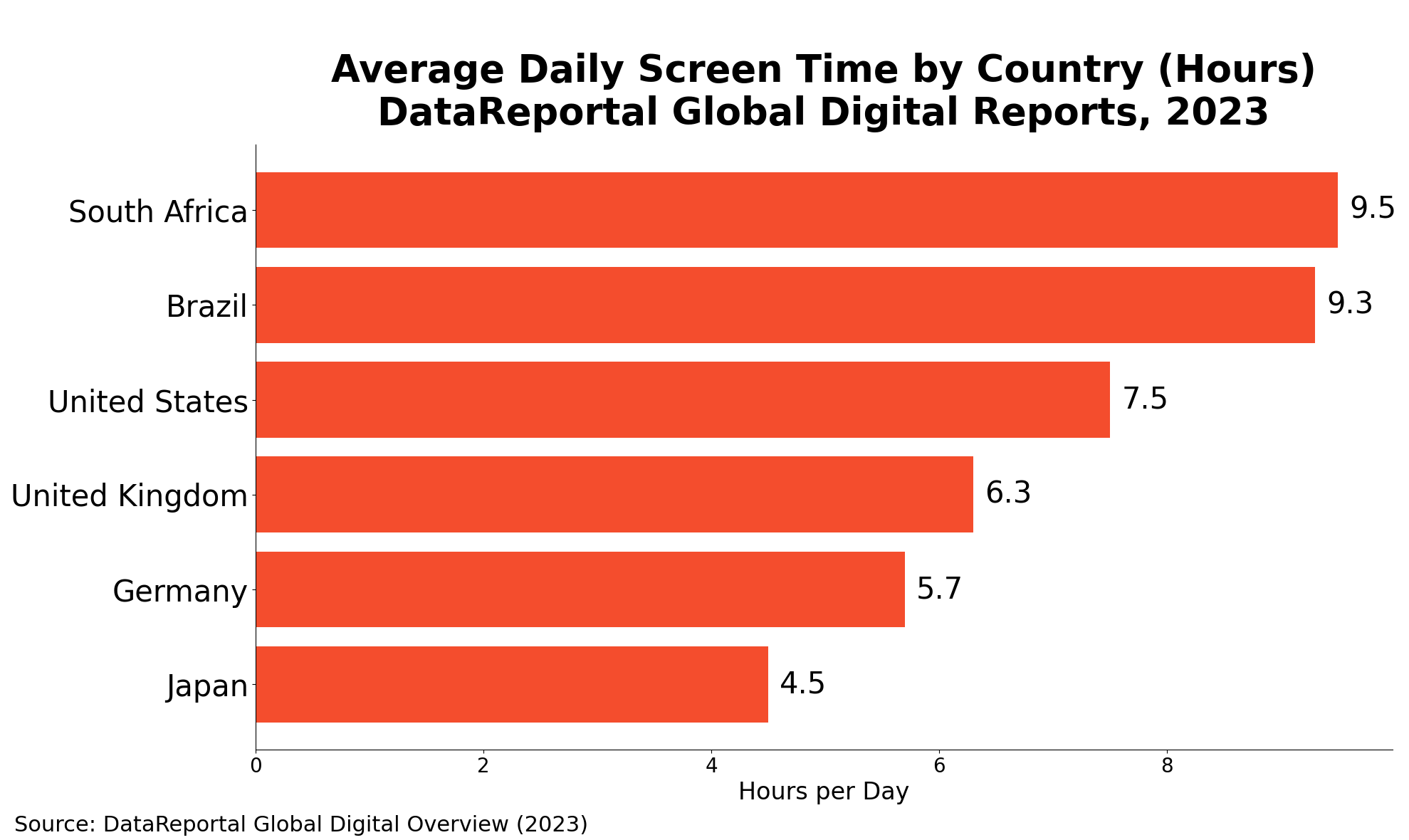
📱 In the U.S. and U.K., over 80% of adults report using screens within an hour of bedtime.
💻 In South Korea, one of the most connected countries, late-night gaming and streaming are major contributors to delayed sleep.
📊 Globally, younger generations are the most affected, with Gen Z reporting the latest average bedtimes.
Putting It Into Perspective: Reducing screen exposure before bed is one of the simplest ways to improve sleep quality—yet also one of the hardest habits to change.
🔎 Did you know? Just two hours of evening screen use can delay melatonin release by up to 90 minutes.
Private Credit on Your Terms

Percent's secondary marketplace lets accredited investors buy into eligible deals or indicate interest in selling existing positions. Secondary market access in private credit is still rare. 16.72% current weighted average coupon. Terms start at 3 months. New investors can receive up to $500 credit.
Alternative investments are speculative. Secondary liquidity not guaranteed. Past performance not indicative. Terms apply.
The modern economy doesn’t sleep—and increasingly, neither do workers.
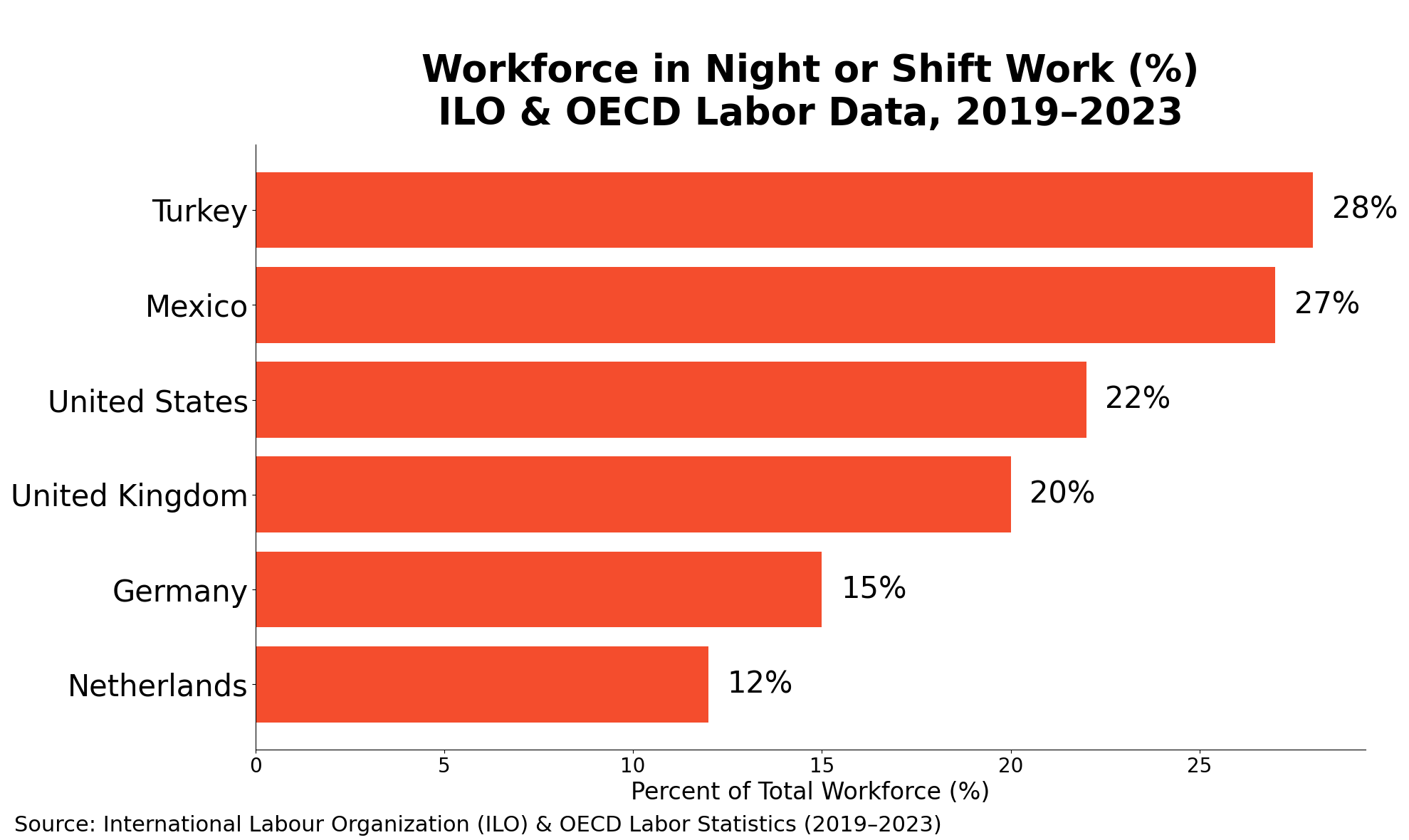
Globalization, remote work, and 24-hour markets have expanded non-traditional work hours. Millions now work evenings, nights, or irregular schedules.
🌍 India and the Philippines host large outsourcing industries aligned with Western time zones, pushing workers into overnight schedules.
🇩🇪 Germany, while more regulated, has seen growth in flexible work hours that blur boundaries between work and rest.
🇺🇸 The gig economy in the U.S. encourages late-night productivity, from rideshare driving to freelance work.
Putting It Into Perspective: Shift work is linked to higher rates of metabolic disorders, sleep disruption, and long-term health risks—critical factors for career and retirement planning.
🔎 Striking statistic: The World Health Organization classifies night shift work as a “probable carcinogen” due to circadian disruption.
Not all late nights are created equal—culture plays a powerful role.
Some societies naturally lean toward later schedules, while others maintain earlier routines rooted in tradition.
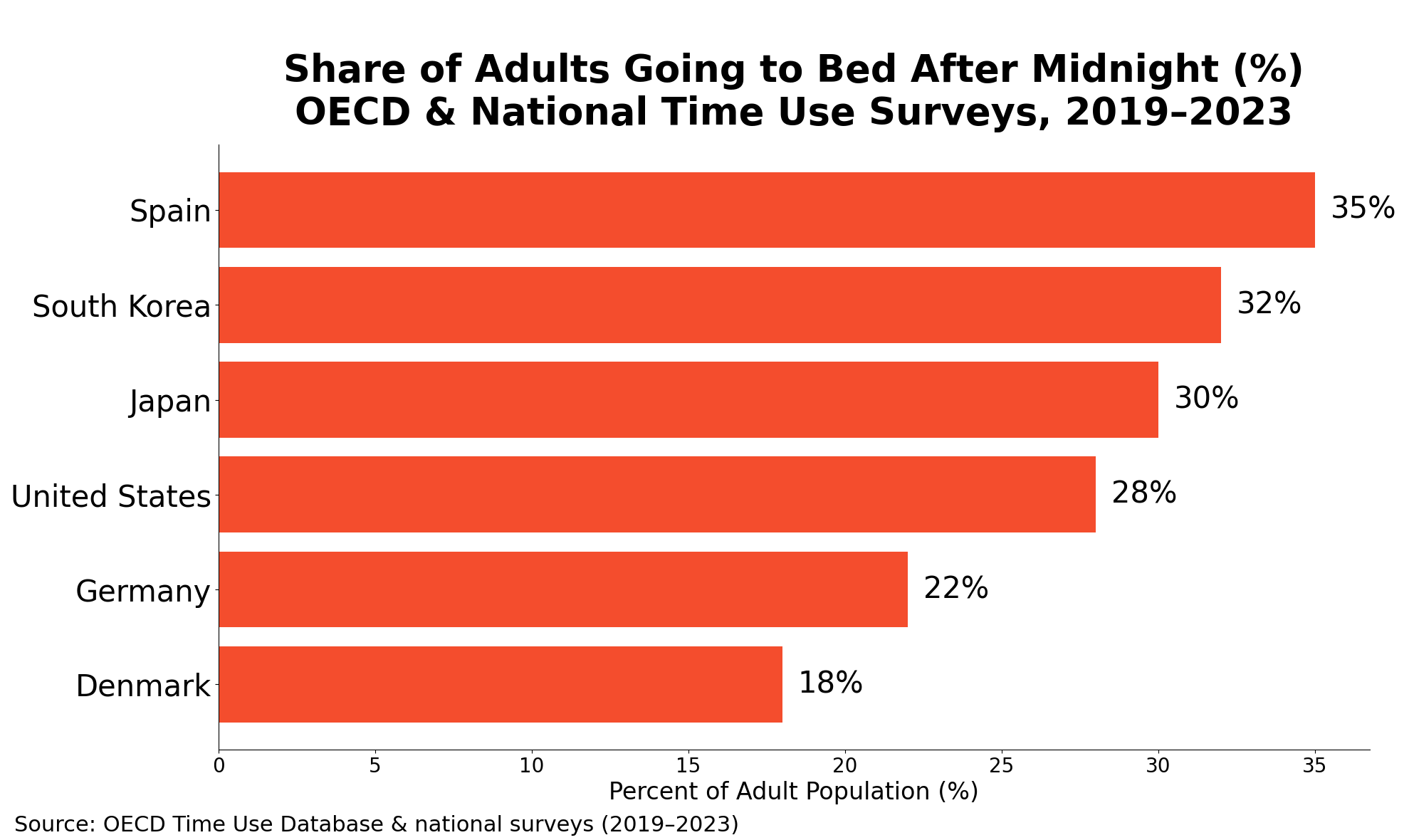
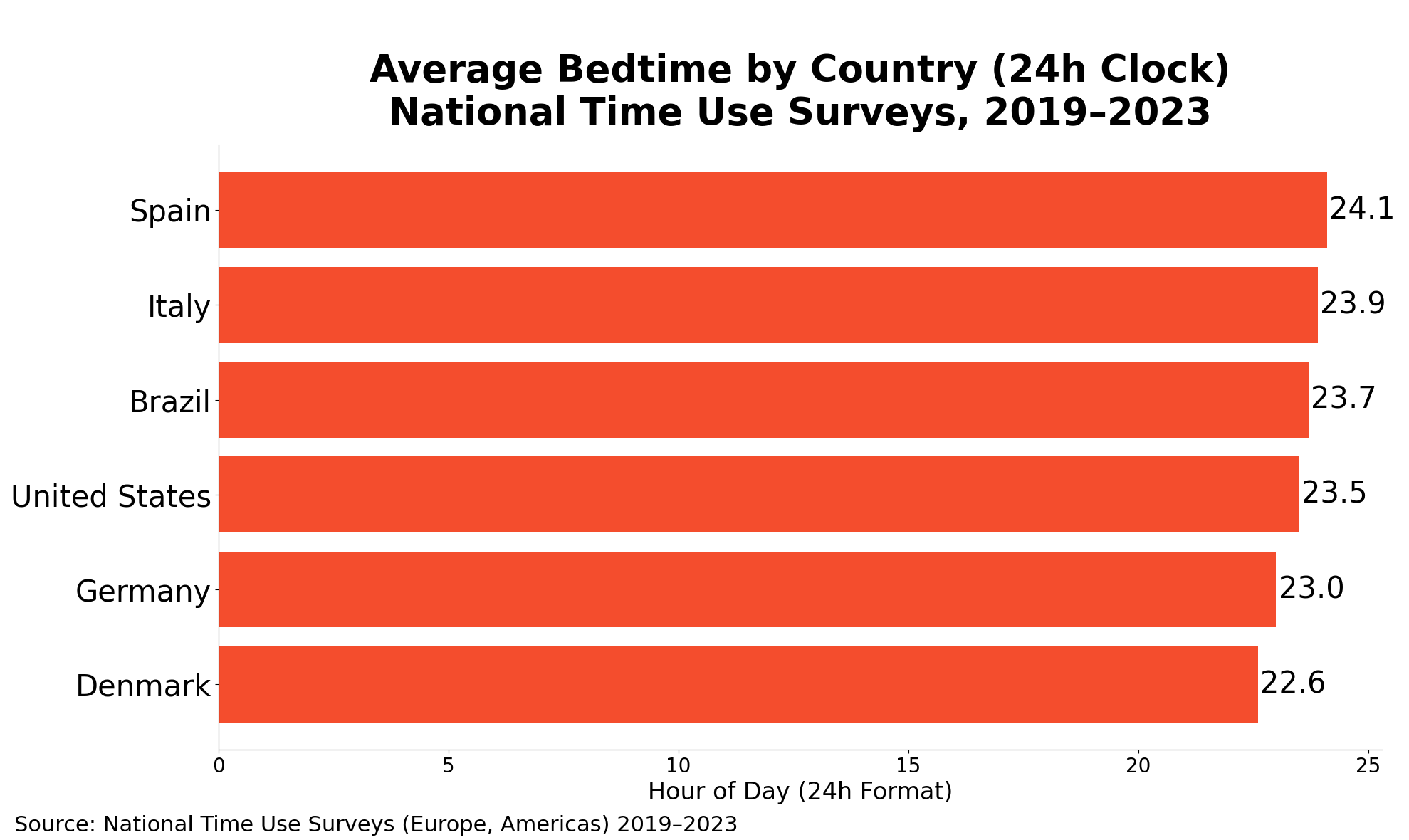
🇪🇸 Spain famously runs late—dinners often start after 9 PM, with bedtimes following well past midnight.
🇮🇹 Italy shares similar patterns, especially in southern regions where evening social life thrives.
🇩🇰 Denmark, by contrast, emphasizes early routines and structured work-life balance, leading to earlier sleep times.
Putting It Into Perspective: Cultural alignment matters. Moving to a country with different daily rhythms can affect everything from social life to health habits.
🔎 Fascinating tidbit: Spain’s late schedule partially stems from a time zone shift during World War II—placing solar noon far from clock noon.
The shift toward later bedtimes isn’t just a lifestyle trend—it’s a public health issue.
Chronic sleep deprivation is now linked to a wide range of conditions, from obesity to Alzheimer’s disease. Even modest reductions in sleep can have cumulative effects.
🧠 Studies show that sleeping less than 6 hours regularly increases dementia risk.
❤️ Short sleep duration is associated with a 20–30% higher risk of cardiovascular disease.
⚖️ Hormonal disruption from poor sleep affects appetite, often leading to weight gain.
Putting It Into Perspective: For those planning long-term health and retirement, sleep may be as important as diet or exercise—yet often overlooked.
🔎 Eye-opening fact: After just one week of poor sleep, the body shows measurable changes in over 700 genes related to immunity and metabolism.
As awareness grows, so does the effort to reclaim healthier sleep patterns.
Governments, companies, and individuals are beginning to respond to the global sleep deficit with new strategies and technologies.
🌙 “Sleep tourism” is emerging, with hotels in Switzerland and Scandinavia offering optimized environments for deep rest.
🏢 Companies in Japan and the U.S. are experimenting with nap pods and flexible schedules.
📊 Wearable devices now track sleep quality, helping individuals make data-driven improvements.
Putting It Into Perspective: The future may not be about sleeping more—but sleeping smarter, with better alignment to natural rhythms.
🔎 Forward-looking insight: The global sleep economy—from tech to wellness—is projected to exceed $500 billion by 2030.

The world is staying up later—but at a cost. Sleep is quickly becoming one of the most important drivers of health and longevity.
Where you live and how you live both shape it.
Tonight, you might choose differently.
Warm regards,
Shane Fulmer
Founder, WorldPopulationReview.com
P.S. Want to sponsor this newsletter? Reach 141,000+ global-minded readers — click here!