- World Population Review Newsletter
- Posts
- The Truth About Degrees That Pay Off Today
The Truth About Degrees That Pay Off Today
Global data reveals which education paths pay—and which don’t.

Philip Saparov
April 04, 2026
Sponsored by

Greetings, inquisitive mind of world events!
Education is still sold as the safest investment—but that promise is no longer guaranteed. Today, what you earn from a degree depends heavily on where you study, what you study, and how the world values those skills.
If you’re thinking about your children, your grandchildren, or even your own next chapter, the real question isn’t whether to pursue higher education—it’s which paths actually pay off.
In this edition, we break down where education delivers real returns—and where it quietly falls short.
Let’s explore where knowledge truly turns into income.
Your Retirement Savings Need to Outlast You

Most retirement plans underestimate two things: how long your savings need to last, and how quietly inflation erodes them along the way.
The 15-Minute Retirement Plan helps you close both gaps with practical guidance on longevity risk, purchasing power, and building a financial plan that doesn't run out before you do.
If you have $1,000,000 or more saved, download your free guide to start.
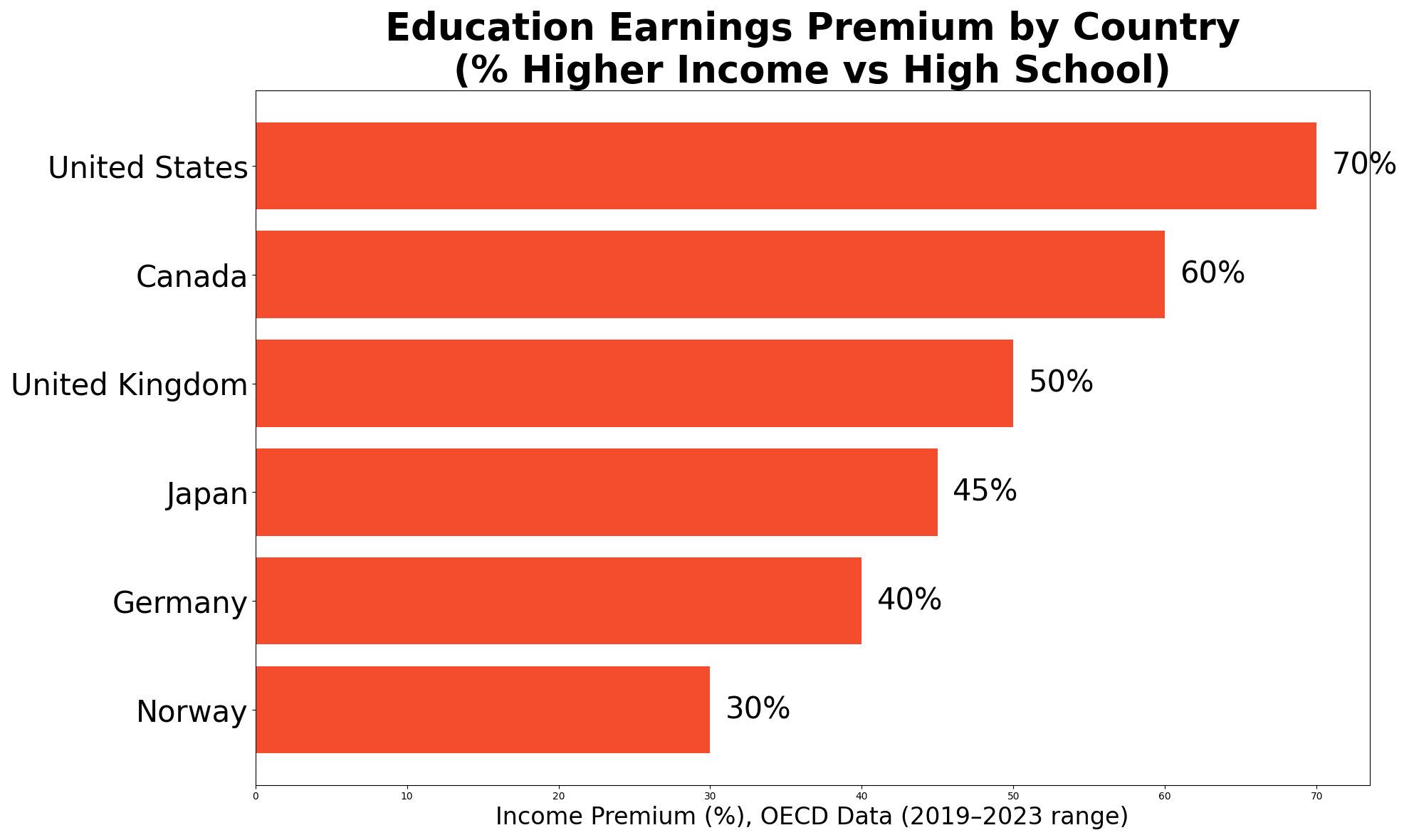
For decades, higher education has promised a simple outcome: earn more. But globally, that “education premium” varies dramatically depending on geography.
🇺🇸 United States still offers one of the strongest earnings boosts. College graduates earn roughly 65–75% more than those with only a high school diploma, though student debt can offset gains.
🇸🇬 Singapore combines strong wages with targeted education. Degrees in finance, engineering, and tech often lead directly to high-paying roles in a tightly aligned economy.
🇩🇪 Germany presents a different model. University graduates earn solid incomes—but vocational training can rival degrees in lifetime earnings, especially in skilled trades.
Putting It Into Perspective: Not all degrees are equal—but neither are national systems. Choosing where to study can be just as important as what you study.
🔎 Insight: In some OECD countries, the earnings gap between degree holders and non-degree workers has shrunk over the past decade—challenging the assumption that college always guarantees higher income.
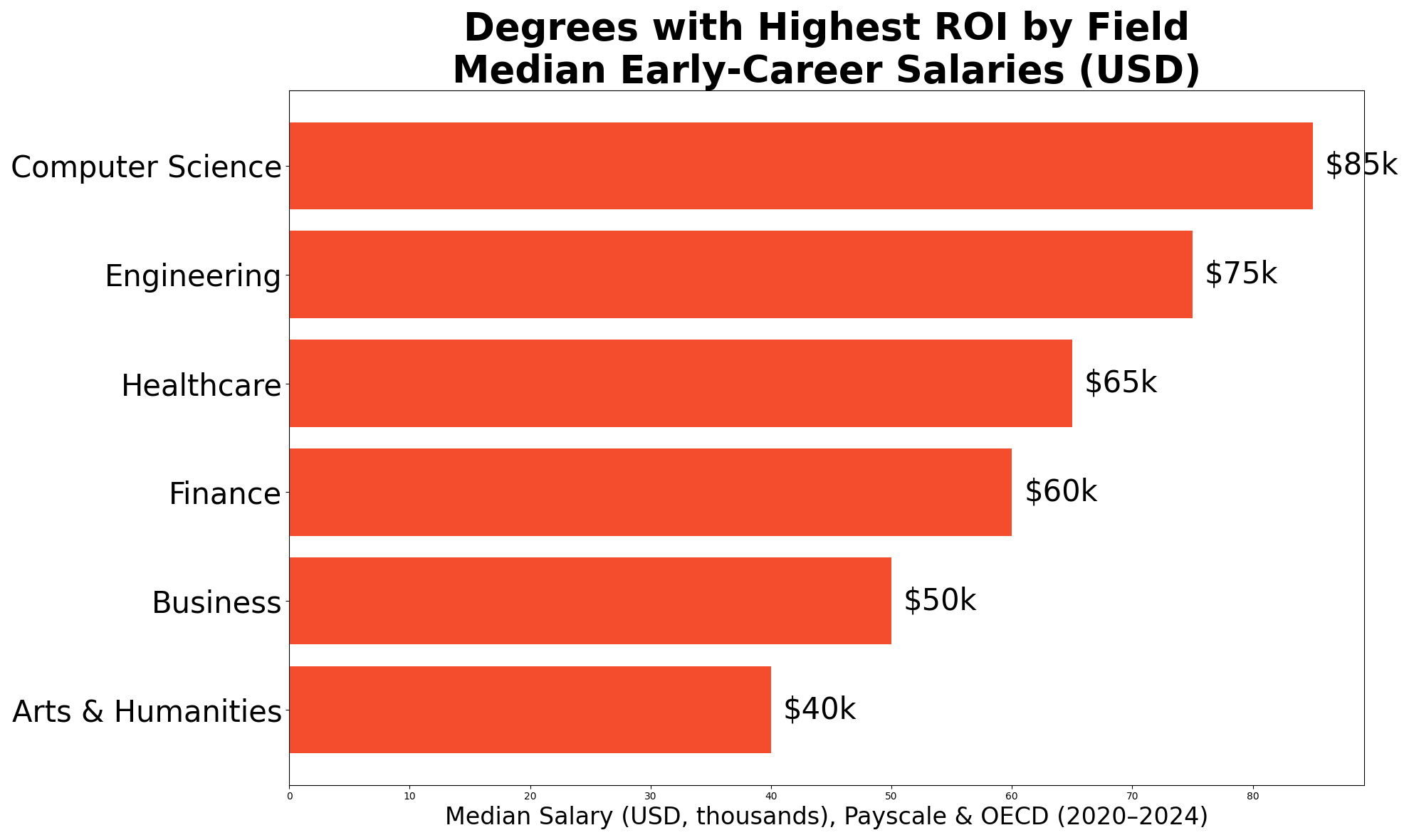
Not all education paths lead to financial upside. Some fields consistently outperform others—across borders and economic cycles.
💻 Technology (Computer Science, AI, Data Science): Graduates often see rapid salary growth, with global demand far exceeding supply.
🏥 Healthcare (Medicine, Nursing, Specialized Care): Aging populations are driving steady, long-term demand—and stable income.
⚙️ Engineering (especially electrical, mechanical, and energy): These degrees remain among the most globally transferable and consistently well-paid.
Meanwhile, degrees in arts, humanities, and some social sciences often deliver lower immediate financial returns—though they may provide value in other ways.
Putting It Into Perspective: The market increasingly rewards skills tied to measurable output—coding, diagnosing, building, optimizing.
🔎 Fascinating fact: A mid-career software engineer in the U.S. can earn more than many physicians in Europe—highlighting how geography reshapes even “high-value” professions.
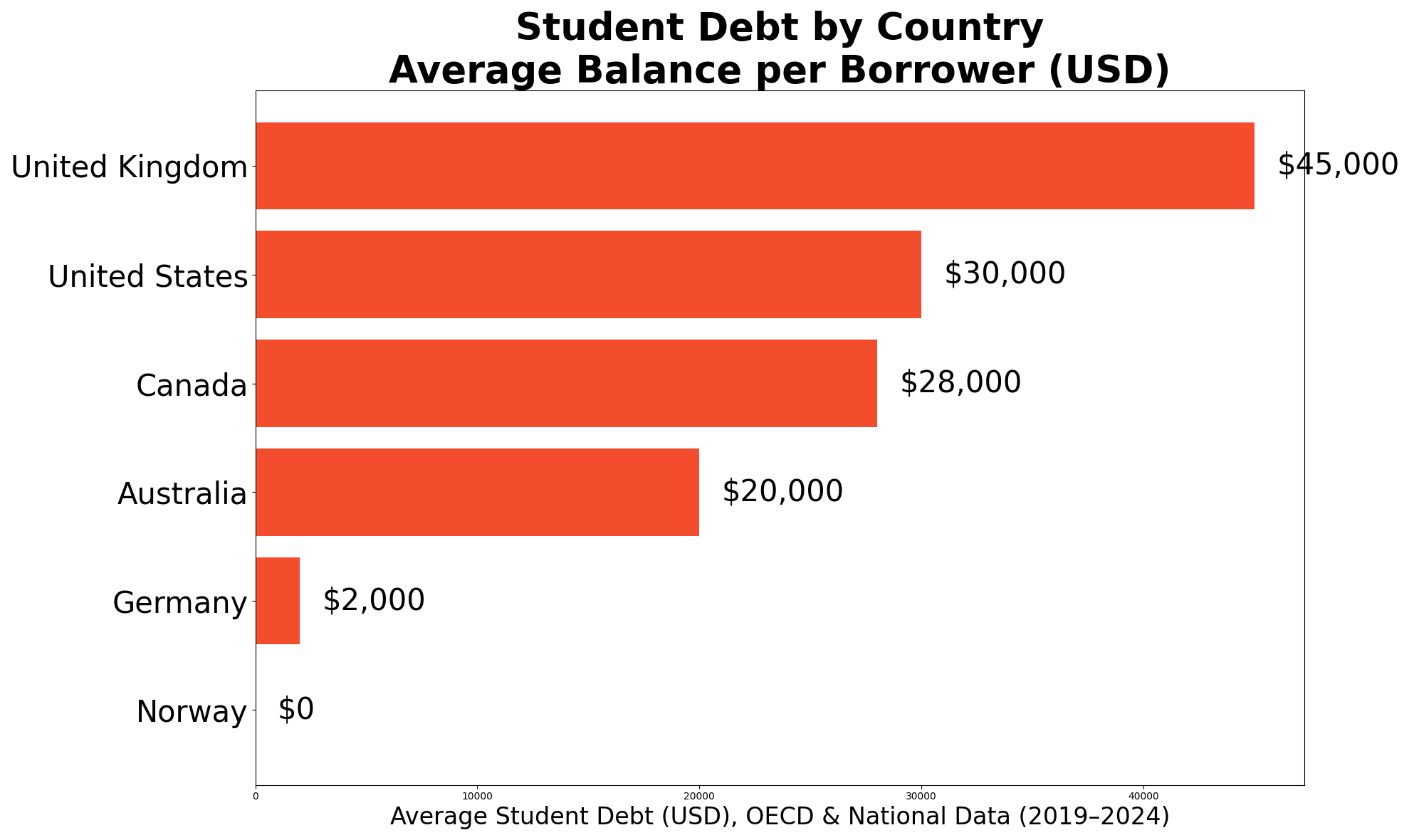
A degree’s value isn’t just about income—it’s about net return after cost. And this is where the equation becomes more complicated.
🇺🇸 United States leads in both high earnings and high student debt, with average balances exceeding $30,000 per borrower.
🇬🇧 United Kingdom operates on an income-based repayment system, easing short-term pressure but extending repayment timelines.
🇳🇴 Norway and 🇫🇮 Finland offer nearly debt-free education, dramatically improving lifetime ROI even with moderate salaries.
Putting It Into Perspective: Two identical degrees can produce entirely different financial outcomes depending on how they’re financed.
🔎 Surprising reality: In the U.S., nearly 25% of borrowers never fully repay their student loans—turning education into a long-term financial drag.
10 AI Stocks to Lead the Next Decade

AI isn’t a tech trend – it’s a full-blown, multi-trillion dollar race, and 10 companies are already pulling ahead.
These are the innovators driving real revenue, attracting institutional attention, and positioning for massive growth.
Get all 10 tickers in The 10 Best AI Stocks to Own in 2026, free today.
Employers are quietly rewriting the rules. Increasingly, what you can do matters more than what you studied.
🌐 Tech companies like Google and IBM now hire based on skills assessments rather than formal degrees for many roles.
📊 Short-term certifications (data analytics, cybersecurity, project management) often deliver faster ROI than traditional degrees.
🎓 Online platforms (Coursera, edX, bootcamps) are producing job-ready candidates in months—not years.
Putting It Into Perspective: Education is shifting from a one-time investment to a continuous, modular process.
🔎 Trend to watch: By 2030, it’s estimated that over 50% of workers will need reskilling—making lifelong learning more valuable than any single degree.
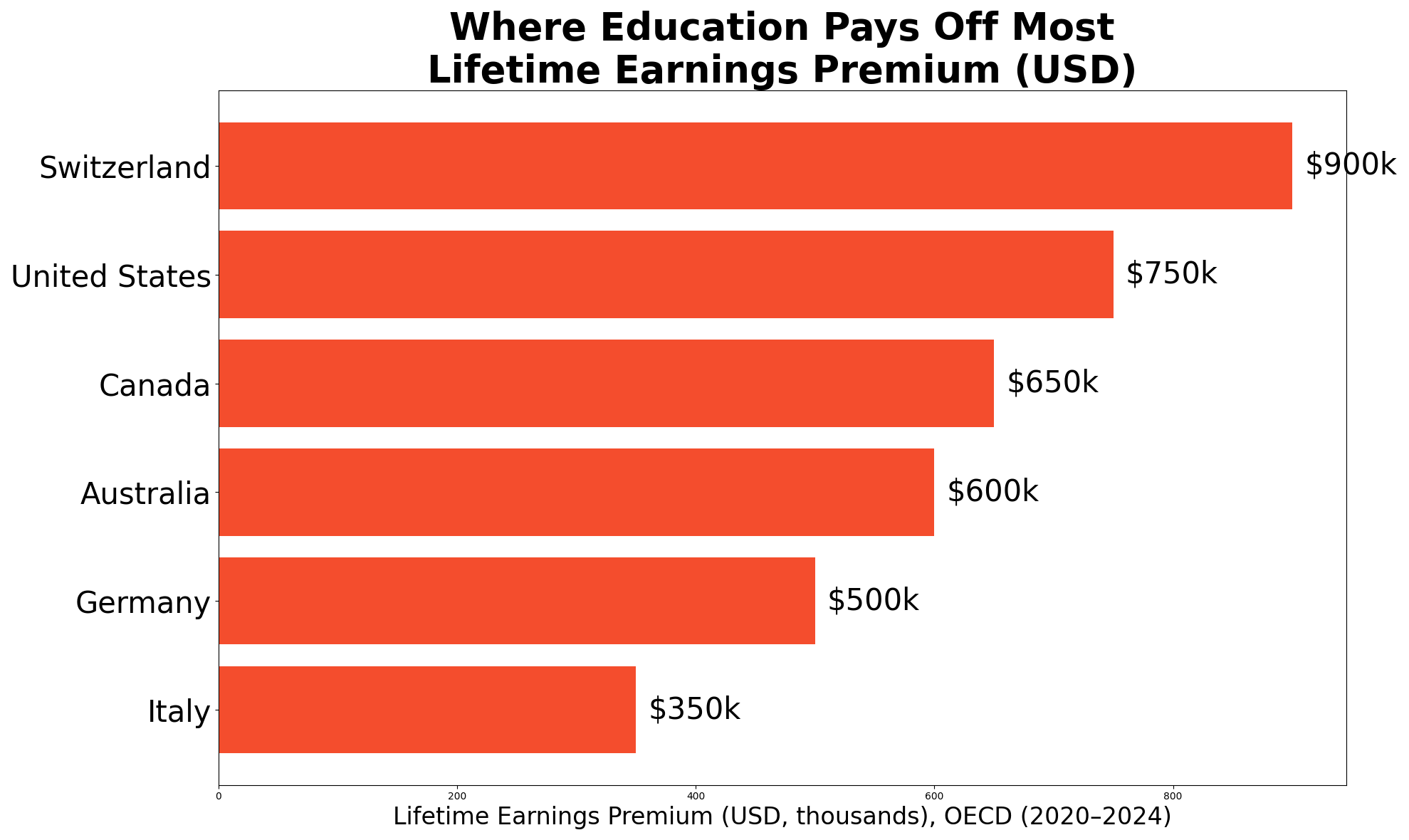
Some countries have quietly optimized the link between education and income—creating systems where graduates transition smoothly into strong careers.
🇨🇭 Switzerland consistently ranks among the best. High wages, strong apprenticeships, and low unemployment create exceptional ROI.
🇨🇦 Canada offers relatively affordable education with strong labor market outcomes, particularly for skilled immigrants and graduates.
🇦🇺 Australia combines high graduate salaries with a global education market, making it attractive for both domestic and international students.
Putting It Into Perspective: These systems succeed by aligning education closely with labor market needs—not just academic theory.
🔎 Little-known insight: Switzerland’s apprenticeship system places nearly 70% of young people into paid training tracks—often leading to high-income careers without traditional degrees.
While some fields thrive, others are seeing declining financial returns—often without much public discussion.
📚 General business degrees have become oversaturated in many markets, reducing their earning premium.
🎭 Creative arts degrees often struggle financially unless paired with entrepreneurial or technical skills.
⚖️ Law degrees, once a clear path to wealth, now face mixed outcomes in countries with oversupplied legal markets.
Putting It Into Perspective: The issue isn’t that these fields lack value—it’s that supply has outpaced demand.
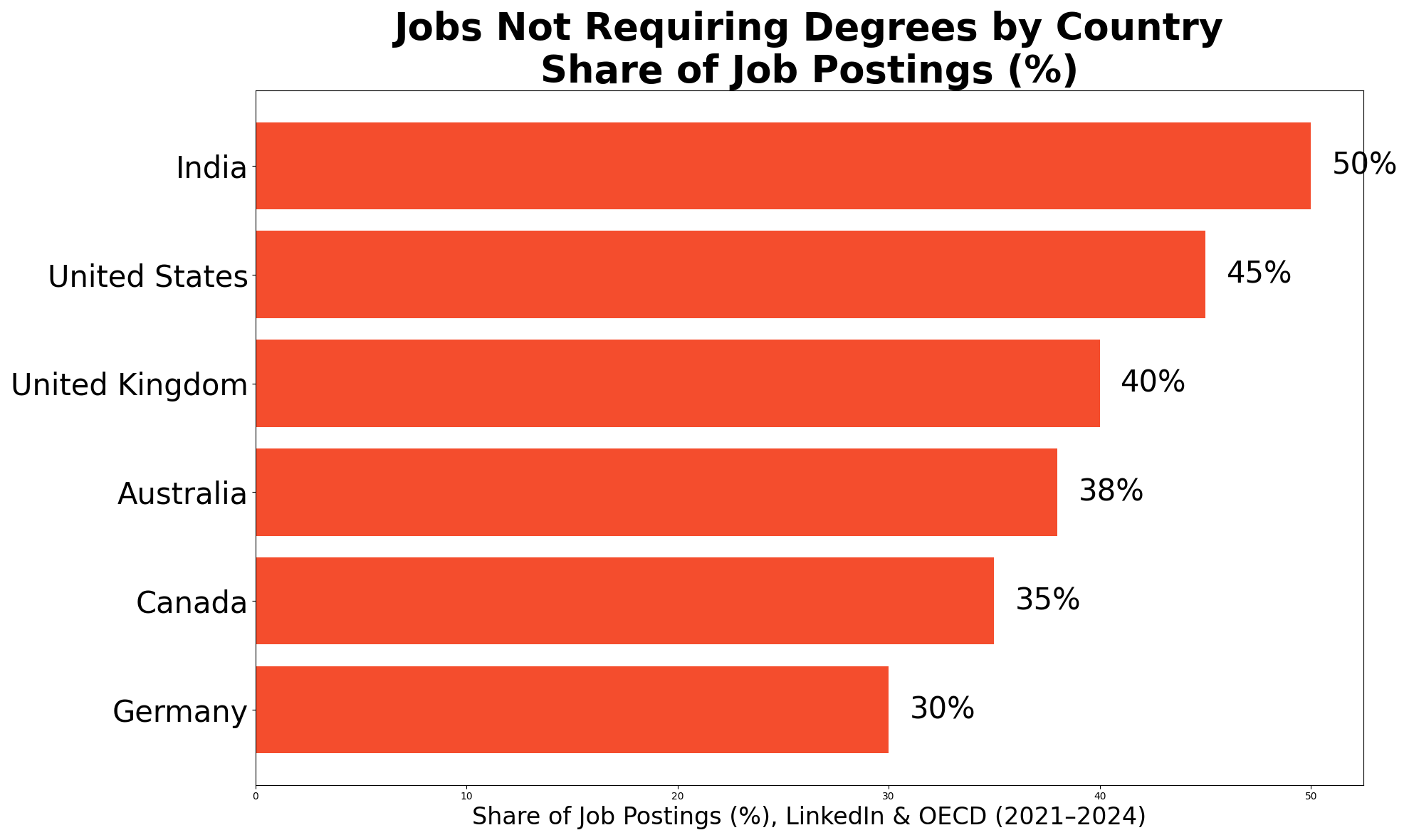
🔎 Striking statistic: In some countries, up to 40% of graduates work in jobs that don’t require a degree—raising serious questions about educational efficiency.
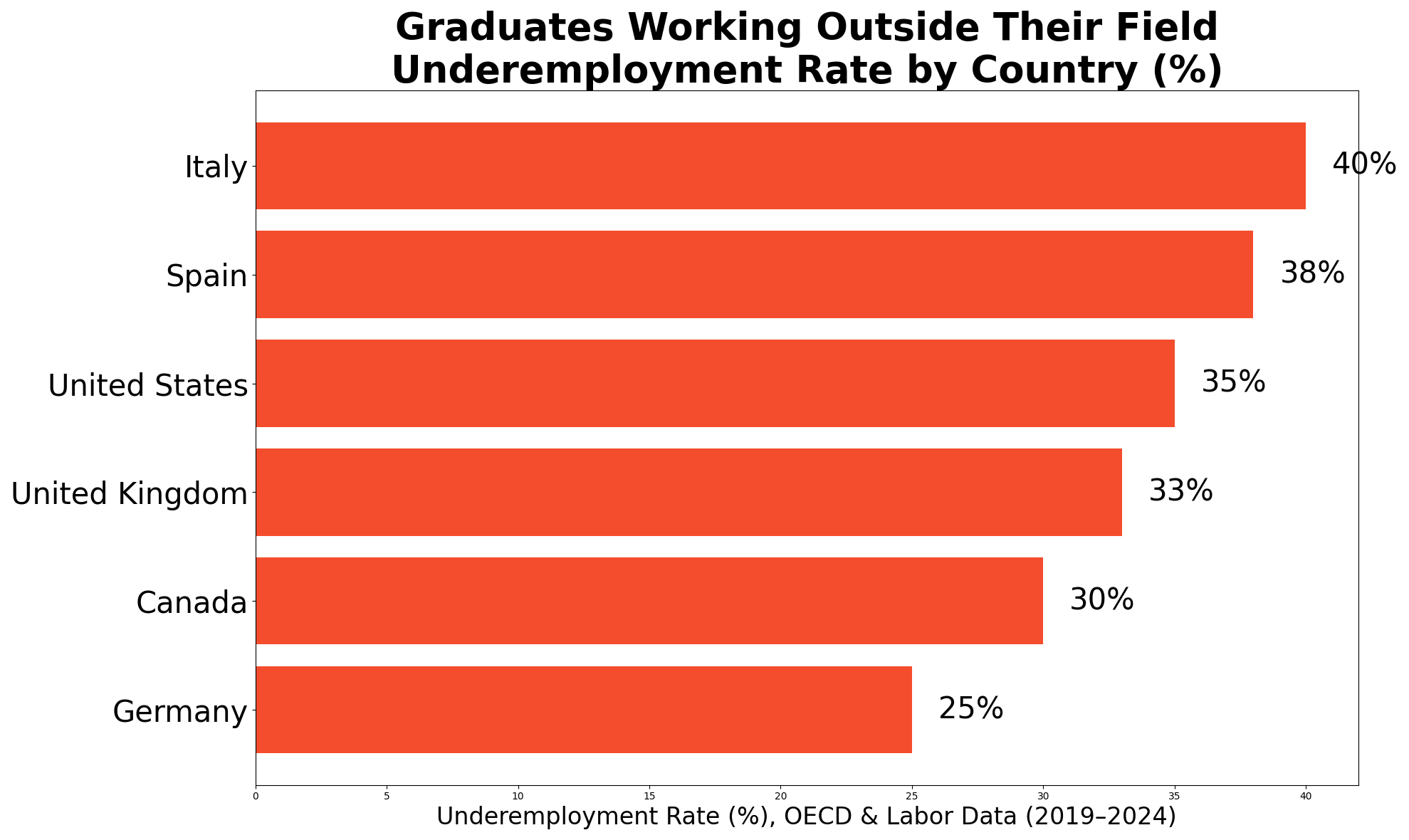
The next decade will likely redefine what “education” even means—and how it translates into income.
🌍 Global competition will continue to equalize wages, especially in digital fields where work can be done from anywhere.
🤖 AI and automation will increase demand for adaptable, tech-literate workers—while reducing returns in routine roles.
📈 Hybrid education models (degrees + certifications + experience) will likely outperform traditional, single-track paths.
Putting It Into Perspective: The safest investment is no longer a specific degree—but the ability to adapt, learn, and pivot over time.
🔎 Bold prediction: By 2040, employers may value verified skill portfolios more than traditional diplomas—fundamentally reshaping higher education.
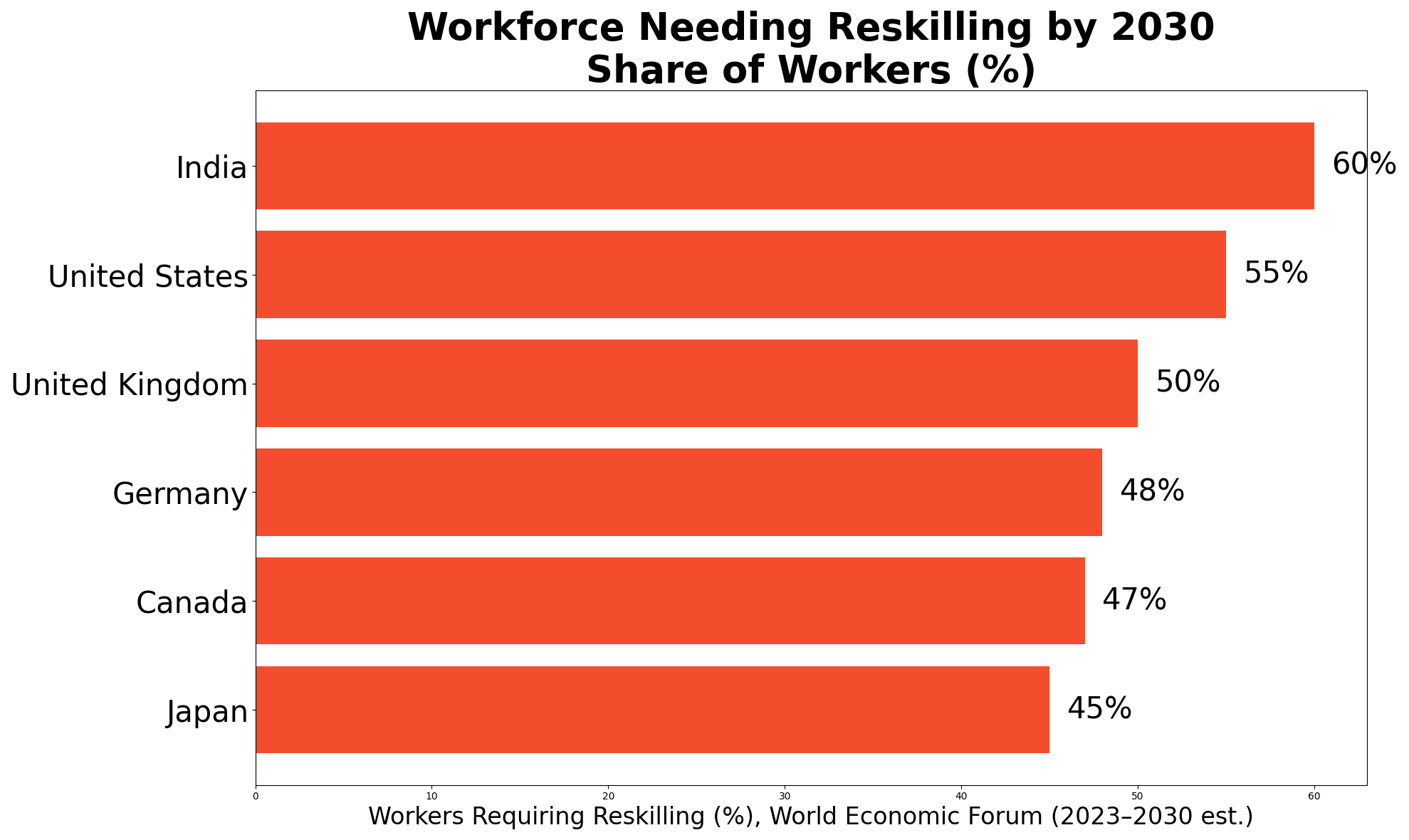
Education is still one of the most powerful tools available—but it’s no longer a guaranteed path to prosperity. Outcomes now depend on the choices you make, the system you enter, and the timing.
For those guiding the next generation—or rethinking their own path—the advantage lies in seeing these shifts early. Where you invest in learning today will shape not just income, but your options and freedom tomorrow.
Stay informed, stay sharp, and keep exploring what’s next.
Warm regards,
Shane Fulmer
Founder, WorldPopulationReview.com
P.S. Want to sponsor this newsletter? Reach 143,000+ global-minded readers — click here!