- World Population Review Newsletter
- Posts
- The World’s Most Oil-Dependent Countries
The World’s Most Oil-Dependent Countries
From reserves to revenue—who rises and falls with oil markets.

Philip Saparov
March 28, 2026
In partnership with

Greetings, inquisitive observer of power and prosperity!
Oil still shapes the modern world more than many realize. It fuels economies, funds governments, and shifts global power.
But oil wealth and oil dependence are not the same. Some nations use it as one pillar. Others rely on it for everything.
Today, we explore the countries most dependent on oil—and what that means for resilience, risk, and the future.
Let’s dig in.
Every headline satisfies an opinion. Except ours.

Remember when the news was about what happened, not how to feel about it? 1440's Daily Digest is bringing that back. Every morning, they sift through 100+ sources to deliver a concise, unbiased briefing — no pundits, no paywalls, no politics. Just the facts, all in five minutes. For free.
When people think of oil power, they think of Saudi Arabia.
🛢️ The kingdom holds roughly 17% of the world’s proven oil reserves and is one of the top exporters globally. Oil typically accounts for 60–70% of government revenue and around 70% of exports.
That concentration creates both strength and exposure. High prices generate massive fiscal surpluses. But downturns quickly pressure budgets and spending plans.
Vision 2030 aims to shift this balance—investing hundreds of billions into tourism, infrastructure, and non-oil sectors. Progress is real, but oil still dominates the financial base.
📊 Insight: Saudi Arabia’s break-even oil price (needed to balance its budget) remains a key indicator of fiscal stability—and it fluctuates with spending ambitions.
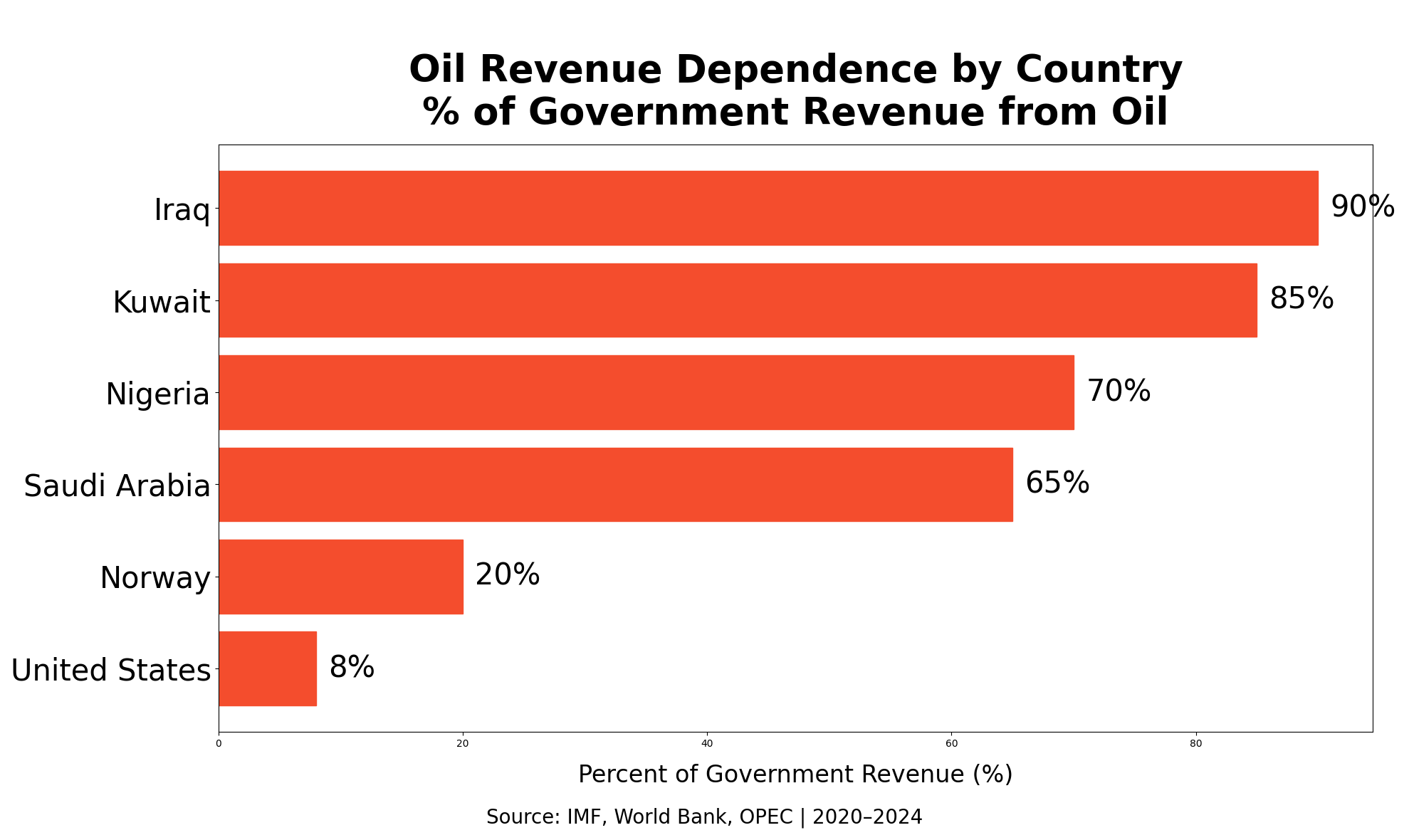
Iraq sits on the fifth-largest proven oil reserves in the world. Production costs are among the lowest globally, making its oil highly competitive.
🛢️ Oil accounts for over 85% of government revenue and roughly 90% of exports—a level of dependence among the highest anywhere.
This leaves little buffer. When oil prices fall, the state struggles to fund salaries, infrastructure, and public services.
Compounding this are governance challenges, political fragmentation, and limited private-sector growth. Diversification remains slow.
⚠️ Key insight: Iraq’s economy doesn’t just rely on oil—it is structurally built around it, making reform both urgent and difficult.
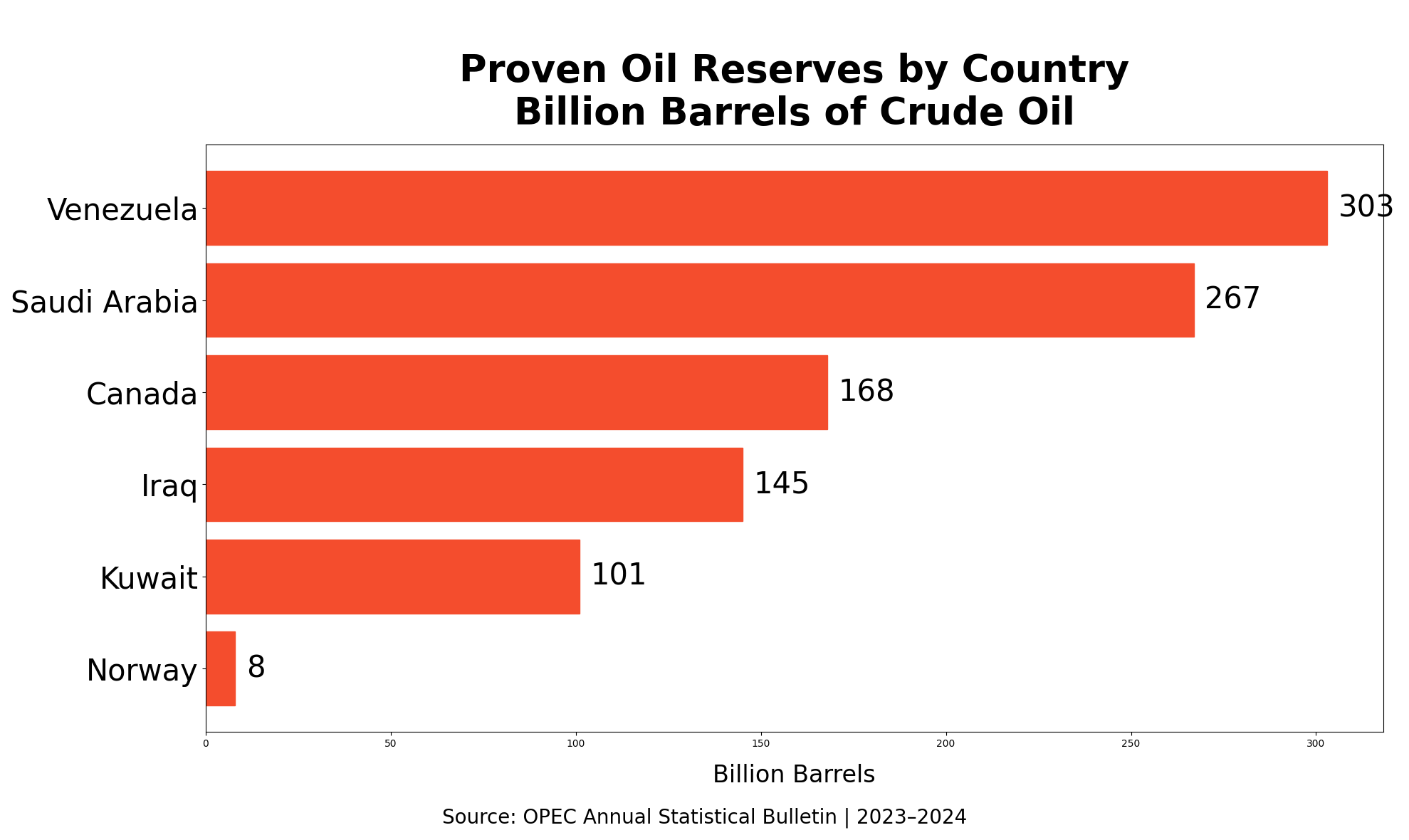
Kuwait combines vast oil wealth with a population under 5 million—a powerful economic equation.
💰 Oil typically generates over 85% of government revenue and more than 90% of export earnings.
This has enabled generous welfare systems, low taxes, and significant sovereign savings. Kuwait’s Future Generations Fund is one of the world’s oldest sovereign wealth funds.
Other Gulf states follow similar patterns. Qatar relies heavily on natural gas, while the UAE has diversified more aggressively into finance, tourism, and logistics.
🔎 Key contrast: Two oil-rich countries may look similar—but those that diversify early are far less vulnerable to long-term demand shifts.

Learn AI in 5 minutes a day

What’s the secret to staying ahead of the curve in the world of AI? Information. Luckily, you can join 2,000,000+ early adopters reading The Rundown AI — the free newsletter that makes you smarter on AI with just a 5-minute read per day.
Venezuela holds the largest proven oil reserves in the world, surpassing even Saudi Arabia.
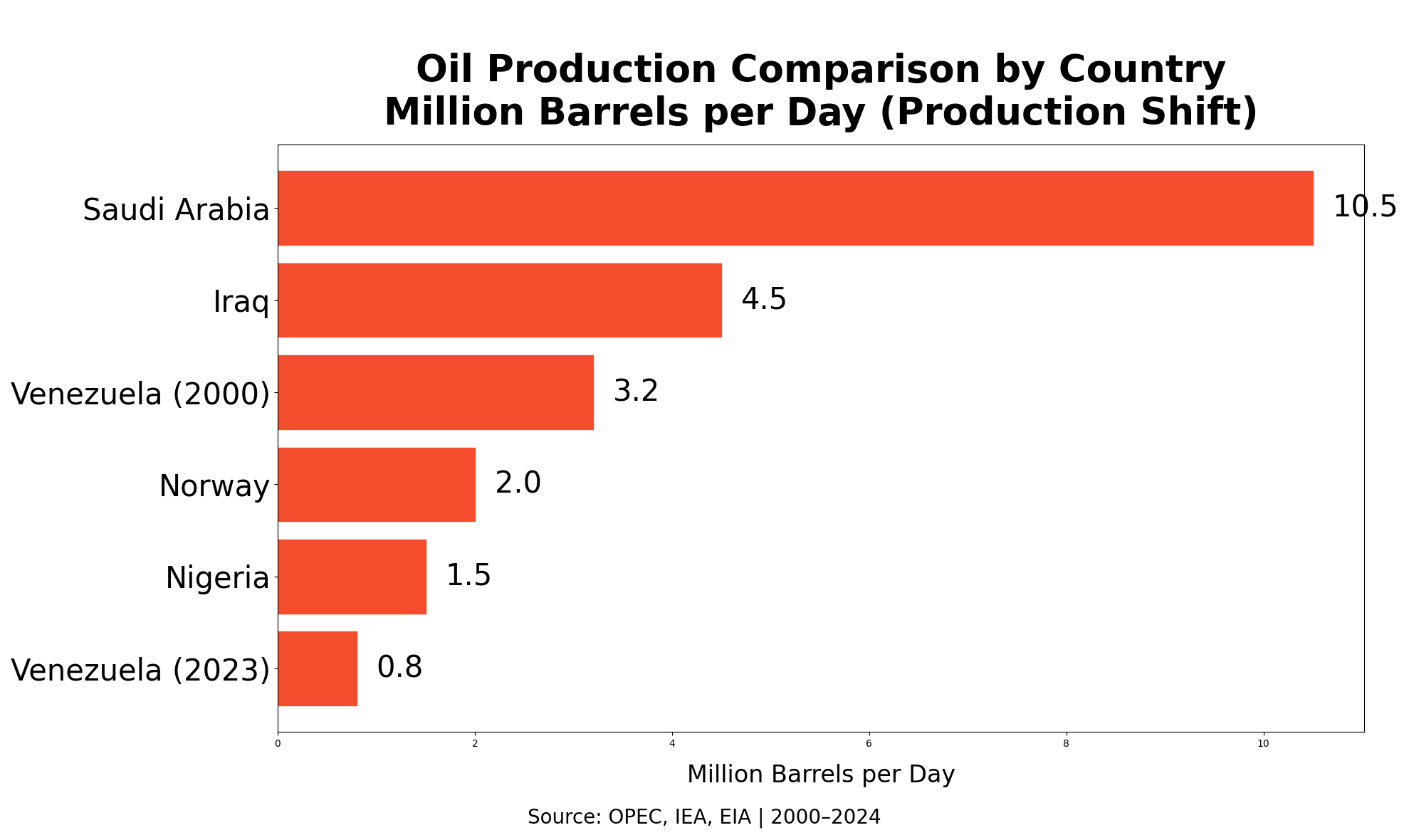
🛢️ Yet production has collapsed—from over 3 million barrels per day in the early 2000s to a fraction of that today.
Oil once accounted for over 95% of export earnings, leaving the economy highly exposed.
Years of underinvestment, sanctions, and institutional breakdown turned dependence into crisis. Inflation surged, infrastructure deteriorated, and fuel shortages became common.
⚠️ Hard truth: Oil wealth amplifies whatever system it sits within—strong systems grow stronger, weak ones unravel faster.
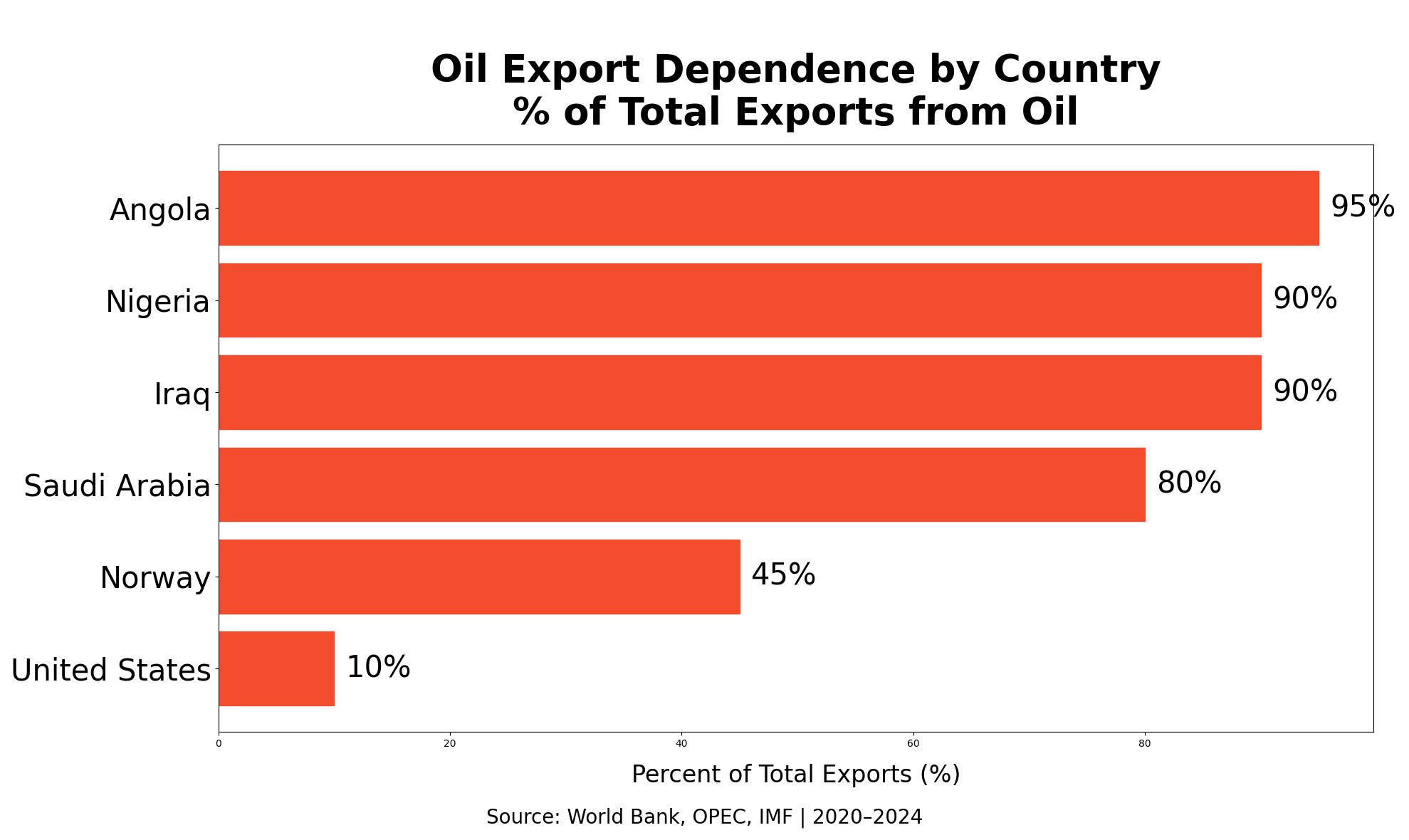
Nigeria is Africa’s largest oil producer, while Angola is one of the continent’s top exporters.
🌍 In both countries, oil drives the majority of export revenue and a large share of government income.
But population changes the equation. Nigeria’s oil wealth is spread across more than 200 million people, limiting its impact on average living standards.
Both countries face recurring challenges: currency volatility, budget instability, and reliance on global oil cycles.
📊 Perspective: When oil prices fall, these economies often experience immediate fiscal tightening—affecting everything from public services to exchange rates.
Norway is one of the world’s largest oil exporters—but its economy tells a different story.
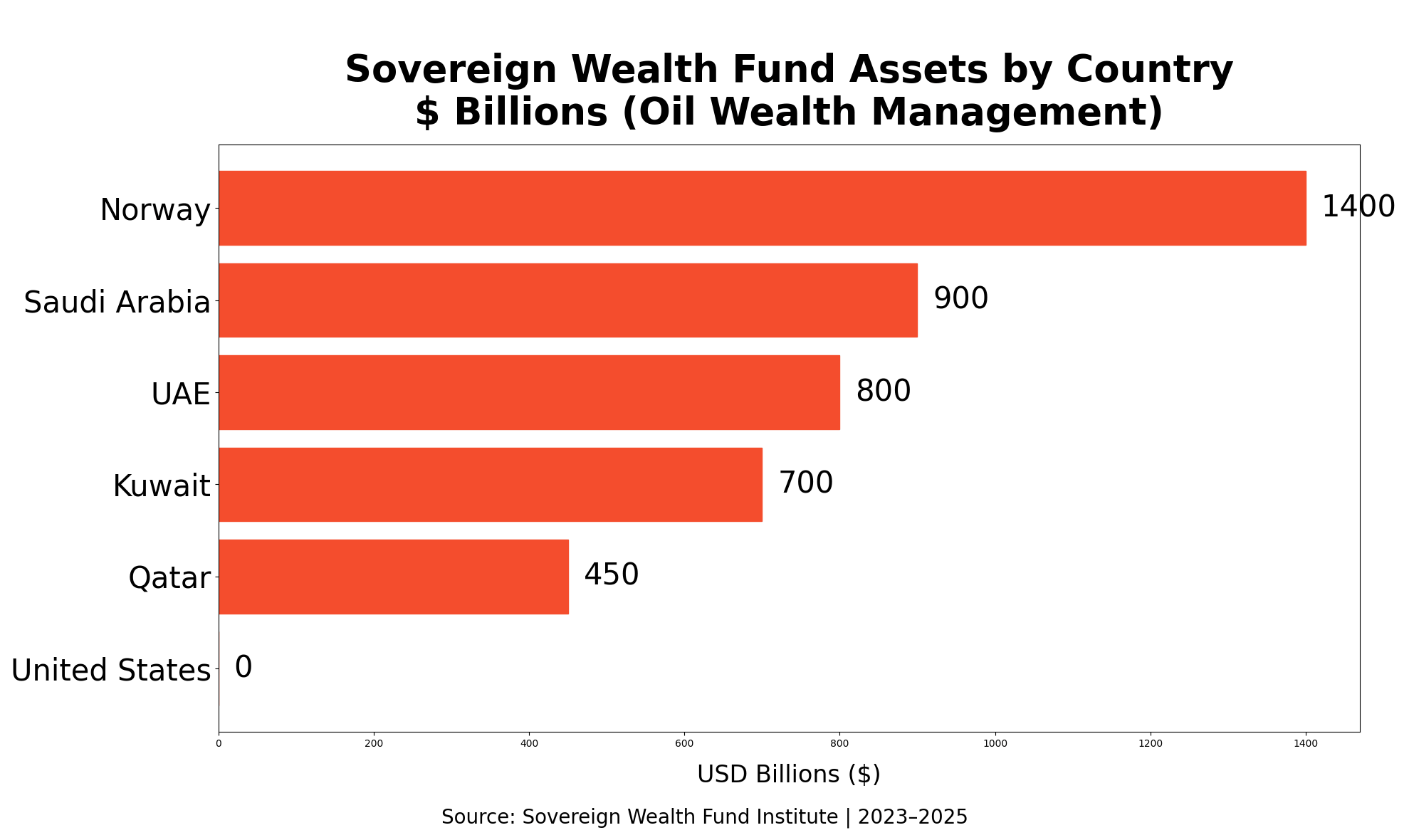
💼 Oil revenues are channeled into a sovereign wealth fund now worth over $1.4 trillion, the largest of its kind globally.
Strict fiscal rules limit how much oil income can be spent each year, preventing overheating and preserving wealth for future generations.
At the same time, Norway has built strong non-oil sectors, from technology to fisheries.
💡 Key takeaway: Norway proves that resource wealth can be transformed into long-term stability—if managed with discipline and foresight.
Oil demand is not disappearing—but it is evolving.
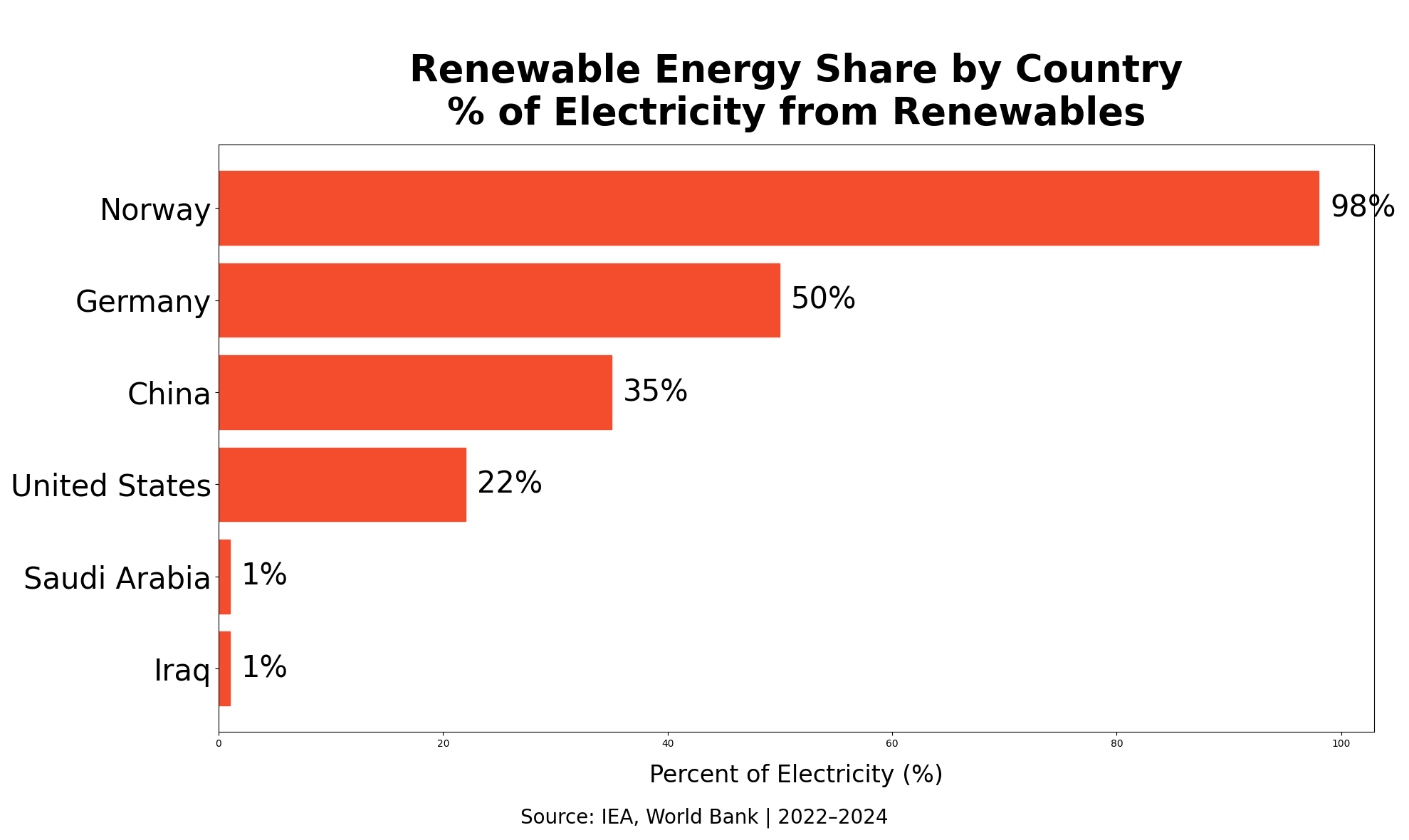
⚡ Electric vehicles, renewable energy, and efficiency gains are slowly reshaping global consumption patterns.
For oil-dependent countries, the challenge is timing. Transition too slowly, and risk grows. Move too quickly without preparation, and economic shocks follow.
The most resilient nations are investing oil revenues into diversification, infrastructure, and human capital. Others remain tied to a single revenue stream.
🔮 Forward insight: By 2040, global oil demand may plateau—making diversification not optional, but essential.
Oil can build nations—or bind them.
The difference lies not underground, but in how countries manage what they have.
Stay curious. The world’s biggest shifts are often hidden in plain sight.
Warm regards,
Shane Fulmer
Founder, WorldPopulationReview.com
P.S. Want to sponsor this newsletter? Reach 142,000+ global-minded readers — click here!