- World Population Review Newsletter
- Posts
- The World's Strangest Tipping Laws
The World's Strangest Tipping Laws
When generosity is welcome—and when it’s a punishable offense.

Philip Saparov
December 12, 2025
In partnership with

What if a simple tip could offend, confuse—or even break the law?
Tipping isn’t just about generosity. Around the world, it’s tangled in deep cultural codes, legal frameworks, and ideas about fairness. In one country, it’s expected. In another, it’s an insult. Somewhere else? It’s illegal.
This week, we break down the world’s tipping rules—not just who tips and who doesn’t, but why. Because behind every gratuity lies a worldview about work, dignity, and value.
Let’s explore the countries where tipping is mandatory, optional—or strictly off the table.
Learn how to make every AI investment count.

Successful AI transformation starts with deeply understanding your organization’s most critical use cases. We recommend this practical guide from You.com that walks through a proven framework to identify, prioritize, and document high-value AI opportunities.
In this AI Use Case Discovery Guide, you’ll learn how to:
Map internal workflows and customer journeys to pinpoint where AI can drive measurable ROI
Ask the right questions when it comes to AI use cases
Align cross-functional teams and stakeholders for a unified, scalable approach
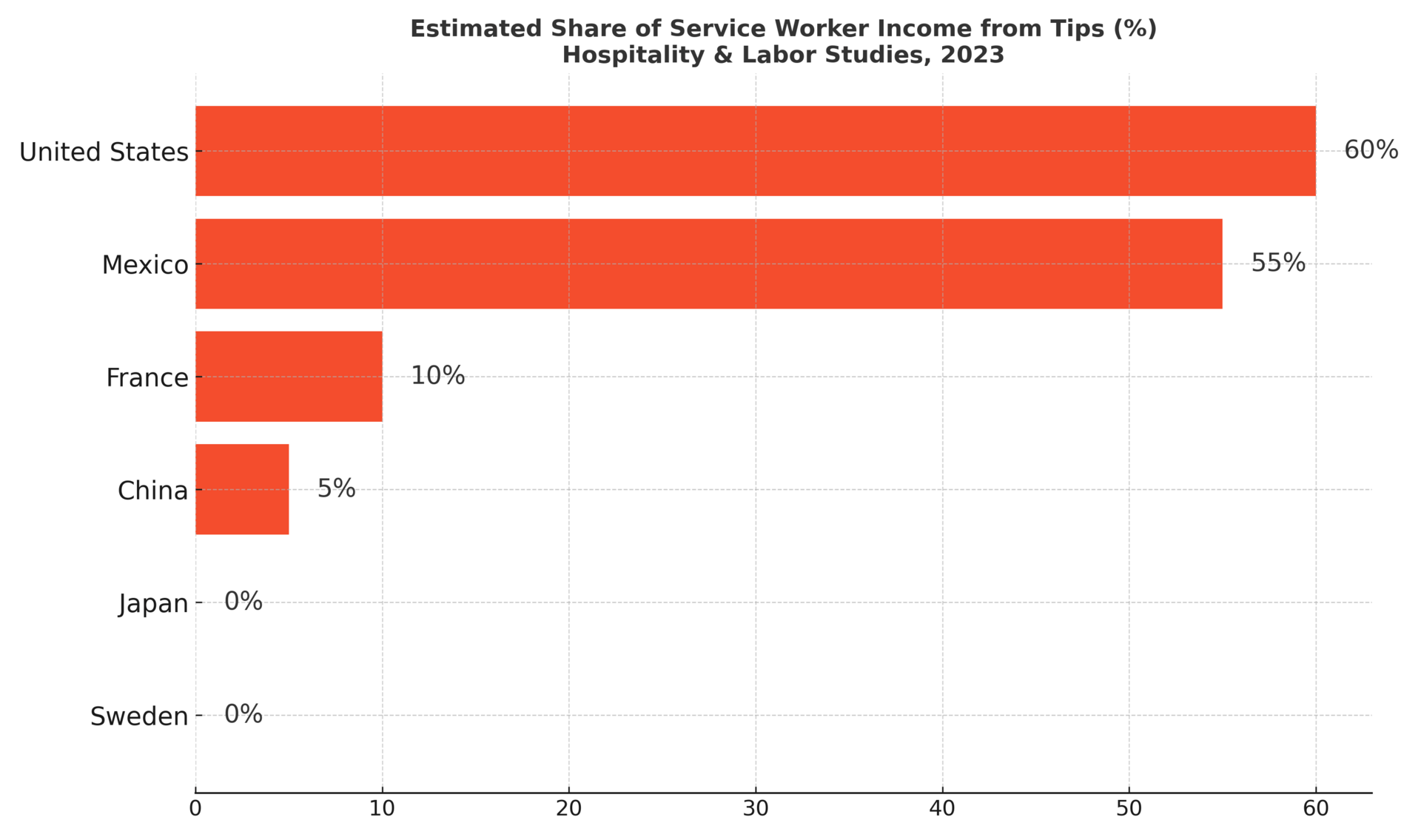
In the U.S., tipping isn’t just customary—it’s baked into the pay structure. Federal law allows employers to pay tipped workers as little as $2.13/hour, expecting tips to make up the rest. That means your 20% tip isn't a gesture of gratitude—it’s literally how servers pay rent.
Some states (like California and Oregon) outlaw this “tip credit” and mandate full minimum wage plus tips. But in many others, service workers live at the mercy of diners’ generosity.
Tourists often find the U.S. tipping culture baffling. With expectations hovering at 18–25%, confusion (or stinginess) can inadvertently hurt workers already underpaid by default.
🔍 Eye-opener: A full-time server in Texas can legally earn just $17,000/year—before tips. Skip tipping, and you’re not just rude—you’re docking their paycheck.

In Japan, tipping is not only unnecessary—it can be deeply offensive. Exceptional service is seen as standard, and monetary tips may be viewed as disrespectful or patronizing.
Instead of cash, appreciation is expressed through politeness, loyalty, or carefully chosen gifts. Try to tip your sushi chef, and you may find your money politely refused—or returned with embarrassment.
This isn’t just etiquette—it’s cultural philosophy. Japan prides itself on “omotenashi,” the art of selfless hospitality. No rewards expected. No tips required.
💡 Cultural curveball: In upscale Tokyo hotels, tipping discreetly with a crisp bill in an envelope can be acceptable—but only if done gracefully, and even then, it’s rare.

Ah, France—where the menu reads “service compris,” yet the debate over tipping persists. Technically, service fees are baked into your bill, usually around 15%. But locals often leave a few coins or a euro or two for good service—especially in cafes and bistros.
The French approach is less rigid than in the U.S. but more structured than in Japan. It's about modest gestures rather than obligations.
And yet, tourists can feel stuck. “To tip or not to tip?” isn’t just a question—it’s a cultural puzzle that’s only half-solved.
🇫🇷 Fun fact: Waiters in France enjoy stronger labor protections and higher base wages than their American counterparts—making tipping a true bonus, not a necessity.

Like Moneyball for Stocks

The data that actually moves markets:
Congressional Trades: Pelosi up 178% on TEM options
Reddit Sentiment: 3,968% increase in DOOR mentions before 530% in gains
Plus hiring data, web traffic, and employee outlook
While you analyze earnings reports, professionals track alternative data.
What if you had access to all of it?
Every week, AltIndex’s AI model factors millions of alt data points into its stock picks.
We’ve teamed up with them to give our readers free access for a limited time.
The next big winner is already moving.
Past performance does not guarantee future results. Investing involves risk including possible loss of principal.
Historically, tipping in China was seen as a leftover of colonialism—a practice rejected after the 1949 revolution. Even today, tipping in local restaurants or taxis is often declined or awkwardly accepted.
Yet globalization is shifting this. In high-end hotels, Westernized restaurants, or tourist hotspots like Beijing and Shanghai, tips are increasingly expected—though not always welcomed.
As with many things in modern China, context is king. Tip in the wrong setting, and it may embarrass the recipient. Fail to tip in another, and it could mark you as ignorant.
🔍 Tipping twist: Major hotel chains in China often pool tips and distribute them equally—so your generous gratuity might benefit housekeeping, bellhops, and kitchen staff alike.

In Denmark, Sweden, and Norway, tipping is rare and low-stakes. These countries offer strong social safety nets and high base wages. Service jobs pay well enough to live on—without relying on customer handouts.
Still, a modest tip (rounding up, leaving 5–10%) is welcome in fine-dining restaurants or when service goes above and beyond. But you’ll never be glared at for skipping it.
The underlying belief? Dignity in work shouldn’t hinge on subjective rewards.
🧊 Chilling insight: In Sweden, the average restaurant server earns around $3,000/month—before tips. Hospitality is treated as a profession, not a stepping stone.

In Mexico, tipping is essential—not just appreciated. Many service workers earn extremely low base pay, and tips often make up more than half of their income.
Standard tipping rates are 10–15%, but for tourists, it’s often expected to go a bit higher—especially in resorts or guided tours. Forgetting to tip here isn’t just a social faux pas—it’s a direct hit to someone’s livelihood.
Interestingly, it’s also common to tip gas station attendants, grocery packers, and even musicians at restaurants—tipping is culturally broad and deeply ingrained.
🔍 Must-know fact: In tourist-heavy zones like Cancún or Cabo, workers rely so heavily on tips from foreigners that economic slowdowns or off-seasons can be financially devastating.
Singapore is known for its orderliness—and tipping is no exception. In most situations, it’s not expected or encouraged. Service charges (usually 10%) are included in bills, and additional tipping is often politely declined.
Why? The government maintains high service standards through training and regulation, not incentives. There's also a cultural emphasis on professionalism and pride in one’s job, not transactional gratitude.
That said, hotel porters or private drivers might accept a small tip from tourists—especially Westerners—but it’s not customary.
📌 Legal line: Singapore’s regulated service charge is mandatory, not optional. So even if you don’t tip, you’ve already paid extra—just not directly to the worker.

From Tokyo to Texas, tipping reveals how nations value work, dignity, and fairness.
In one place, it’s expected income. In another, an unwanted gesture. And increasingly, it’s a tradition in flux, shaped by global tourism and shifting values.
So next time you're abroad, don’t just ask, “How much should I tip?” Ask: “What does tipping mean here?”
That single question could save you awkwardness—and open a deeper window into how a culture works.
Stay curious. Stay alert. And keep decoding the world, one custom at a time.
Warm regards,
Shane Fulmer
Founder, WorldPopulationReview.com
P.S. Want to sponsor this newsletter? Reach 140,000+ global-minded readers — click here!