- World Population Review Newsletter
- Posts
- What Silence Reveals About a Country’s Mindset
What Silence Reveals About a Country’s Mindset
What pauses in conversation reveal about trust, status, and thought.

Philip Saparov
March 26, 2026
In partnership with

Greetings, inquisitive observer of human behavior!
Silence means very different things depending on where you are. In some places, it’s awkward. In others, it signals confidence and respect. And in a world full of constant noise, understanding that difference can shape how you connect, communicate, and make decisions.
So where is silence embraced—and where is it avoided?
Let’s take a closer look.
The $66 Billion Opportunity in Weddings

Fact: People will spend for love.
Americans spent $66 billion on weddings last year. And, as always, flowers were a non-negotiable part of that spend. This highlights a unique market opportunity for The Bouqs Co. right now.
Famous for cutting the time it takes flowers to travel farm-to-door by 3x, The Bouqs Co. is already one of the country’s largest floral subscription services. But their latest expansion to 70+ brick-and-mortar stores could unlock more high-margin events, like weddings.
They already have 100% YoY growth in counties where stores have opened, with more than $1.2m in revenue per store.
You can join this chapter as they capture more of the $100b global floral market. Become an early shareholder in The Bouqs Co.
This is a paid advertisement for The Bouq’s Regulation CF offering. Please read the offering circular at https://invest.bouqs.com/
In much of the world, silence is uncomfortable. In the Nordics, it’s expected—and respected.
🇫🇮 Finland is often considered the global capital of silence. Conversations are purposeful, not filler. Speaking only when you have something meaningful to say is seen as a mark of intelligence.
🇸🇪 Sweden values conversational balance. Pauses are natural, allowing space for reflection rather than interruption.
🇳🇴 Norway leans into quiet as a form of respect—especially in nature-oriented lifestyles where solitude is normalized.
What this means for you: In these societies, talking too much can signal insecurity rather than confidence. Silence, on the other hand, communicates thoughtfulness and self-assurance.
A striking insight: Finland consistently ranks among the happiest countries in the world—despite (or perhaps because of) its famously quiet culture.
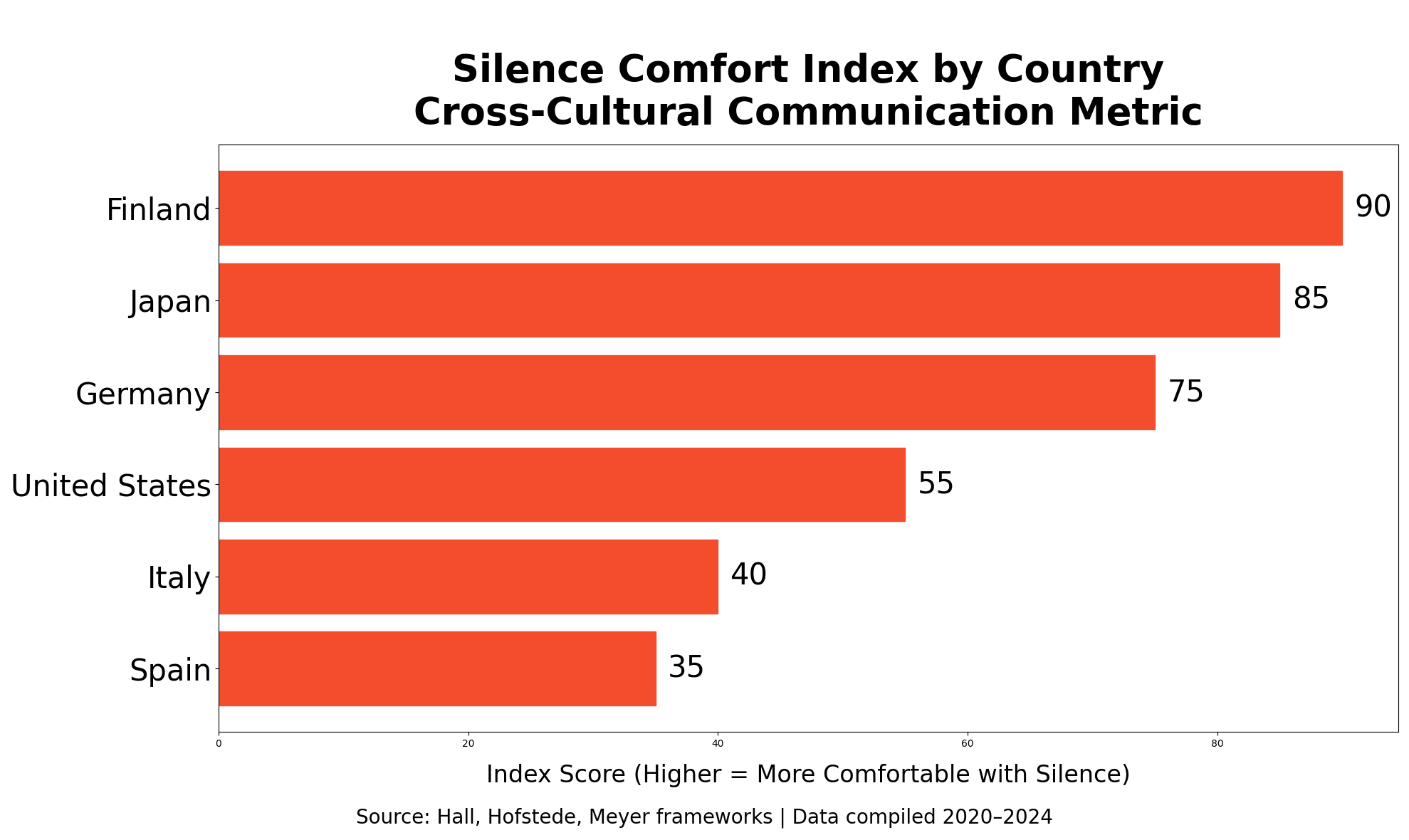
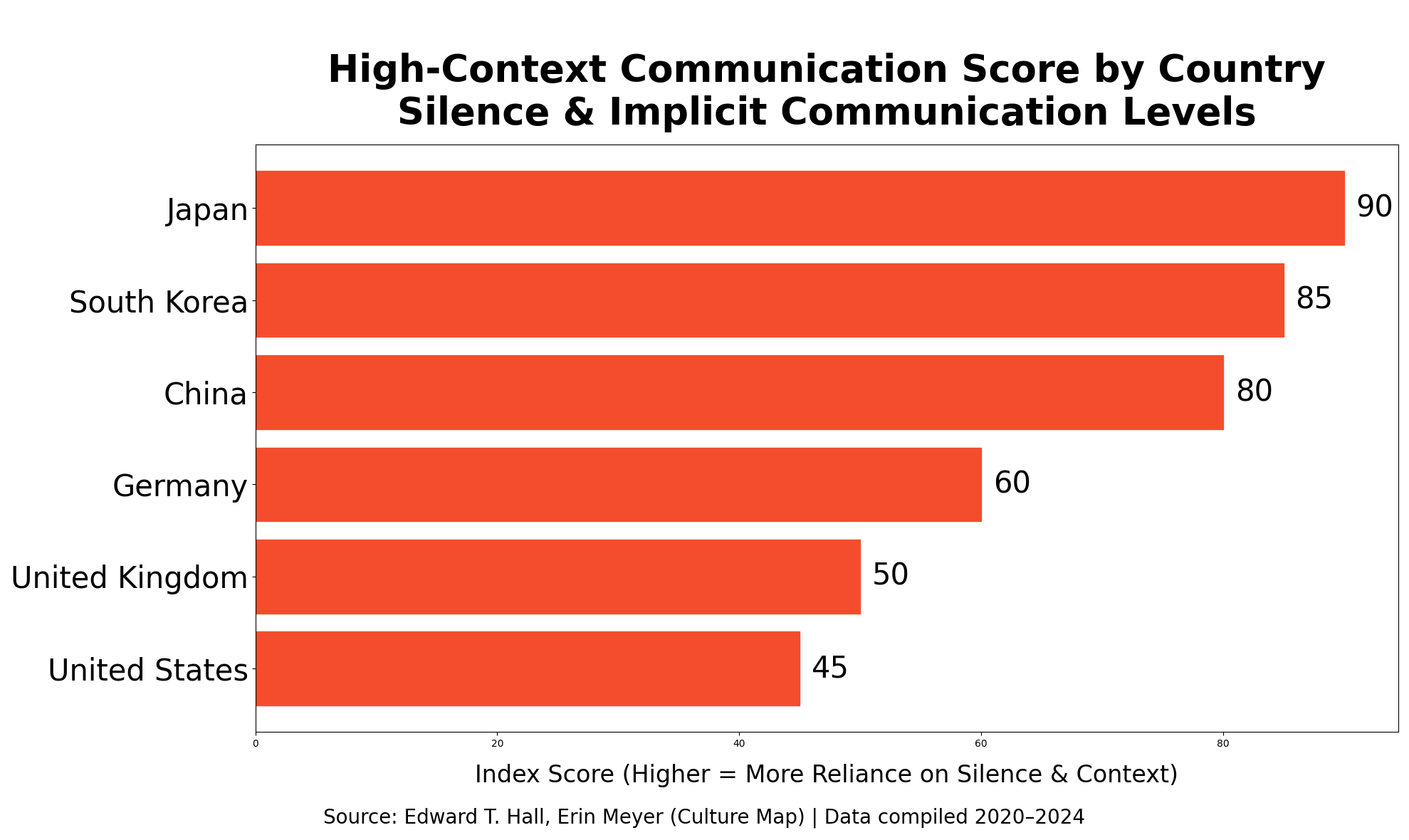
In Japan, silence is not empty—it’s full of meaning.
🇯🇵 Conversations often rely on what is not said. Context, tone, and pauses carry as much weight as words.
🇯🇵 Interruptions are rare. Allowing silence shows respect for the other person’s thoughts.
🇯🇵 Group harmony (wa) is prioritized, and silence helps avoid unnecessary conflict or embarrassment.
For outsiders, this can feel ambiguous. But within the culture, it creates smoother social interactions and deeper mutual understanding.
What this means for you: If you’re doing business or building relationships in Japan, patience in conversation is essential. Filling every pause can come across as pushy or insensitive.
A subtle but powerful fact: In Japanese meetings, the longest pause often follows the most important statement—giving everyone space to process before responding.
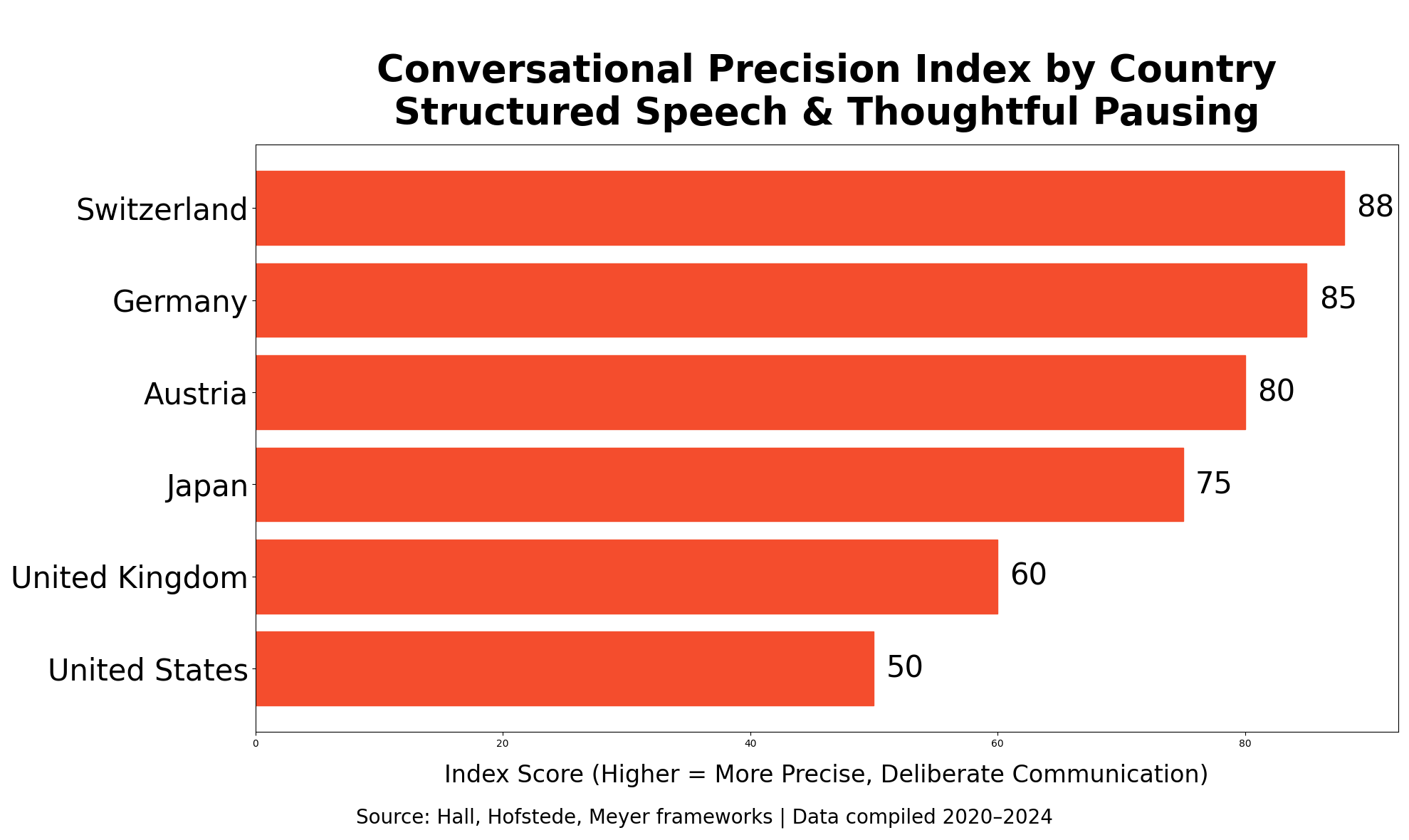
In parts of Central Europe, silence is tied to clarity and efficiency.
🇩🇪 Germany values structured, deliberate communication. Pauses are used to think—not to disengage.
🇨🇭 Switzerland combines multilingual culture with careful speech, where silence helps avoid misunderstanding.
🇦🇹 Austria shares similar norms, emphasizing thoughtful contribution over constant dialogue.
Here, silence signals competence. Speaking too quickly or too often can undermine credibility.
What this means for you: In these environments, it’s better to pause, think, and respond precisely than to speak impulsively. This has direct implications for negotiations and professional settings.
A revealing detail: Studies show German business meetings often include longer pauses between speakers than Anglo-American ones—yet decisions are reached more efficiently.
Most coverage tells you what happened. Fintech Takes is the free newsletter that tells you why it matters. Each week, I break down the trends, deals, and regulatory shifts shaping the industry — minus the spin. Clear analysis, smart context, and a little humor so you actually enjoy reading it. Subscribe free.
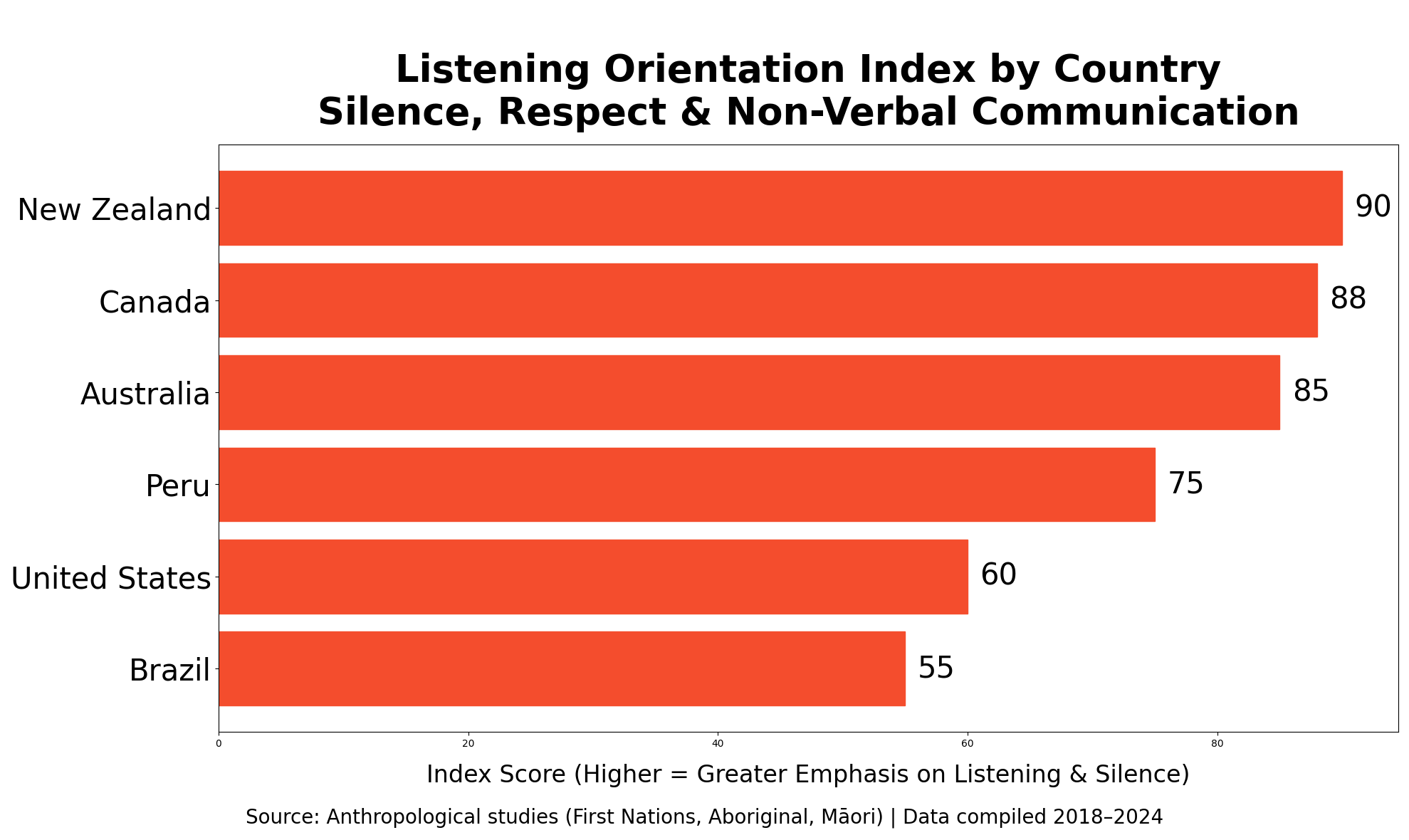
Long before modern communication norms, many Indigenous cultures treated silence as a form of awareness.
🇨🇦 First Nations communities often use silence to show respect, especially when listening to elders.
🇦🇺 Aboriginal Australians incorporate silence into storytelling and learning, allowing meaning to unfold gradually.
🇺🇸 Native American traditions frequently view silence as a way to connect—with others and with nature.
In these contexts, silence is not a gap—it’s a presence.
What this means for you: Learning to sit comfortably in silence can deepen relationships and improve listening skills—especially in cross-cultural settings.
A fascinating perspective: In some Indigenous traditions, interrupting someone is considered more disrespectful than saying nothing at all.
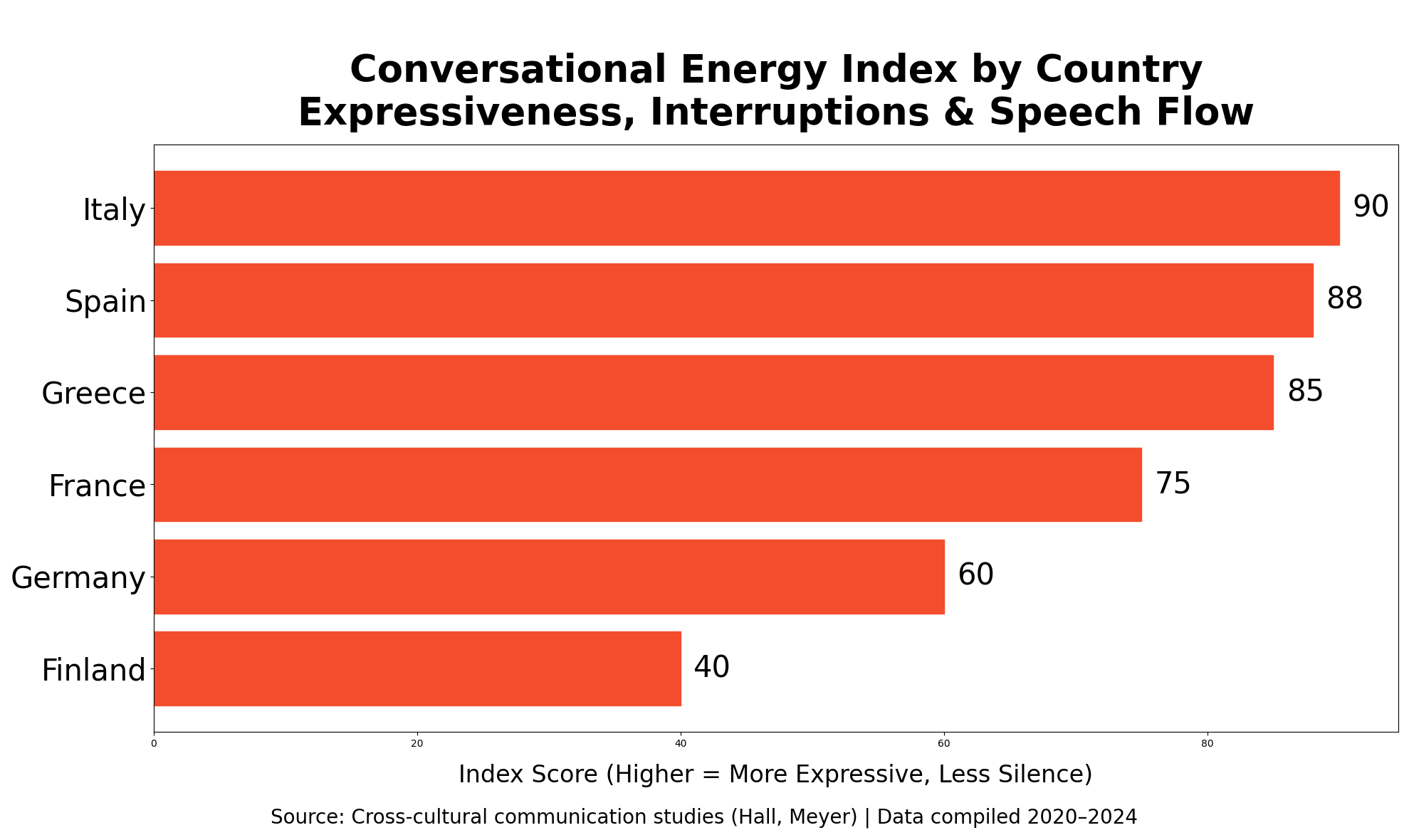
To understand silence, it helps to contrast it.
🇮🇹 Italy thrives on expressive, overlapping conversation—silence can feel like disengagement.
🇪🇸 Spain embraces lively dialogue, where pauses are shorter and energy is higher.
🇬🇷 Greece similarly values verbal expression, especially in social settings.
In these cultures, silence may signal discomfort, disagreement, or lack of interest.
What this means for you: If you’re relocating or traveling, mismatched expectations around silence can lead to misunderstandings. What feels respectful in Finland may feel distant in Italy.
A useful insight: Cross-cultural studies show Southern Europeans interrupt more frequently—not out of rudeness, but as a sign of engagement.
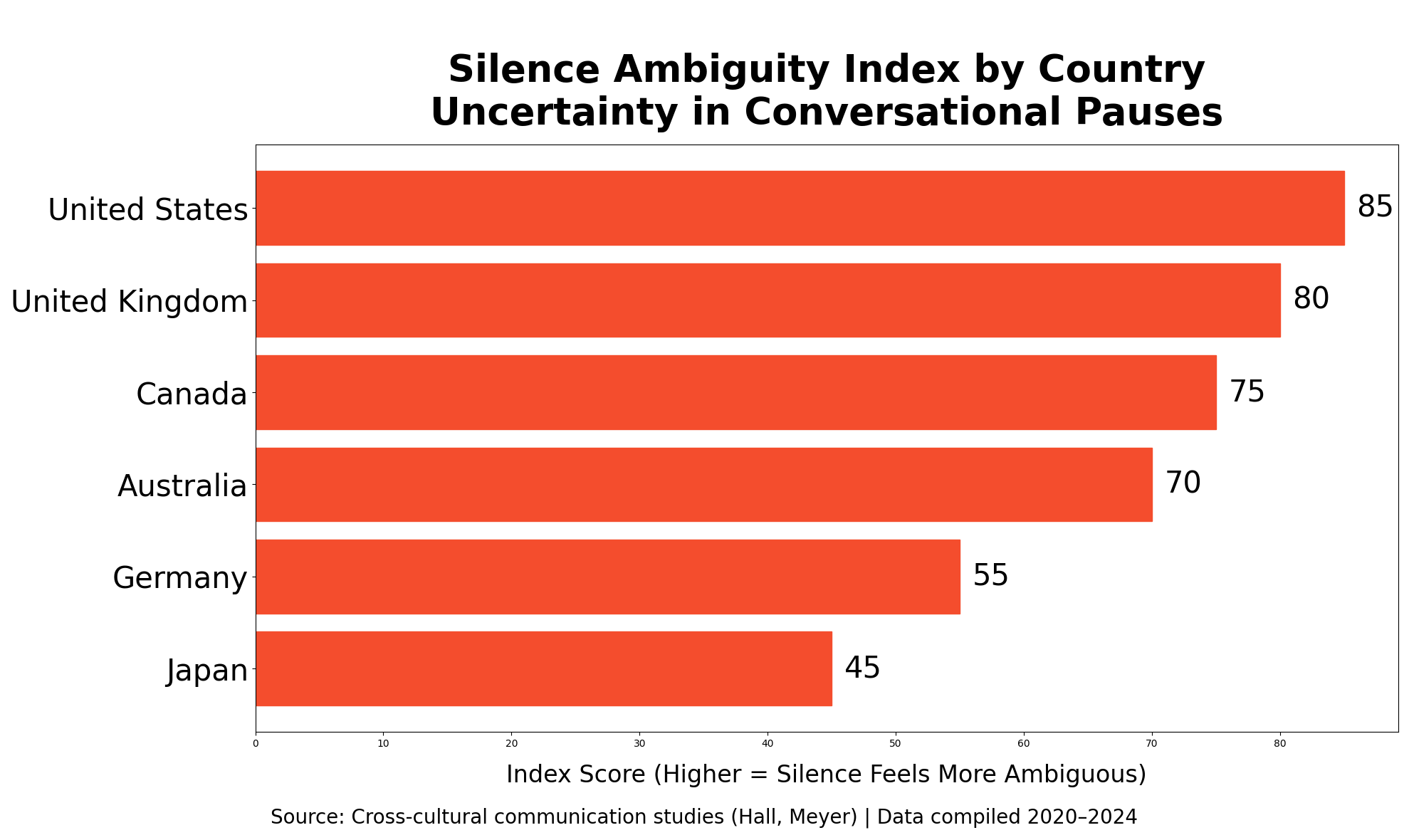
In Anglo cultures, silence sits somewhere in the middle—and often creates uncertainty.
🇺🇸 United States conversations tend to prioritize responsiveness and energy. Silence can feel awkward or even negative.
🇬🇧 United Kingdom communication is more reserved, but still relies on verbal cues to maintain flow.
🇨🇦 Canada blends both styles, with politeness often filling conversational gaps.
Here, silence is often interpreted rather than understood.
What this means for you: In these cultures, managing silence becomes a social skill—knowing when to fill it and when to let it breathe.
An interesting data point: In American conversations, pauses longer than 4 seconds are often perceived as uncomfortable—far shorter than in Nordic or East Asian contexts.
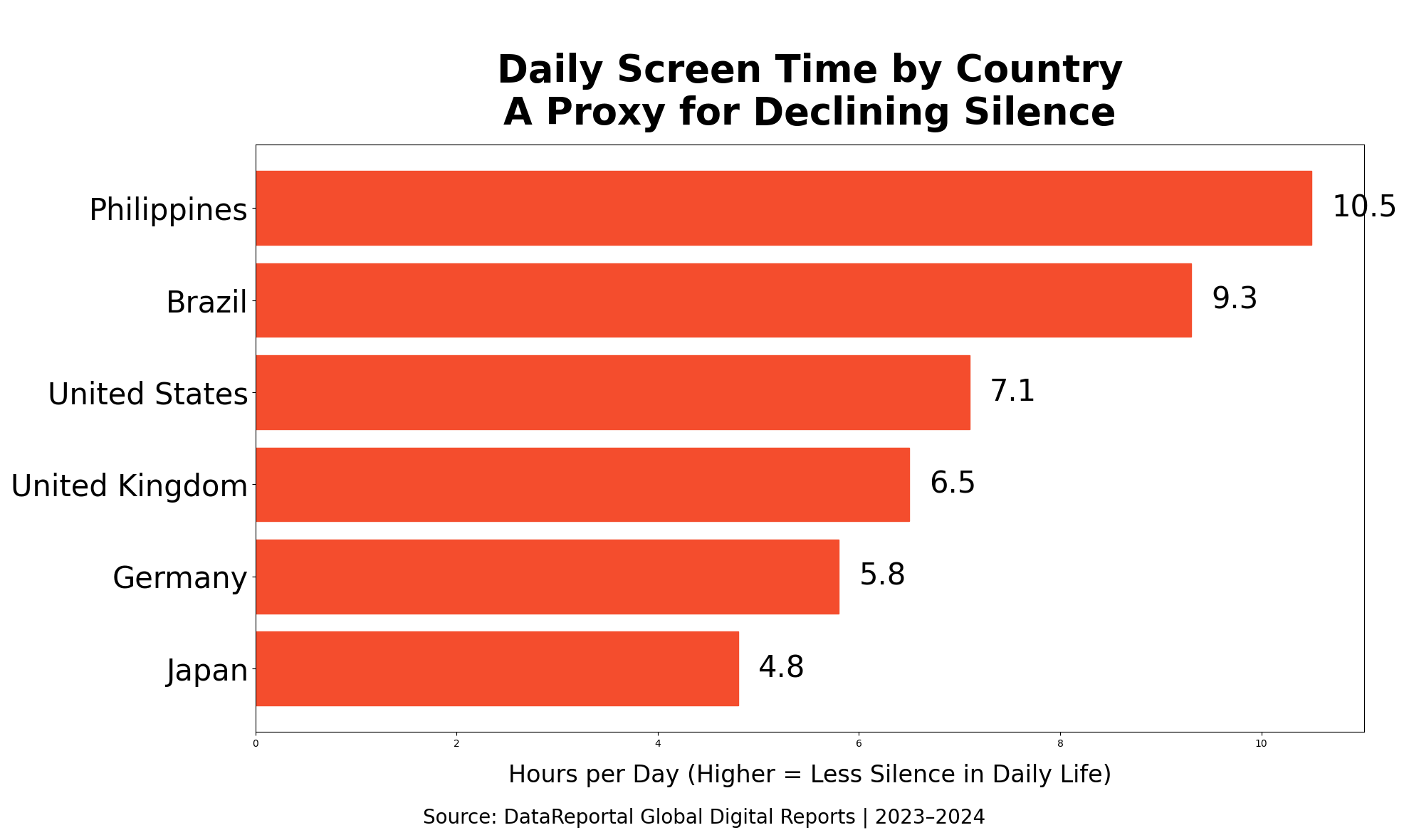
As the world becomes more connected, it also becomes noisier.
Constant communication—emails, messages, meetings—has reduced our tolerance for silence. Yet the ability to pause, reflect, and listen is becoming more valuable, not less.
Globally, we’re seeing a shift:
Mindfulness practices are rising
Remote work is changing communication rhythms
High-level negotiations increasingly reward those who listen more than they speak
What this means for you: Mastering silence may be a competitive advantage—in business, relationships, and decision-making.
A forward-looking insight: Research suggests that leaders who speak less in meetings—but with greater precision—are consistently rated as more competent and trustworthy.
Silence is not universal—but understanding it is powerful.
Whether you’re choosing where to live, how to communicate, or how to build trust across cultures, knowing when to speak—and when not to—can shape outcomes in ways most people overlook.
In a noisy world, those who understand silence often hear what others miss.
Stay curious. There’s always more beneath the surface.
Warm regards,
Shane Fulmer
Founder, WorldPopulationReview.com
P.S. Want to sponsor this newsletter? Reach 142,000+ global-minded readers — click here!