- World Population Review Newsletter
- Posts
- What the Quietest Nations Know That You Don’t
What the Quietest Nations Know That You Don’t
How silence is boosting health, wealth, and livability worldwide.

Philip Saparov
December 01, 2025
In partnership with

Greetings, seeker of clarity in a noisy world—
In a time of endless alerts, engines, and urban roar, one resource is becoming more precious than oil: silence.
More than a luxury, quiet is turning into a national strategy—boosting health, shaping tourism, and redefining livability. Some countries are leading the charge, redesigning life around sound—or the lack of it.
Where is peace still possible? Who’s winning the war on noise? And what does quiet do for your brain, heart, and future?
Let’s find out.
Missed OpenAI? The Clock Is Ticking on RAD Intel’s Round

Ground floor opportunity on predictive AI for ROI-based content.
RAD Intel is already trusted by a who’s-who of Fortune 1000 brands and leading global agencies with recurring seven-figure partnerships in place.
$50M+ raised. 10,000+ investors. Valuation up 4,900% in four years*.
Backed by Adobe and insiders from Google. Invest now.
This is a paid advertisement for RAD Intel made pursuant to Regulation A+ offering and involves risk, including the possible loss of principal. The valuation is set by the Company and there is currently no public market for the Company's Common Stock. Nasdaq ticker “RADI” has been reserved by RAD Intel and any potential listing is subject to future regulatory approval and market conditions. Investor references reflect factual individual or institutional participation and do not imply endorsement or sponsorship by the referenced companies. Please read the offering circular and related risks at invest.radintel.ai.
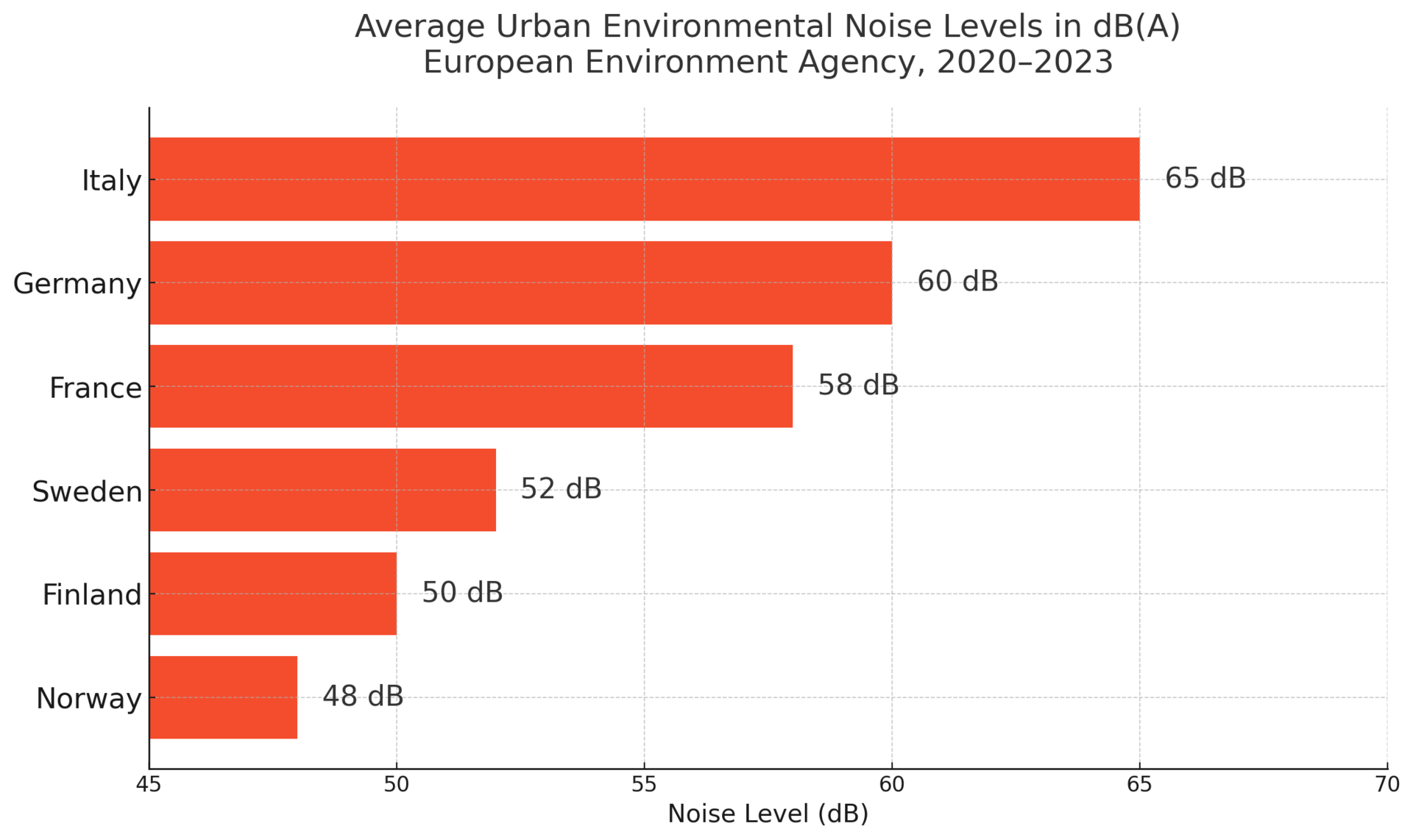
Nordic countries consistently rank among the world’s quietest—and it’s no accident.
🇫🇮 Finland, the reigning “quietest country” by multiple noise pollution indices, treats tranquility almost as infrastructure. With expansive forests, low population density, and strong noise ordinances, the country invests in both natural and policy-driven silence.
🇸🇪 Sweden integrates acoustic considerations into urban planning. Stockholm has “quiet zones” within city parks, where traffic is rerouted and noise is capped.
🇳🇴 Norway even includes “soundscape quality” in its environmental planning frameworks, acknowledging noise as a public health issue on par with air or water.
Sound Insight: A study in Finland showed that forest walks not only reduce stress but measurably lower blood pressure after just 15 minutes of silence.
Japan, despite its dense cities, is remarkably quiet—and that’s due to both technology and culture.
In Tokyo, trains glide silently on magnetic levitation tracks, and “quiet cars” are not just rules—they’re respected norms. Even in crowded neighborhoods, noise complaints are rare. Why? Cultural etiquette prioritizes not disturbing others—a concept called “meiwaku.”
Japan also leads in low-noise road surfacing and acoustic building design. The government incentivizes noise-reducing materials in construction and even monitors city sound levels in real time.
📉 Fascinating Fact: In Tokyo’s Shinjuku ward—one of the busiest areas in the world—average decibel levels are lower than those in most U.S. suburbs.

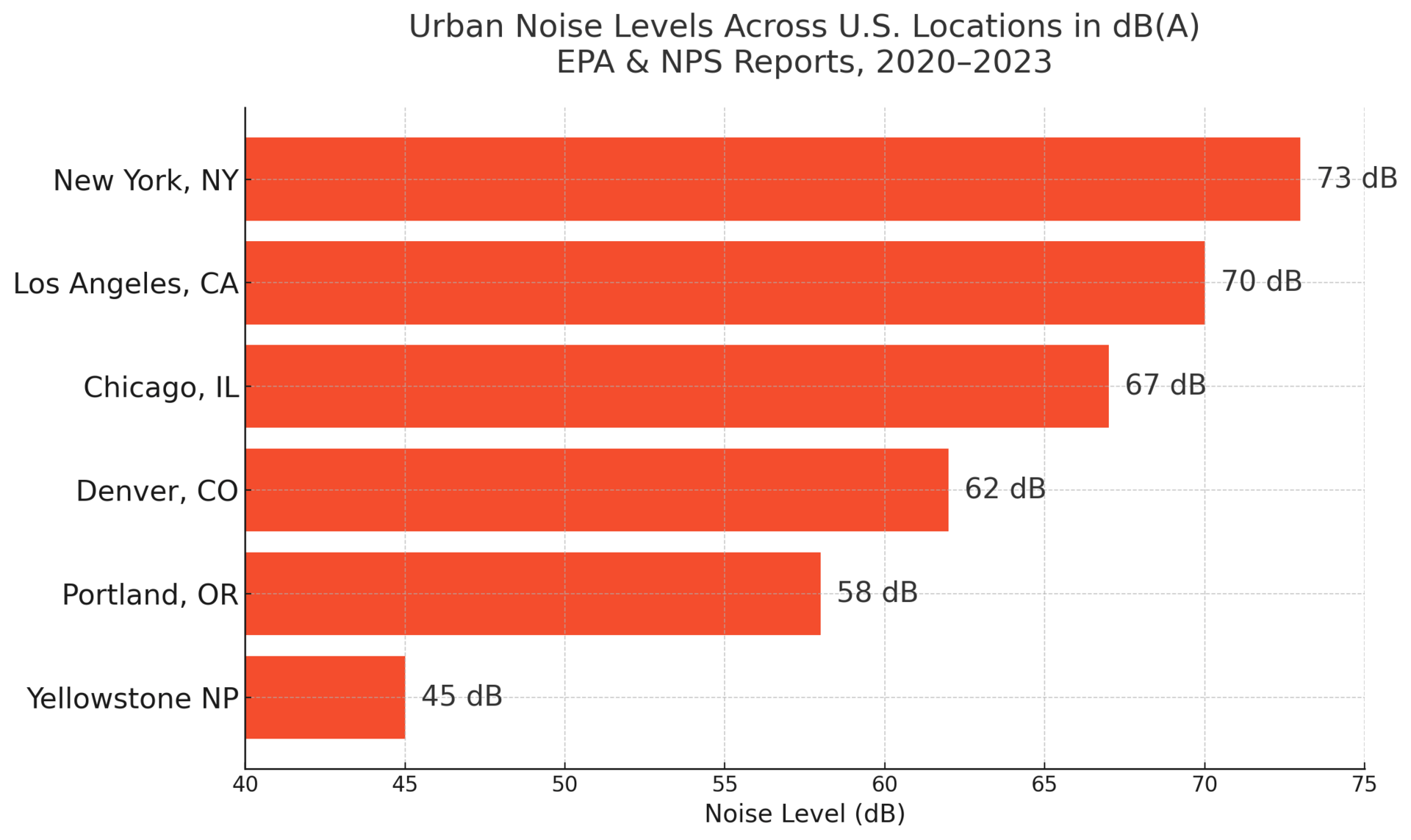
The U.S. is a paradox of noise: some of the loudest cities in the developed world, and yet home to vast pockets of profound stillness.
National Parks like Yellowstone and Zion are part of an emerging movement called “quiet tourism.” Organizations like Quiet Parks International are identifying and preserving natural acoustic sanctuaries in the U.S., and interest is growing.
Still, the U.S. faces serious challenges: urban noise levels often exceed 70 dB—well above WHO’s recommended limit of 55 dB for health.
🔍 Consider this: The National Park Service found that noise pollution disrupts animal habitats across 63% of U.S. protected lands—making silence a biodiversity issue as well.
If You Could Be Earlier Than 85% of the Market?

Most read the move after it runs. The top 250K start before the bell.
Elite Trade Club turns noise into a five-minute plan—what’s moving, why it matters, and the stocks to watch now. Miss it and you chase.
Catch it and you decide.
By joining, you’ll receive Elite Trade Club emails and select partner insights. See Privacy Policy.
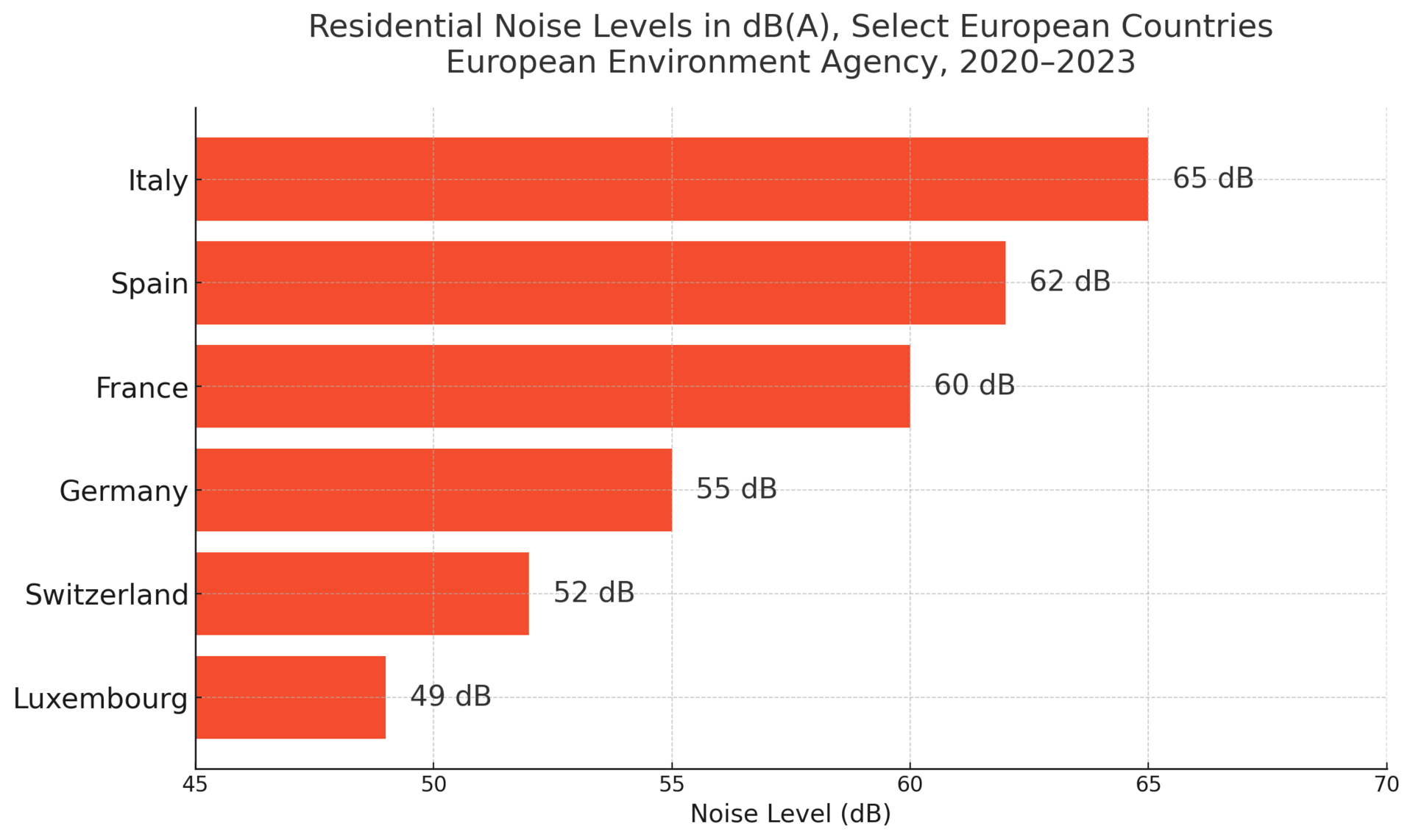
In Germany, noise isn’t just a nuisance—it’s codified in law.
🇩🇪 “Ruhezeiten” (quiet hours) are strictly enforced: from 10 p.m. to 6 a.m., and all day Sundays, mowing lawns or drilling walls can result in fines. The country also limits noise near hospitals, schools, and nature reserves.
Germany has pioneered noise mapping technology—cities like Berlin and Frankfurt use predictive models to reduce exposure by adjusting traffic flows and building materials.
🔊 Sound Strategy: Frankfurt’s airport has invested millions in noise abatement, including flight path changes and noise insulation grants for homes.
Singapore is proof that you don’t need vast wilderness to create peace.
With one of the highest population densities in the world, Singapore still ranks low on global noise indexes thanks to its rigorous urban sound policies.
The country mandates noise barriers on construction sites, enforces quiet hours, and monitors decibel levels with acoustic cameras across the city. Public education campaigns also raise awareness of “noise etiquette.”
🌱 Urban Fact: Singapore’s vertical gardens and rooftop forests don’t just cool the city—they absorb sound, reducing urban noise by up to 30%.

Noise pollution is not just annoying—it’s deadly.
The World Health Organization reports that noise exposure contributes to 48,000 heart disease deaths annually in Europe alone. It also increases the risk of diabetes, depression, and even dementia.
Sleep disruption from chronic noise can cause hormonal imbalances, accelerate aging, and reduce immune function. Countries investing in “quiet” aren't just improving quality of life—they’re extending it.
⚠️ Health stat: Children living near high-traffic areas show significantly lower reading comprehension scores due to chronic noise exposure in schools.

The next frontier in urban development? Sound-aware design.
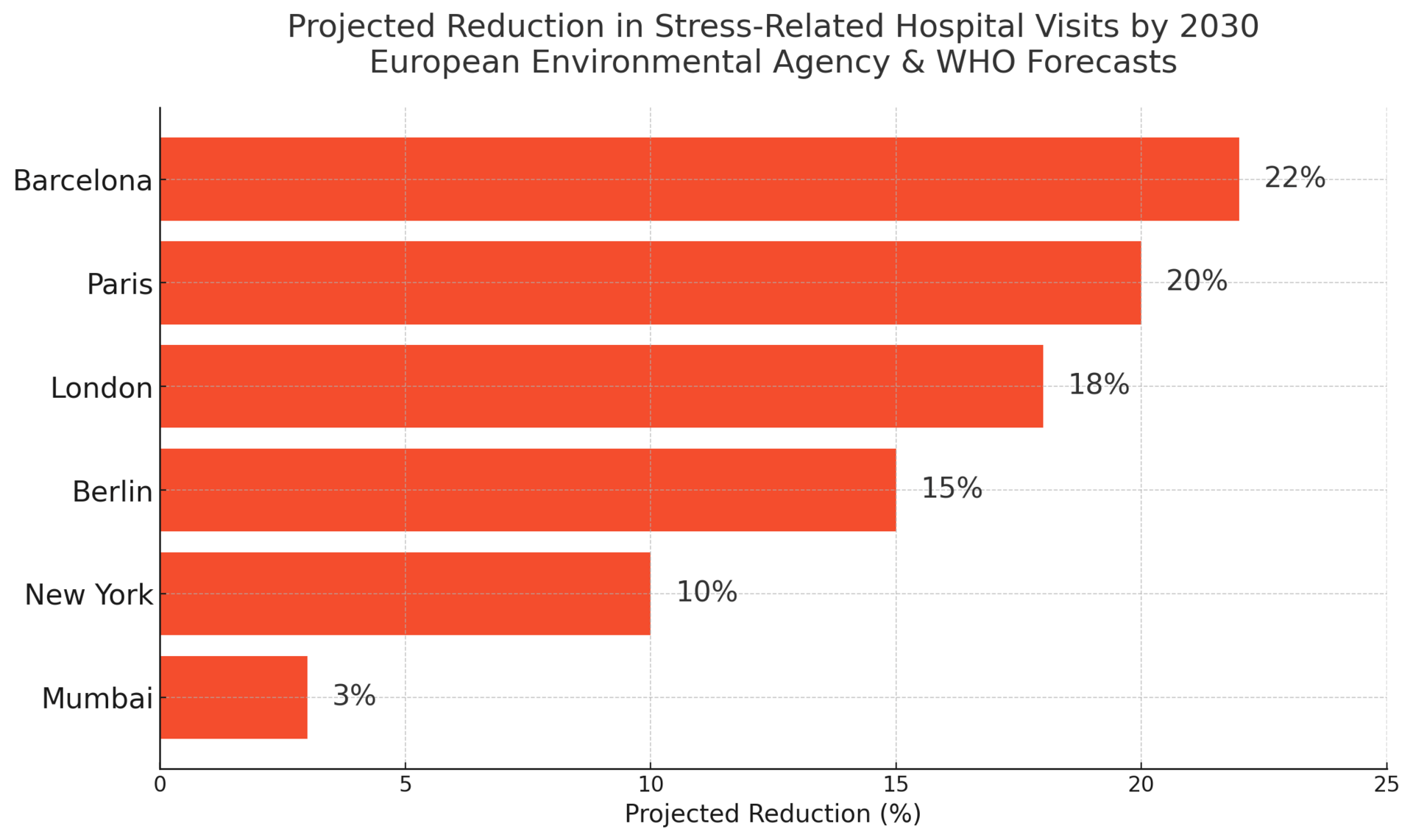
Emerging technologies include AI-driven soundscape monitoring, green noise walls, and acoustic zoning in smart cities. Paris, London, and Barcelona are experimenting with “sonic landscaping”—where natural and artificial sounds are balanced for mental well-being.
The concept of the “Quiet City” is gaining traction, where municipalities aim to not just reduce noise—but to design spaces that promote healthy, restorative sounds (like water features or rustling trees).
🌍 Projected Shift: By 2030, cities with comprehensive sound regulations could see a 20% drop in stress-related hospital visits, according to the European Environmental Agency.
Silence isn’t just golden—it’s powerful.
It protects your heart, sharpens your mind, and adds years to your life. Across the globe, nations are waking up to its value—and redesigning the future around it.
If you're choosing where to live, travel, or invest your energy—follow the quiet.
Because the countries that master silence today may be the ones thriving tomorrow.
Warm regards,
Shane Fulmer
Founder, WorldPopulationReview.com
P.S. Want to sponsor this newsletter? Reach 140,000+ global-minded readers — click here!