- World Population Review Newsletter
- Posts
- Where Clean Air Buys You Time
Where Clean Air Buys You Time
Low-pollution nations gaining a hidden longevity edge.

Philip Saparov
December 01, 2025
In partnership with

Greetings, seeker of clarity and longevity!
What if one of the biggest predictors of how long you’ll live… is the air you're breathing right now?
Forget the headlines—air pollution is quietly shaving years off lifespans around the world. But in a handful of countries, clean air is turning into a longevity advantage.
In this edition, we reveal seven places where the atmosphere itself is a health asset—and how that hidden edge could shape your next move, investment, or retirement plan.
Take a deep breath. This might just change the way you live—and where.
Don't wait until New Years to take control of your health.

Every year it’s the same - November comes, the days get dark and cold, you start skipping your morning workout, and you start to lose control of your health habits.
It’s easy to think “I’ll worry about getting back on track next year” - but there’s no reason you can’t get a head start now.
You just need a daily health habit that’s ACTUALLY easy to stick with.
That’s where AG1 comes in. With just one quick scoop every morning, you’ll get over 75 ingredients that help support your immune health, gut health, energy, and close nutrient gaps in your diet.
Right now is the best time to get started - with every new subscription, they are giving away $126 in free gifts for the holidays.
Give AG1 a try today and take back control of your health this holiday season.
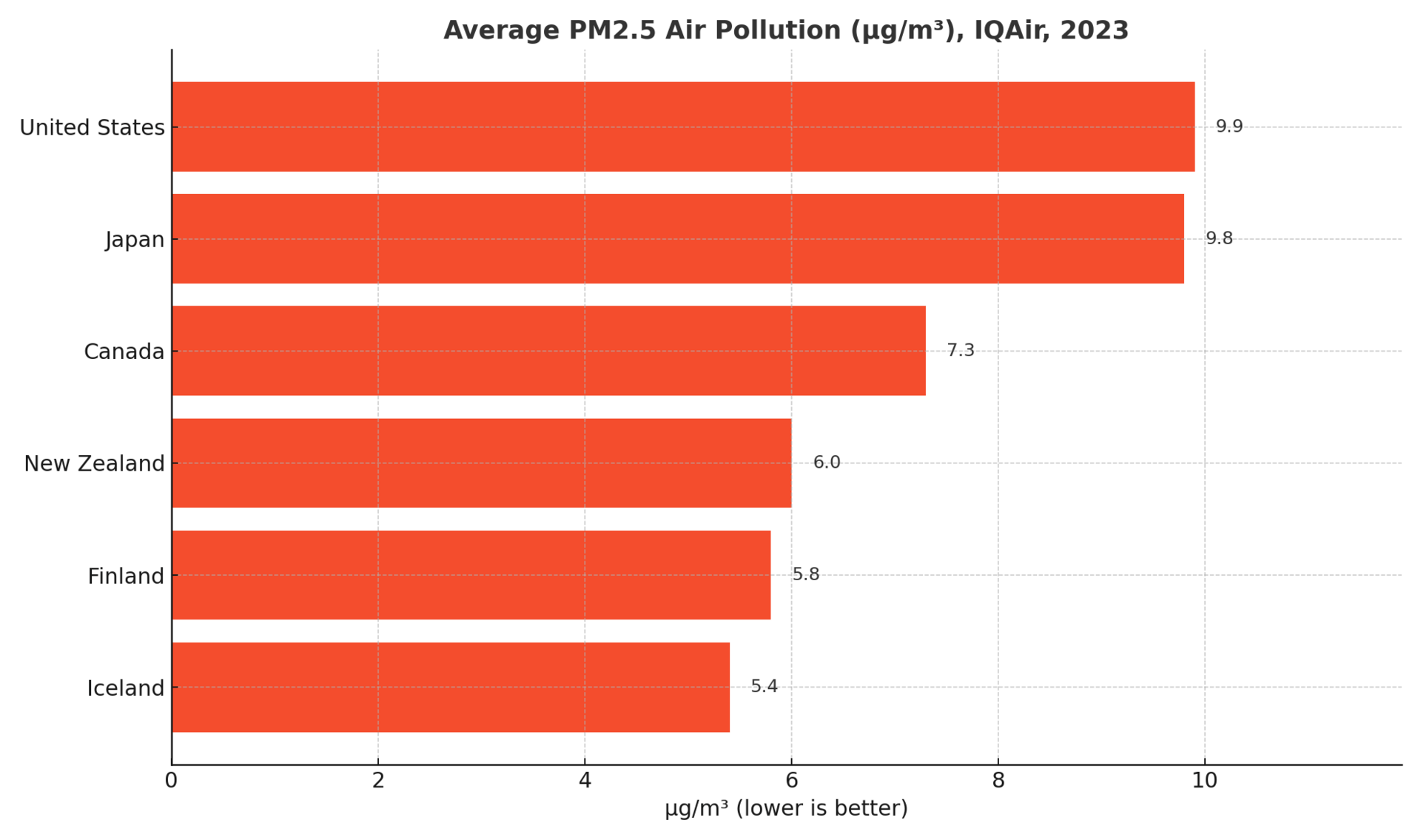
These three nations consistently top global charts for air quality. Their secret? Geography, green energy, and governance.
🇮🇸 Iceland, powered almost entirely by geothermal and hydroelectric energy, has some of the world’s lowest PM2.5 (fine particulate matter) levels. Its capital, Reykjavík, boasts cleaner air than most remote villages.
🇫🇮 Finland combines dense forests, low population, and proactive environmental policy. Helsinki’s air quality rivals rural Canada’s—and that’s saying something.
🇳🇿 New Zealand benefits from its oceanic isolation and strict environmental laws. Even Auckland, its largest city, has PM2.5 levels below WHO guidelines.
Final breath: People in these countries live, on average, 2.5 years longer than those in comparable economic regions with higher pollution.
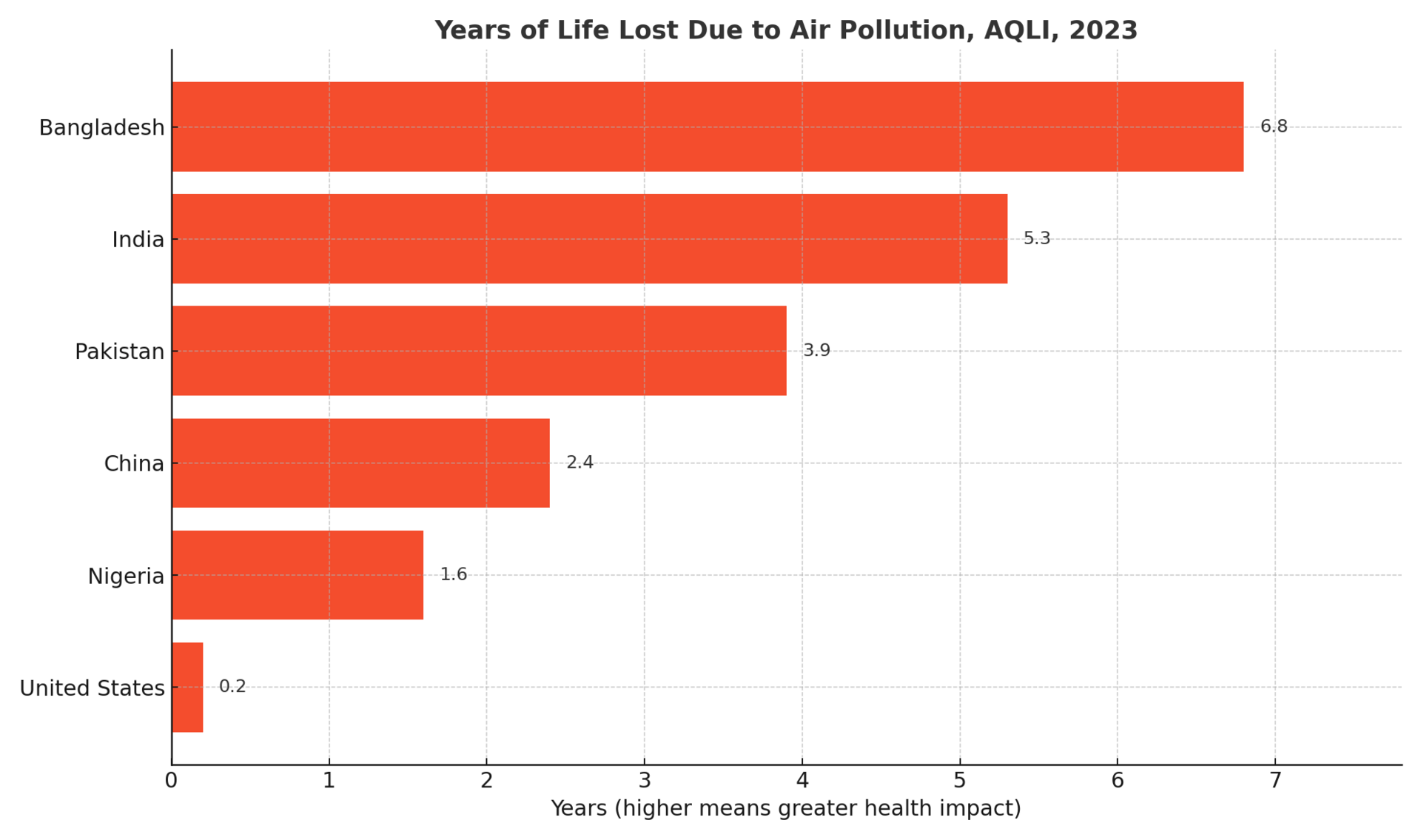
It’s not just about visible smog. Microscopic particulates (PM2.5) penetrate the lungs, bloodstream, and even the brain—cutting life short across continents.
🟤 Bangladesh, India, and Pakistan have some of the highest air pollution levels globally, reducing life expectancy by up to 6.8 years, according to the Air Quality Life Index.
🌁 Even within nations, inequality reigns. In the U.S., people in polluted counties live 1.9 years less, on average, than those in cleaner-air regions—regardless of healthcare access.
🌿 Meanwhile, cleaner countries (like Japan or Sweden) not only avoid this loss but gain longevity dividends—lower dementia rates, reduced stroke risk, and fewer respiratory deaths.
Data insight: The WHO estimates that 99% of the world’s population breathes air exceeding recommended pollution levels.
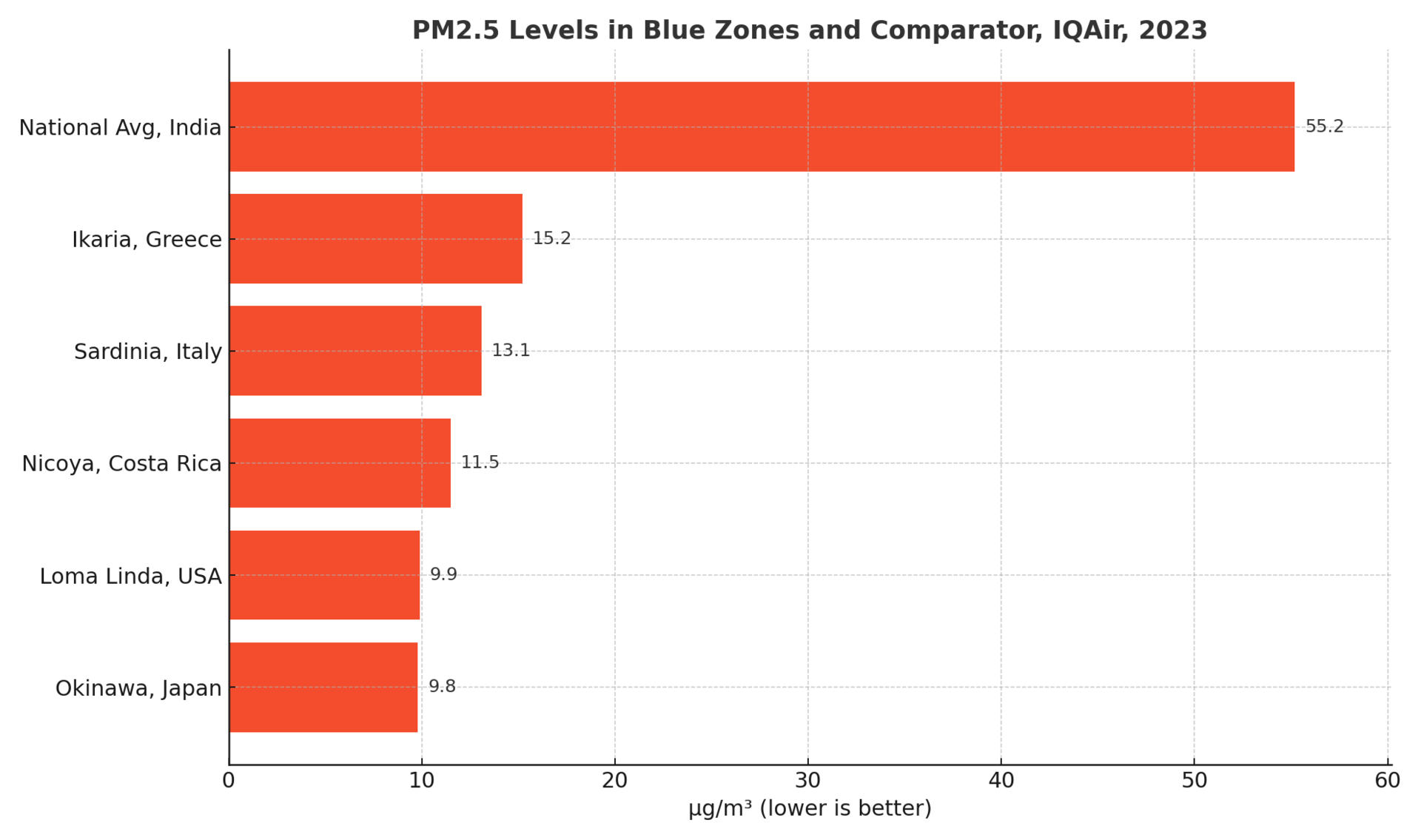
"Blue Zones"—regions where people live well past 100—may owe more to the atmosphere than we once thought.
🌀 Okinawa, Japan: Known for its centenarians, Okinawa also enjoys sea-breeze-filtered air and low industrial density.
🏔️ Sardinia, Italy: Nestled in mountainous terrain with minimal heavy industry, Sardinia’s air is remarkably clean—and locals walk it daily.
🌊 Nicoya, Costa Rica: With low emissions, coastal winds, and little traffic, Nicoya’s clean air complements its mineral-rich water and plant-based diets.
Interesting connection: A recent Stanford study found a strong overlap between air quality and longevity in five of the original Blue Zones.
The AI Insights Every Decision Maker Needs

You control budgets, manage pipelines, and make decisions, but you still have trouble keeping up with everything going on in AI. If that sounds like you, don’t worry, you’re not alone – and The Deep View is here to help.
This free, 5-minute-long daily newsletter covers everything you need to know about AI. The biggest developments, the most pressing issues, and how companies from Google and Meta to the hottest startups are using it to reshape their businesses… it’s all broken down for you each and every morning into easy-to-digest snippets.
If you want to up your AI knowledge and stay on the forefront of the industry, you can subscribe to The Deep View right here (it’s free!).
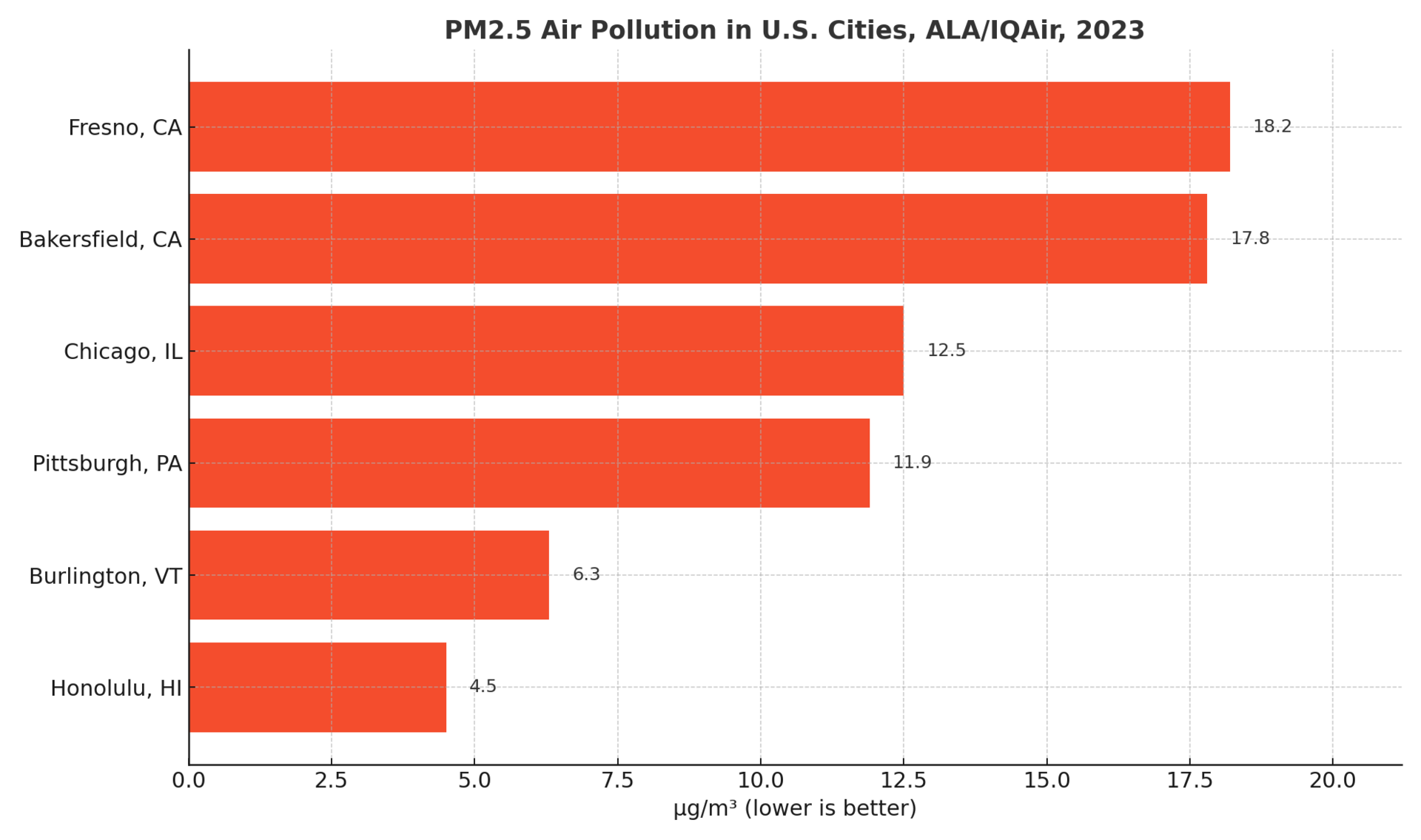
In America, the air you breathe can change your health future—by your street address.
💨 California’s Central Valley, despite being the "salad bowl of the world," suffers from some of the worst PM2.5 levels in the country due to agriculture, wildfires, and topography.
🌬️ Conversely, places like Burlington, Vermont or Honolulu, Hawaii offer some of the cleanest urban air in the nation—alongside thriving local economies and high quality of life.
⚖️ EPA regulations have helped reduce average PM2.5 levels by 41% since 2000, but disparities remain sharp, especially in low-income and minority communities.
Takeaway stat: Living in the cleanest 10% of U.S. counties could add up to 1.6 years to your life.
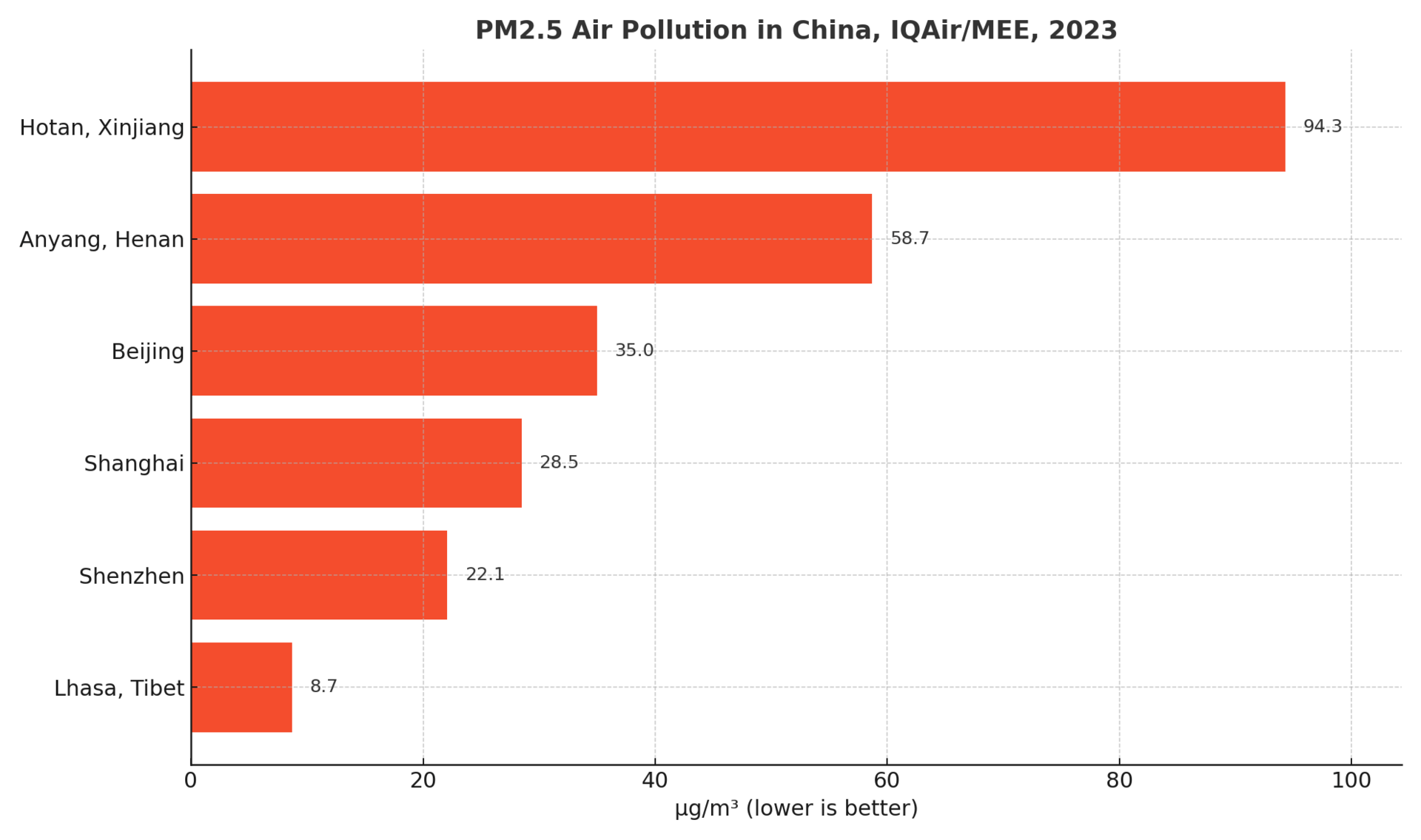
Just a decade ago, “Airpocalypse” headlines dominated Chinese news. Today? A quieter, cleaner revolution is underway.
🏭 China cut PM2.5 levels by 42% since 2013, thanks to sweeping industrial reforms, coal reductions, and green investments.
🌆 Cities like Beijing and Shanghai, once poster children for smog, now regularly outperform major South Asian cities on air quality metrics.
⚠️ Still, heavy-polluting regions remain. Rural coal use and winter heating surges keep certain provinces in the red zone.
Hidden gem: China’s aggressive policy response shows how quickly a nation can pivot from toxic to tolerable—with political will and economic alignment.
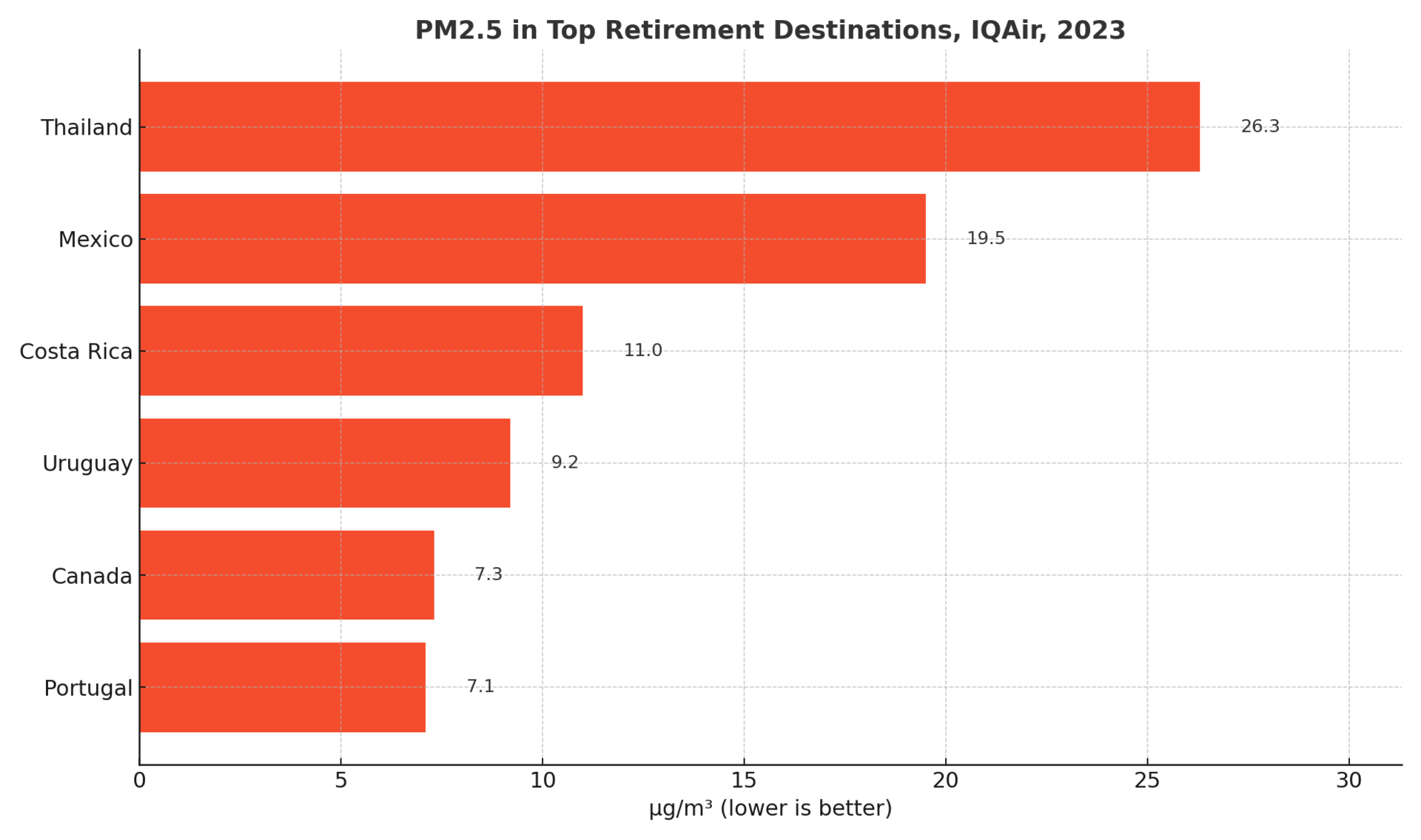
For retirees prioritizing health, air quality may soon top the checklist—alongside taxes and cost of living.
🏞️ Portugal, increasingly popular with North American retirees, offers mild weather, low pollution, and universal healthcare.
🌲 Canada consistently ranks among the cleanest air nations. For retirees drawn to nature, Nova Scotia and British Columbia offer both beauty and breathability.
🌍 Uruguay and Costa Rica offer low urban pollution, stable politics, and rising appeal among eco-conscious expats.
Fun fact: In a recent International Living survey, 82% of retirees said environmental quality was a “major factor” in choosing where to move.
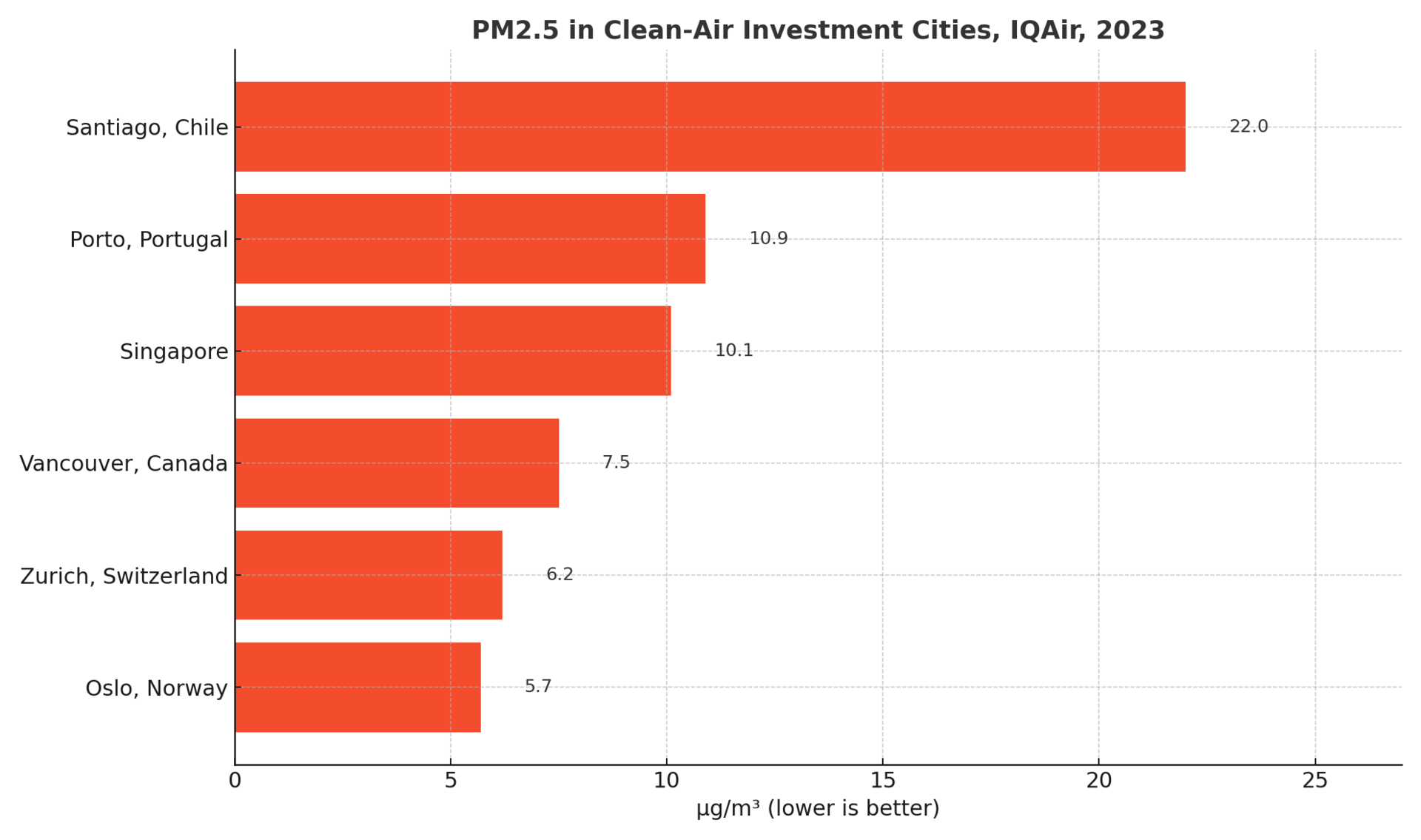
Can clean air signal a smart investment? Increasingly, yes.
💸 Real estate markets in clean-air regions—from Tasmania to Northern Portugal—are heating up as climate and health concerns drive migration.
🏢 Cities with aggressive clean-air policies (like Oslo, Zurich, and Singapore) are attracting not just tourists—but talent and capital.
📈 Companies focused on air purification, indoor air tech, and green infrastructure are growing fast. The global air purifier market alone is expected to hit $18 billion by 2030.
Investor insight: Clean air isn’t just a health asset—it’s becoming a valuation multiplier in global real estate and quality-of-life indexes.
We rarely think about the air around us—until we realize it’s quietly shaping how long we live, how well we age, and where opportunity thrives.
Clean air is no longer just an environmental perk. It’s a health asset. A strategic edge. A powerful filter for deciding where to live, grow, and invest.
Those who pay attention now won’t just live longer—they’ll live smarter.
So breathe like it matters. Because it does.
Stay sharp. Stay curious.
Warm regards,
Shane Fulmer
Founder, WorldPopulationReview.com
P.S. Want to sponsor this newsletter? Reach 139,000+ global-minded readers — click here!