- World Population Review Newsletter
- Posts
- Where Living Costs Are Surging Most Right Now
Where Living Costs Are Surging Most Right Now
The new reality of food, rent, and energy across the globe.

Philip Saparov
April 14, 2026
In partnership with

Greetings, inquisitive mind of global change!
A quiet shift is underway—and you’re likely feeling it already. Groceries cost more. Energy bills sting a bit harder. Rent, in many places, has taken on a life of its own. Across the world, the price of everyday living is rising—but not evenly.
Some places are becoming noticeably harder to afford. Others are holding steady—for now.
In this edition, we break down where the cost of basics is climbing fastest—and what that means for where you live, spend, and plan next.
Let’s take a closer look.
The Biggest Knock on Private Credit? Percent Changed That.

The number one knock on private credit has always been the same: you can't get out. Lock in for 12 or 24 months, hope things go as planned, wait. Percent changed that in December 2025 with a secondary marketplace. Browse live bid and ask data on seasoned deals, submit an indication of interest to buy or sell, and Percent coordinates the match. For accredited investors who want private credit yields without locking up capital indefinitely, you can do that now. The numbers as of Q4 2025: · $1.82B funded across 981 deals · 16.72% current weighted average coupon · 0.58% lifetime charge-off rate Very few individual investor platforms offer this. New investors can receive up to $500 on their first investment.
Alternative investments are speculative. Secondary liquidity not guaranteed. Past performance not indicative. Terms apply.
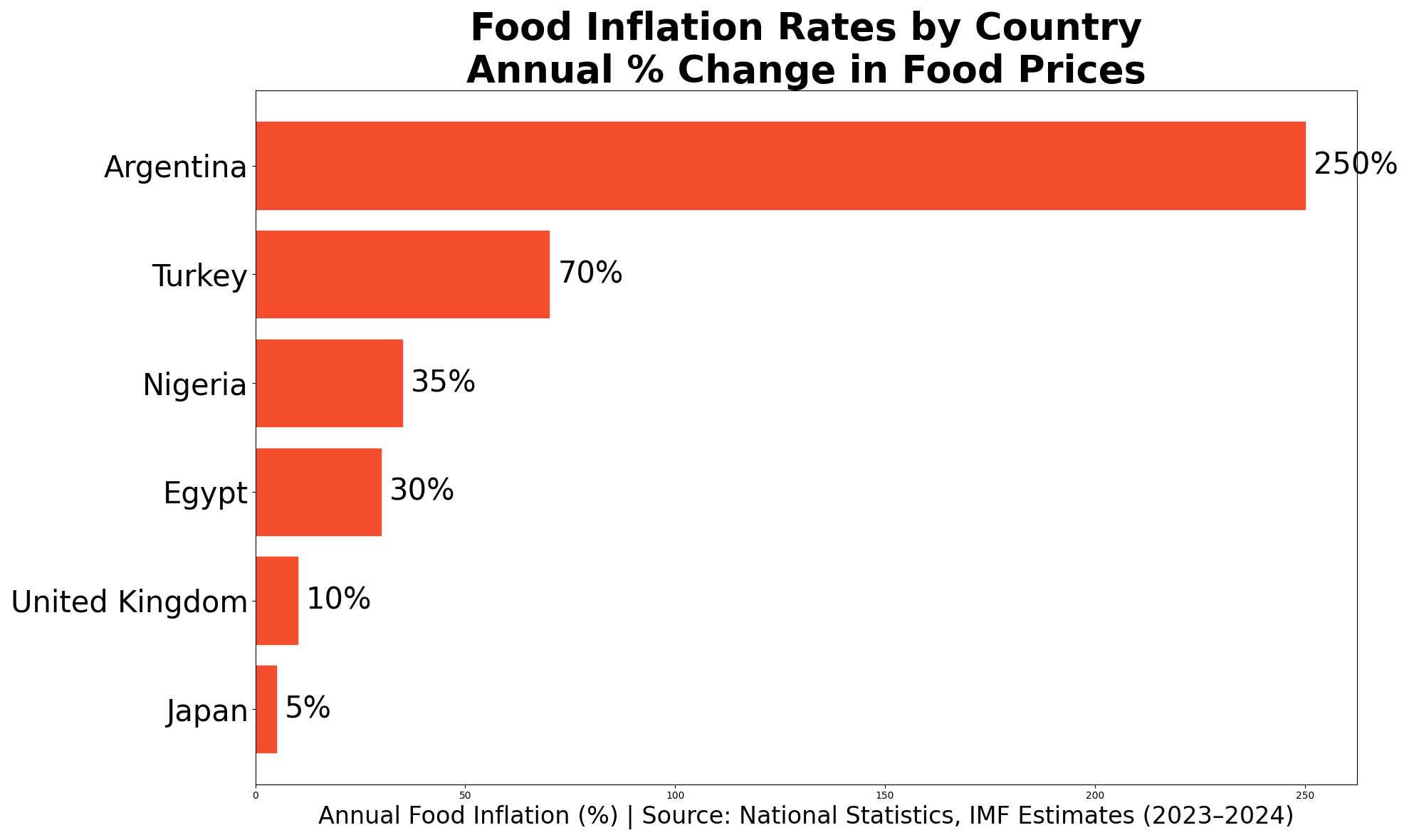
Food is the most immediate pressure point—and in some countries, it’s becoming a defining economic force. What used to be a minor monthly adjustment is now a major line item.
🇦🇷 Argentina continues to grapple with triple-digit inflation, where grocery prices can shift noticeably within weeks. Staples like bread and beef—once national symbols of abundance—have become budget stressors.
🇹🇷 Turkey has seen persistent food inflation driven by currency depreciation and supply chain volatility. Households are adapting by shifting toward cheaper, local alternatives.
🇳🇬 Nigeria faces a different challenge: structural supply issues. Rising transport costs and insecurity in farming regions have pushed food prices sharply upward.
Putting It Into Perspective: Food inflation isn’t just about higher prices—it changes diets, health outcomes, and long-term savings potential. For those considering relocation or retirement, stable food systems matter more than ever.
🔎 A striking reality: In Argentina, annual inflation has exceeded 200%, meaning food prices can double in less than a year.
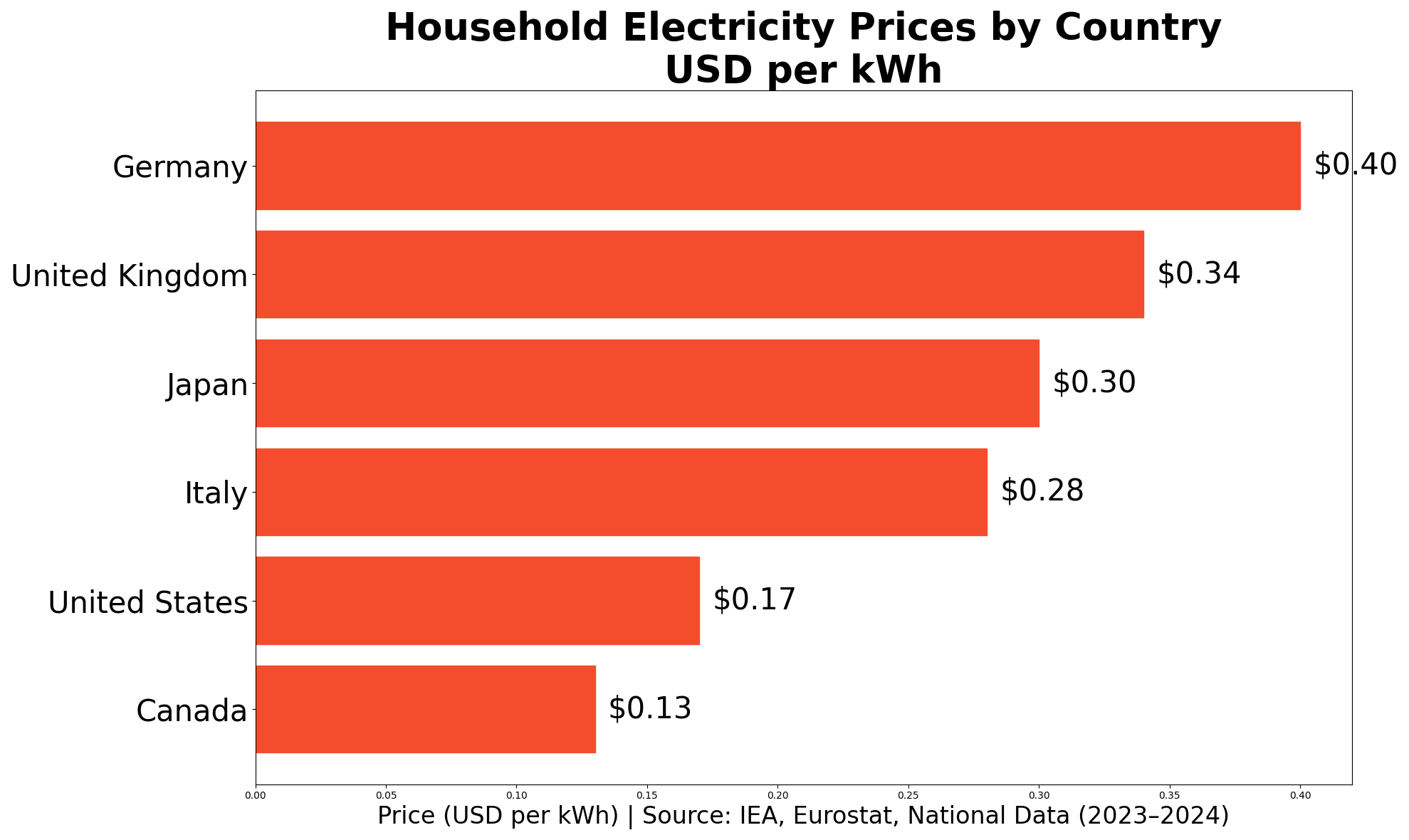
Energy costs ripple through every part of life—from heating homes to running businesses. When energy spikes, everything else tends to follow.
🇩🇪 Germany, once reliant on cheap Russian gas, has faced sustained energy cost volatility. While prices have stabilized somewhat, they remain significantly higher than pre-2022 levels.
🇬🇧 The United Kingdom has experienced steep household energy bills, forcing policy interventions like price caps to protect consumers.
🇯🇵 Japan, heavily dependent on energy imports, has seen rising electricity costs driven by global fuel prices and currency weakness.
Putting It Into Perspective: Energy affordability directly affects quality of life—especially for retirees or those on fixed incomes. Countries with domestic energy sources or diversified supply tend to offer more stability.
💡 Insight: In the UK, energy bills at their peak consumed over 10% of average household income—a threshold often associated with “energy poverty.”
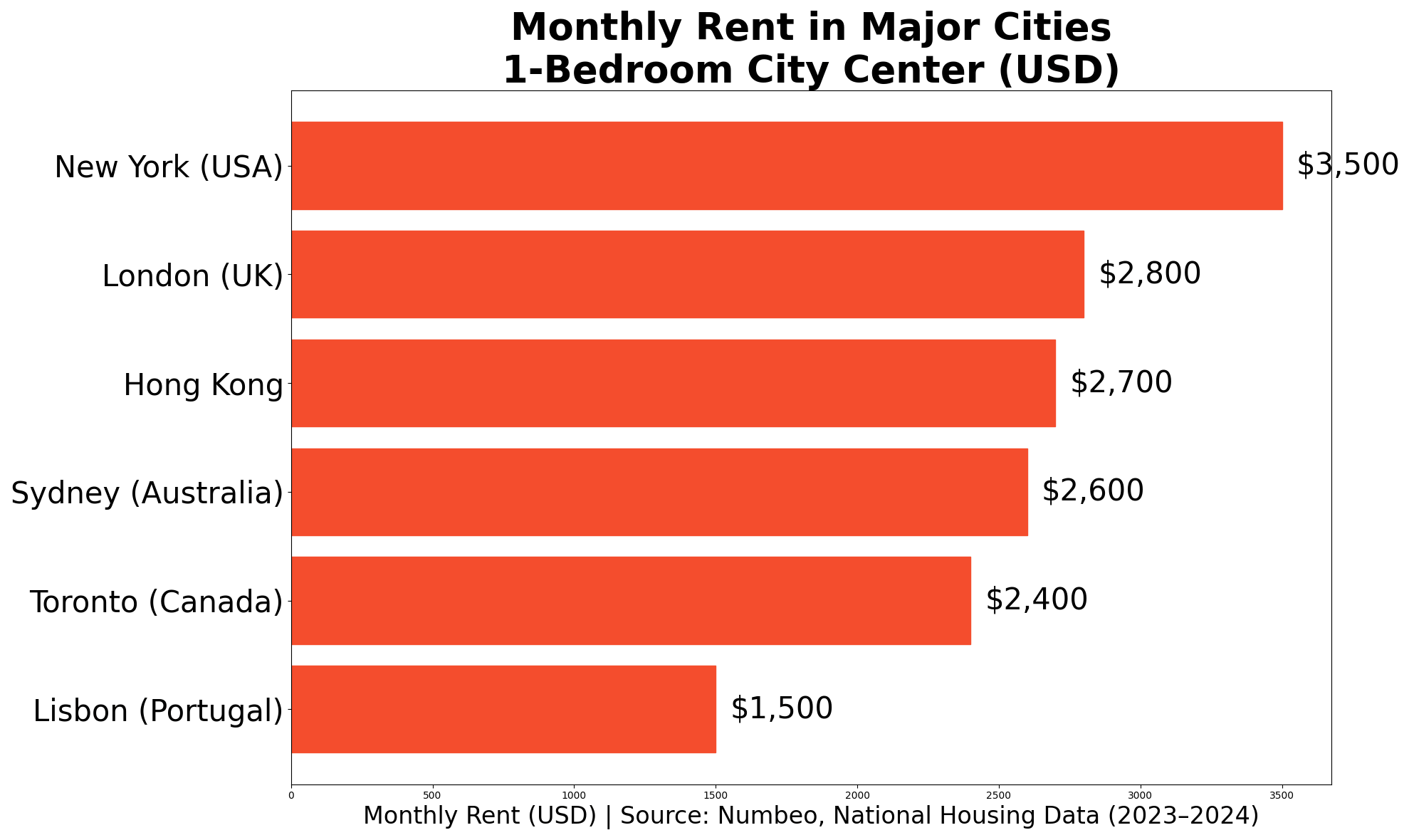
Housing costs are rising in ways that are both widespread and deeply local. Supply shortages, migration patterns, and investment flows are all colliding.
🇨🇦 Canada has seen rapid rent increases in cities like Toronto and Vancouver, driven by population growth and limited housing supply.
🇦🇺 Australia faces similar pressures, with vacancy rates at historic lows and rents climbing sharply across major cities.
🇵🇹 Portugal, once a haven for affordable European living, is experiencing rising rents due to foreign investment and digital nomad demand.
Putting It Into Perspective: Housing is often the largest expense. Even modest increases can significantly impact long-term financial planning, especially for those considering relocation.
🏠 A notable shift: Lisbon rents have increased by over 30% in just a few years, pricing out many locals and reshaping the city’s demographic makeup.
Nuclear Stocks Are Surging - These 7 Lead the Pack

For years, investors ignored nuclear.
Now energy demand is rising, supply is tight, and governments are backing buildouts.
Yet parts of the sector still trade as if nothing changed.
The 7 Top Nuclear Stocks to Buy Now report highlights companies leading this rally and positioned to benefit as momentum builds.
In many emerging economies, rising costs of basics are not just inconvenient—they’re destabilizing.
🇪🇬 Egypt has faced rising food and fuel costs alongside currency devaluation, putting pressure on middle- and lower-income households.
🇵🇰 Pakistan has experienced sharp increases in energy and food prices, compounded by fiscal challenges and import costs.
🇰🇪 Kenya is seeing steady increases in fuel and food, affecting transportation and daily living expenses.
Putting It Into Perspective: These regions often experience the fastest cost increases because they rely heavily on imports and are more sensitive to currency fluctuations.
📊 A telling detail: In several emerging markets, households spend over 40% of their income on food alone—leaving little room to absorb price shocks.

Some countries once known for low living costs are quickly losing that reputation.
🇲🇽 Mexico has seen rising prices in popular expat hubs like Mexico City and Playa del Carmen, driven by demand from remote workers.
🇹🇭 Thailand, long a budget-friendly destination, is experiencing gradual increases in rent and food in tourist-heavy regions.
🇪🇸 Spain remains relatively affordable compared to Western Europe, but cities like Barcelona are seeing upward pressure on rents and utilities.
Putting It Into Perspective: Affordability is dynamic. A destination that was ideal five years ago may no longer offer the same value today.
🌍 A subtle shift: Mexico City rents in prime neighborhoods have surged over 20% in recent years, largely due to foreign demand.

Not everywhere is experiencing rapid increases. Some countries offer relative stability—at least for now.
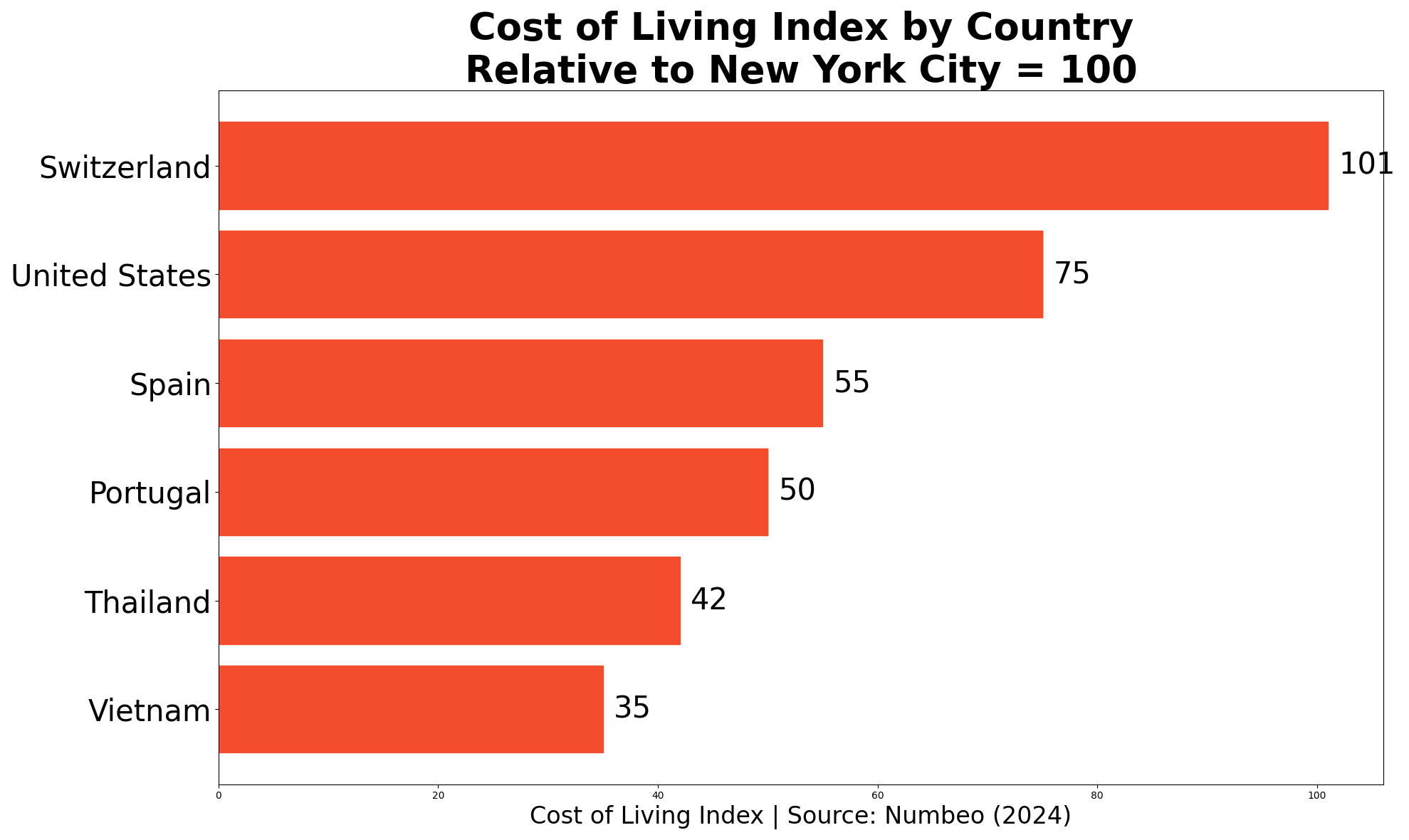
🇨🇭 Switzerland remains expensive but stable, with predictable cost increases and strong currency support.
🇸🇬 Singapore has high costs but benefits from efficient infrastructure and controlled inflation in essentials.
🇻🇳 Vietnam continues to offer relatively low living costs, though prices are gradually rising as the economy grows.
Putting It Into Perspective: Stability can be just as valuable as low costs. Predictable expenses make long-term planning far easier.
📈 Interesting note: Vietnam’s cost of living remains among the lowest in Asia, yet its economy is growing at one of the fastest rates globally—a rare combination.

Rising costs of basics aren’t just economic data—they’re signals. Signals about where opportunity is shifting, and where risks are building.
🌍 Relocation decisions: Countries with stable food and energy systems may offer better long-term value than those with short-term affordability.
💰 Investment considerations: Real estate markets in “rising cost zones” may offer growth—but also volatility.
🧭 Lifestyle planning: Understanding cost trends can help you choose where to spend your time, money, and energy more wisely.
Putting It Into Perspective: The smartest decisions often come from seeing trends early—not reacting when they peak.
🔮 Forward-looking insight: By 2030, global urban housing demand is expected to outpace supply in many regions, suggesting continued upward pressure on rents worldwide.
The rising cost of basics is more than a financial story—it’s a reshaping of how and where people live. Some regions will adapt smoothly; others will struggle. But for those paying attention, these shifts offer clarity.
Clarity on where to go, what to avoid, and how to position yourself for a more stable, fulfilling future.
Stay informed, stay curious—and keep exploring the patterns shaping our world.
Warm regards,
Shane Fulmer
Founder, WorldPopulationReview.com
P.S. Want to sponsor this newsletter? Reach 144,000+ global-minded readers — click here!