- World Population Review Newsletter
- Posts
- Where Urban Green Space Is Vanishing Fastest
Where Urban Green Space Is Vanishing Fastest
How rapid urban growth is squeezing nature out block by block.

Philip Saparov
March 14, 2026
Sponsored by

Greetings, inquisitive mind of world events!
Cities promise opportunity—but as skylines rise, something quieter is disappearing: urban green space.
Parks, tree-lined streets, and wetlands are steadily replaced by towers and roads. Yet this shift matters more than it might seem. Access to green space is closely tied to health, stress levels, and even property values.
So where is nature disappearing fastest—and which cities are finding ways to protect it?
Let’s take a look.
Is Your Retirement Plan Built to Last?

Most people saving for retirement have a number in mind. Fewer have a plan for turning that number into actual income.
The Definitive Guide to Retirement Income walks you through the questions that matter: what things will cost, where the money comes from, and how to keep your portfolio aligned with your long-term goals.
If you have $1,000,000 or more saved, download your free guide and start building a retirement income plan that holds up.
Nowhere is the pressure on urban land greater than in Asia’s rapidly expanding megacities. Millions migrate to these economic engines every year, and development often outpaces environmental planning.
Three cities illustrate the challenge clearly.
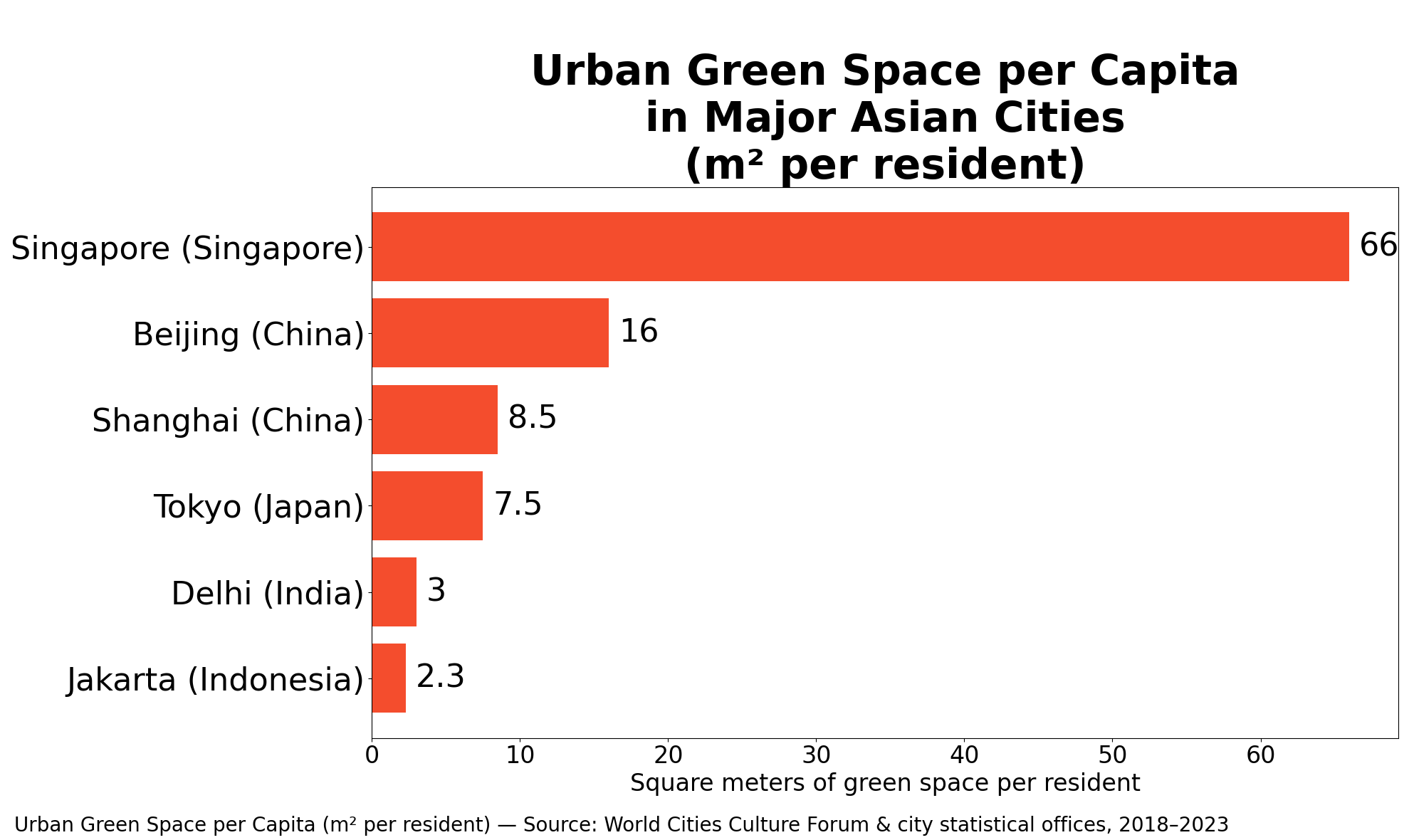
🇨🇳 Shanghai has expanded its built environment dramatically over the past three decades. While the city has created impressive waterfront parks, dense high-rise districts continue to replace older neighborhoods that once contained informal green courtyards and trees.
🇮🇳 Delhi faces a similar dilemma. Rapid construction and road expansion have eaten into urban forests and wetlands, even as pollution levels make green buffers more important than ever.
🇮🇩 Jakarta—already one of the fastest-growing cities in Southeast Asia—has seen wetlands and mangrove areas replaced by residential developments.
Putting It Into Perspective: In many Asian megacities, green space per resident has fallen below 10 square meters per person, far below the World Health Organization’s recommended minimum of 9–15 m². In the densest districts, it can drop to just 2–3 m².
Urban greenery has always been scarce in desert climates, but modern development has intensified the challenge.
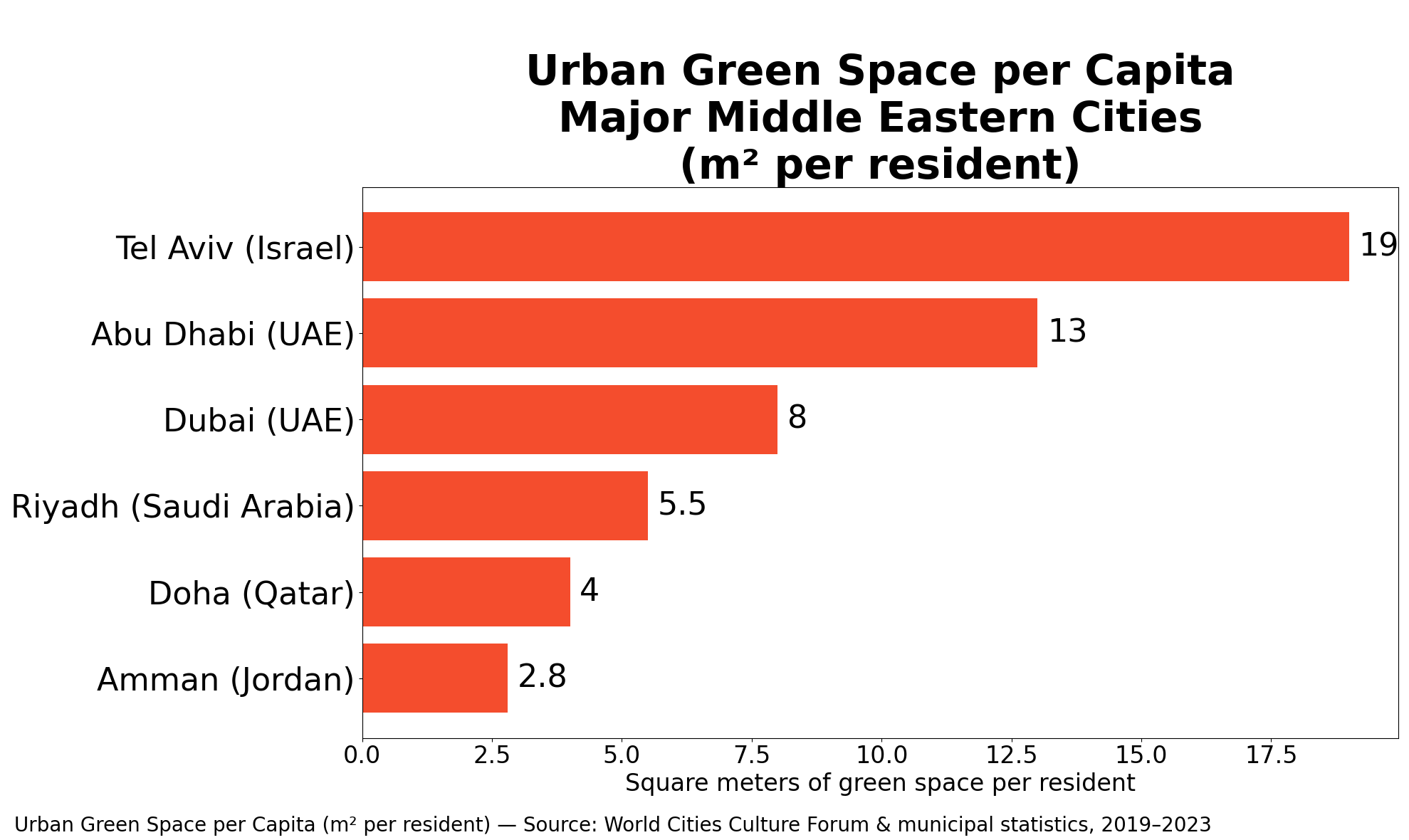
🇦🇪 Dubai has transformed from a small coastal settlement into a global metropolis in just a few decades. While master-planned communities include landscaped parks, the sheer scale of construction has replaced many natural desert ecosystems.
🇸🇦 Riyadh has expanded outward at extraordinary speed. The city’s footprint has grown nearly tenfold since the 1970s, replacing desert landscapes with highways and residential compounds.
🇶🇦 Doha has also undergone rapid transformation. Major infrastructure projects tied to economic growth have altered coastal environments and reduced natural vegetation areas.
Putting It Into Perspective: In extremely hot climates, losing green space has an outsized effect. Trees and vegetation can lower local temperatures by 2–5°C (3–9°F)—a crucial buffer in regions where summer temperatures routinely exceed 110°F (43°C).
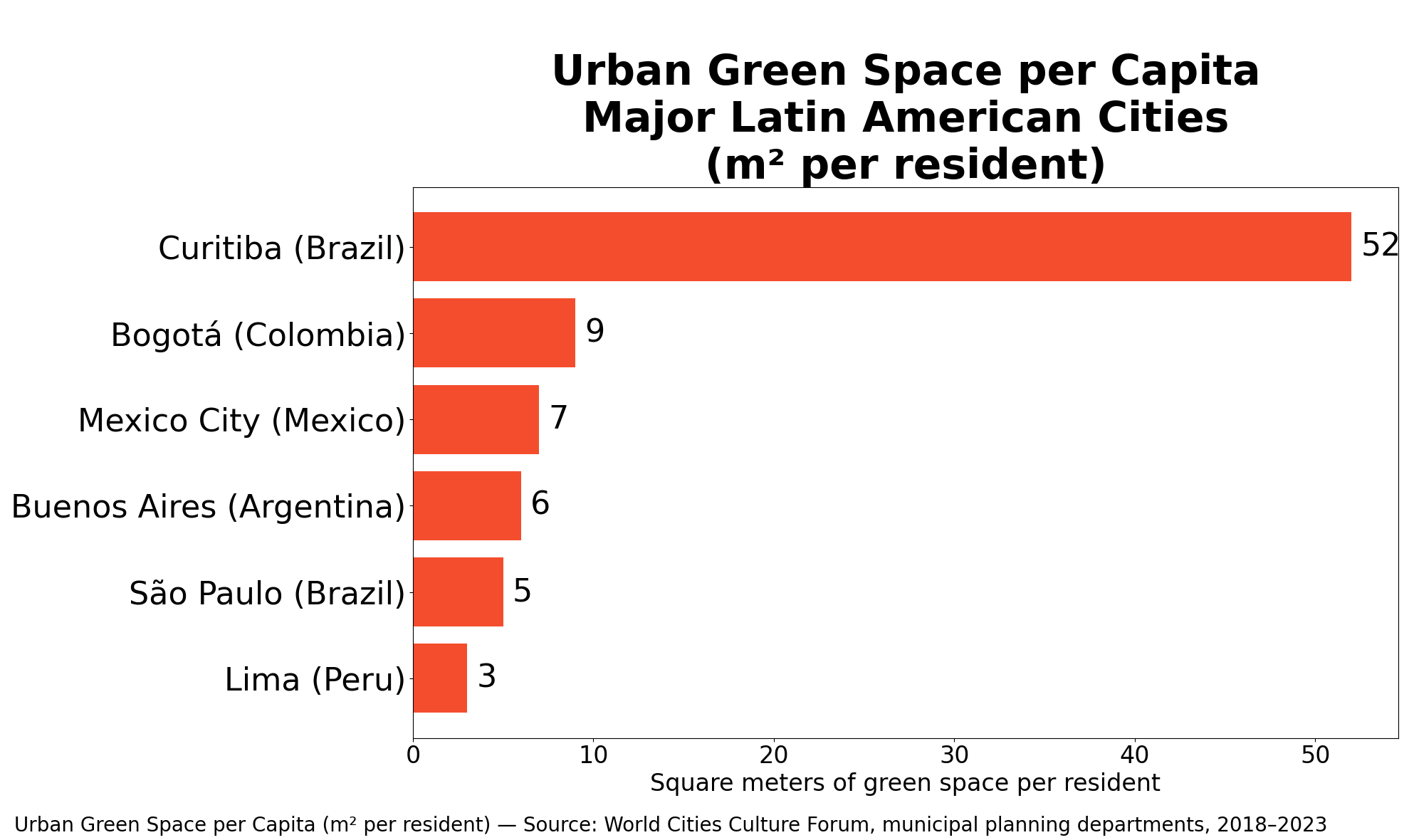
Latin American cities are famous for their vibrant street life, but many are also among the most densely built urban environments in the world.
🇧🇷 São Paulo, South America’s largest city, has seen decades of expansion replace large areas of native Atlantic Forest. Though the city still has significant parks, many neighborhoods remain underserved by accessible green areas.
🇲🇽 Mexico City continues to expand into surrounding ecological zones. Urbanization has steadily reduced wetlands and forested hillsides that once surrounded the basin.
🇨🇴 Bogotá has made progress building bike lanes and public parks, yet population growth still pressures surrounding natural areas.
Putting It Into Perspective: In some districts of São Paulo, residents have less than 5 m² of green space per person—a stark contrast to cities like Vienna, where residents enjoy over 100 m² per person.
Real-World Ads, Simple to Run

With AdQuick, executing Out Of Home campaigns is as easy as running digital ads. Plan, deploy, and measure your real-world advertising effortlessly — so your team can scale campaigns and maximize impact without the headaches.
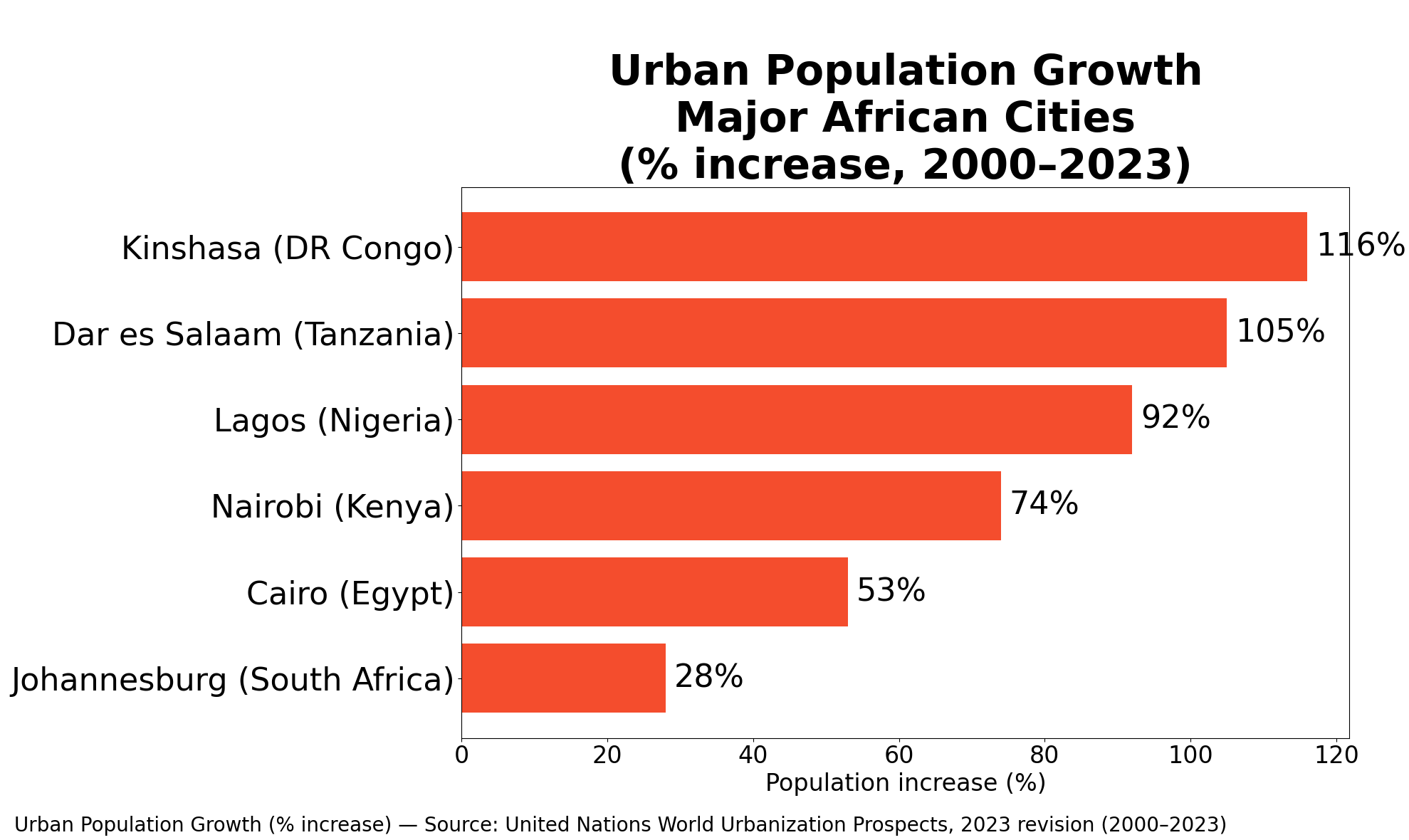
Africa is urbanizing faster than any other continent. By 2050, the region’s urban population is expected to triple—a demographic shift with enormous environmental implications.
🇳🇬 Lagos exemplifies the challenge. Rapid development has filled wetlands and coastal vegetation areas that once helped absorb flooding and cool the city.
🇰🇪 Nairobi faces similar pressures. Informal settlements and infrastructure projects are encroaching on forests and wildlife corridors near the city.
🇪🇬 Cairo continues expanding into desert and agricultural land along the Nile, replacing fertile green zones with residential and commercial districts.
Putting It Into Perspective: Africa’s cities often grow faster than planning systems can adapt. In Lagos, the population has surged from about 1.4 million in 1970 to over 20 million today—leaving little time to preserve natural spaces.
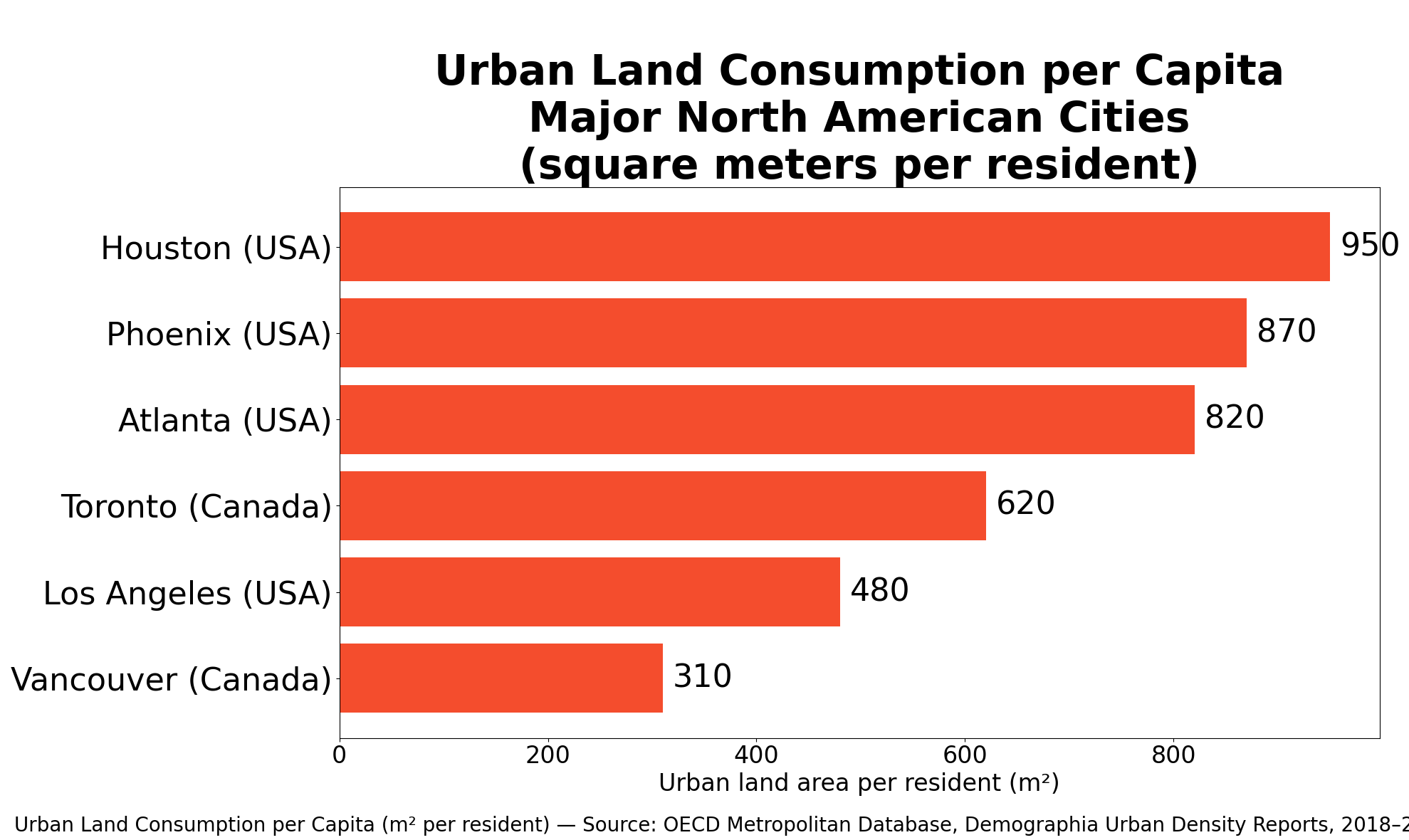
Unlike dense megacities, many North American urban areas lose green space through horizontal expansion rather than vertical growth.
🇺🇸 Houston has become a symbol of rapid suburban sprawl. Expanding highways and housing developments have steadily replaced prairies and wetlands.
🇨🇦 Toronto continues pushing outward into surrounding farmland and forests as its population grows.
🇺🇸 Phoenix, one of the fastest-growing U.S. cities, has converted large stretches of desert into suburban developments.
Putting It Into Perspective: In the United States alone, roughly 2 million acres of natural land are converted to urban use every year—an area roughly the size of Delaware disappearing annually.
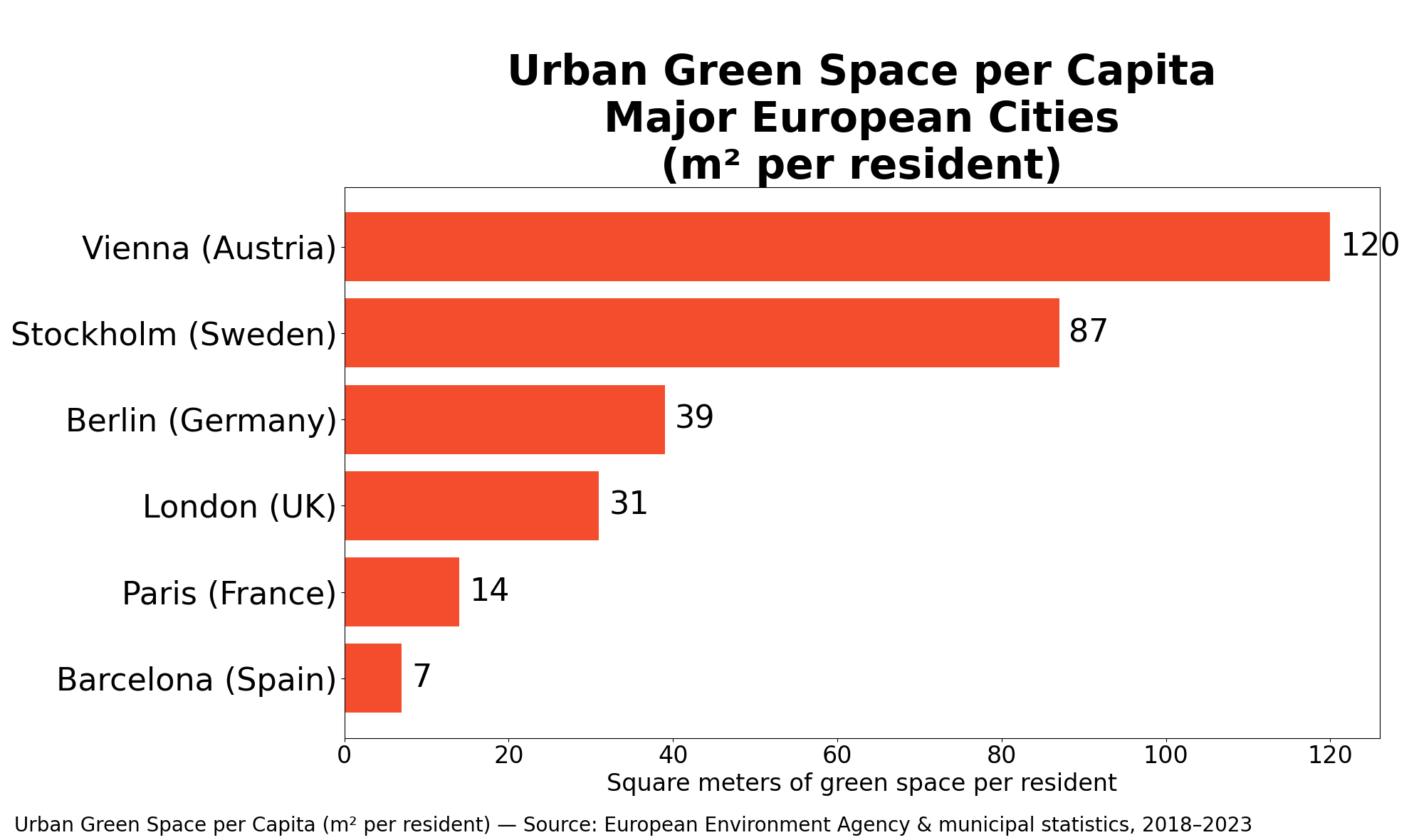
Europe generally protects green space more carefully than many regions, but urban density still creates trade-offs.
🇬🇧 London remains famous for its parks, yet housing demand continues pushing development into surrounding green belts.
🇩🇪 Berlin has experienced a construction boom as its population grows, putting pressure on vacant lots and small neighborhood green spaces.
🇪🇸 Barcelona, already one of Europe’s densest cities, struggles to add greenery in neighborhoods built long before modern urban planning.
Putting It Into Perspective: Barcelona’s famous Eixample district contains only about 1–2 m² of green space per resident, prompting major efforts to convert streets into pedestrian-friendly “superblocks.”
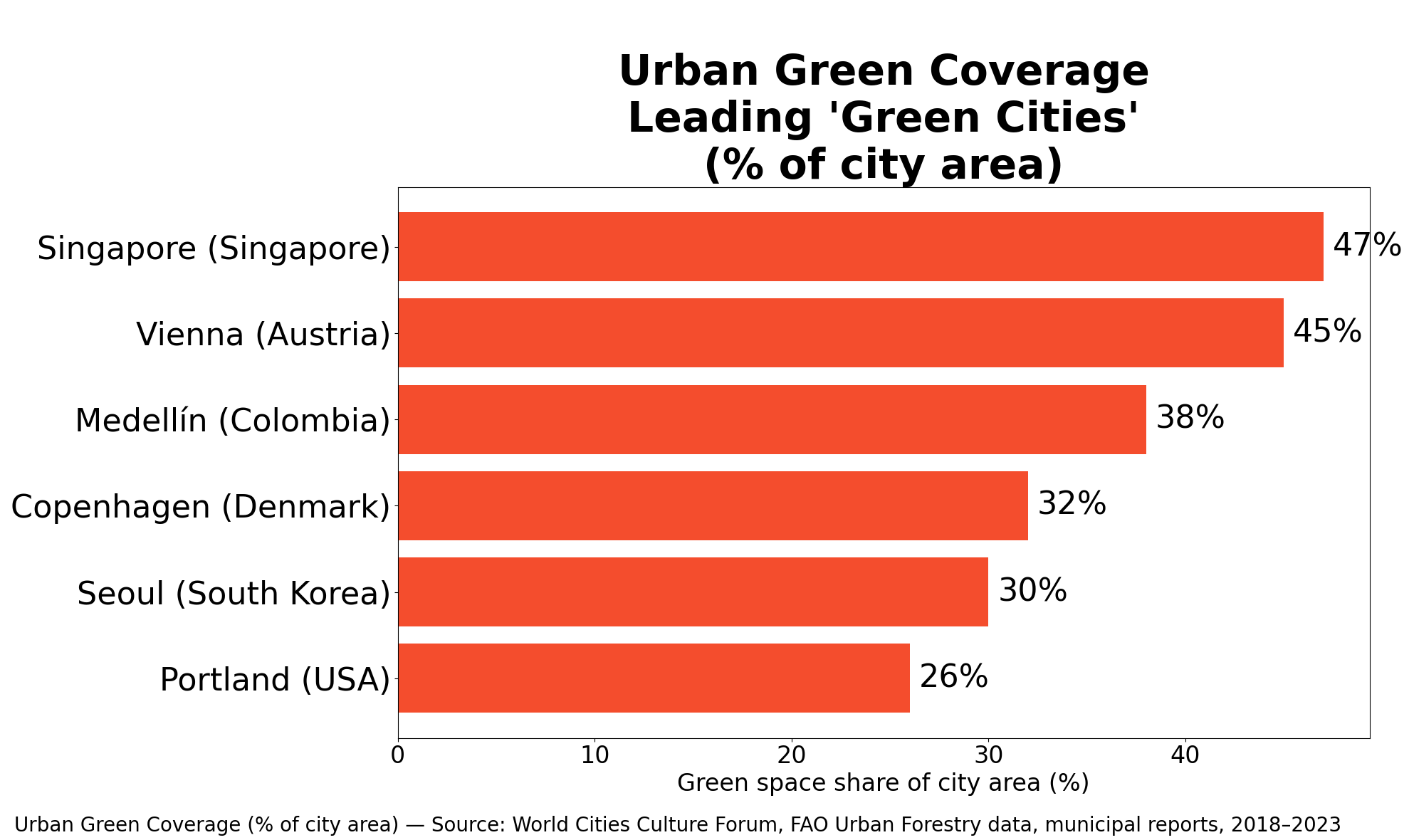
The disappearance of urban nature has sparked a powerful response: a global movement to rebuild green space inside cities.
Several cities are becoming models for the future.
🇸🇬 Singapore has earned the nickname “City in a Garden.” Through rooftop gardens, vertical forests, and strict planning rules, nearly half the island remains green despite extreme density.
🇦🇹 Vienna consistently ranks among the world’s most livable cities thanks in part to vast parks, forests, and riverside green zones.
🇨🇴 Medellín has pioneered “green corridors”—tree-lined urban routes that cool neighborhoods and reduce pollution.
Putting It Into Perspective: Singapore’s urban tree canopy is so extensive that researchers estimate it can lower city temperatures by up to 7°C (12°F) in some districts.
Cities drive innovation—but they also shape our health and quality of life. As urban areas grow, green space is quietly becoming one of the most important indicators of long-term livability.
The cities that thrive in the future may be those that remember a simple truth: great cities need room to breathe.
Stay curious, stay informed—and keep exploring the forces shaping our world.
Warm regards,
Shane Fulmer
Founder, WorldPopulationReview.com
P.S. Want to sponsor this newsletter? Reach 140,000+ global-minded readers — click here!