- World Population Review Newsletter
- Posts
- Who Really Controls the Digital World Now?
Who Really Controls the Digital World Now?
How platform dominance is reshaping power, risk, and control.

Philip Saparov
April 17, 2026
In partnership with

Greetings, inquisitive mind of global shifts!
The modern economy runs on platforms. The apps you use, the services you rely on—even critical systems—are powered by a handful of tech giants. It’s seamless, efficient… and easy to overlook.
But what happens when entire countries depend on infrastructure they don’t control?
Today, we explore where that dependence runs deepest—and why it matters more than you might think.
Let’s take a closer look.
Fast browsing. Faster thinking.
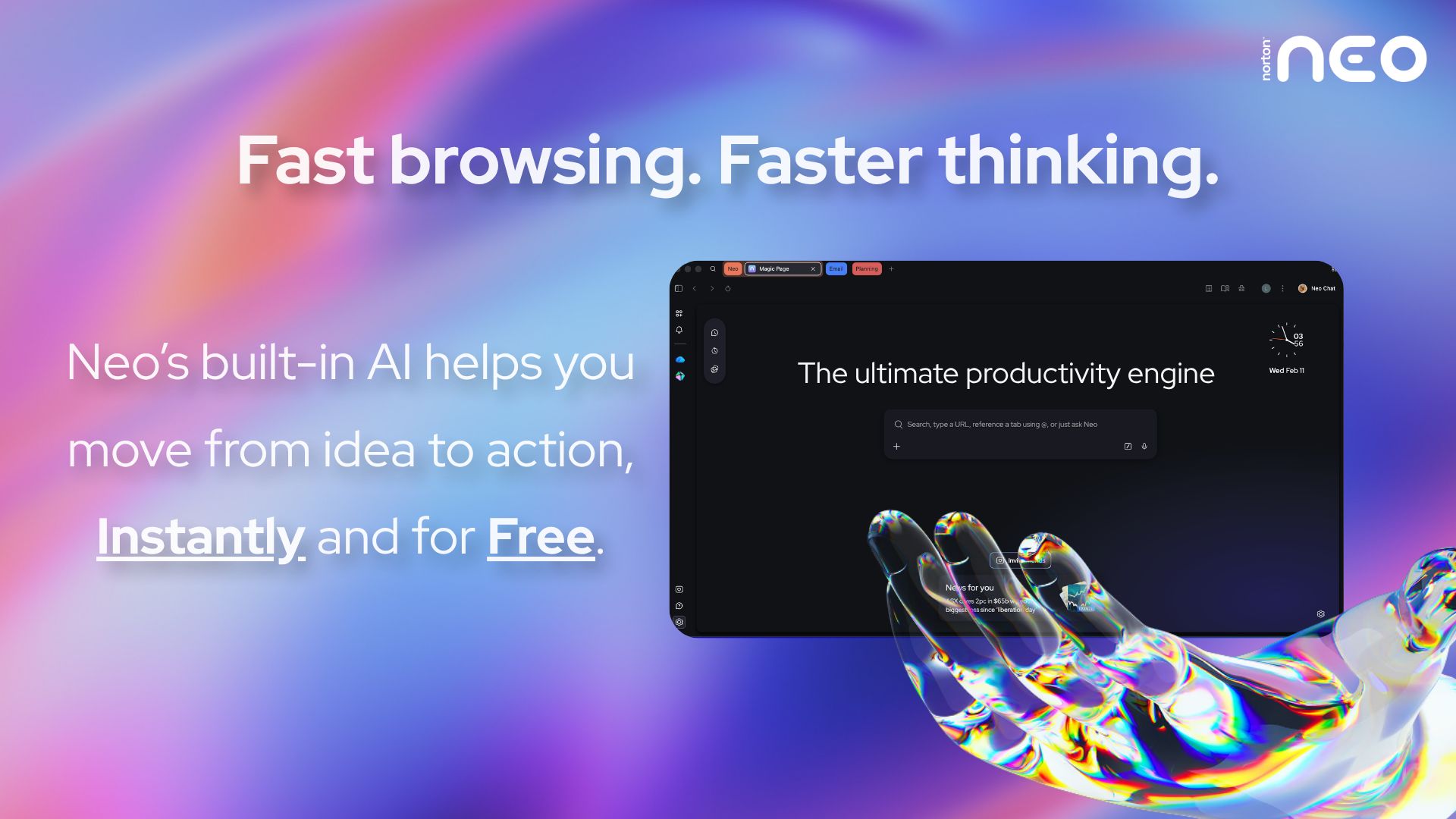
Your browser gets you to a page. Norton Neo gets you to the answer. The first safe AI-native browser built by Norton moves with you from idea to action without slowing you down. Magic Box understands your intent before you finish typing. AI that works inside your flow, not beside it. No prompting. No copy-pasting. No switching apps.
Built-in AI, instantly and for free. Privacy handled by Norton. Built-in VPN and ad blocking protect you by default. No configuration. No extra apps. Nothing to think about.
Fast. Safe. Intelligent. That's Neo.
The digital backbone of many economies isn’t local—it’s rented. Cloud computing—dominated by Amazon, Microsoft, and Google—now hosts everything from tax systems to hospital data and financial transactions.
🇮🇪 Ireland stands out as Europe’s data hub, attracting tech giants with low corporate taxes and favorable regulation. This has boosted GDP—but also means a large portion of economic output is tied to foreign firms’ strategic decisions.
🇸🇬 Singapore has become Southeast Asia’s cloud gateway, enabling cross-border finance, AI development, and logistics. Its strength lies in connectivity—but that same openness increases exposure to external disruptions.
🇦🇪 The UAE is digitizing rapidly, from smart cities to AI governance. Much of this infrastructure is built on partnerships with U.S. providers, trading speed for long-term control.
Putting it into perspective: Cloud dependence isn’t just technical—it’s strategic. If pricing rises, policies shift, or access is restricted, entire sectors can feel it instantly.
🔎 Insight: In 2024, AWS alone generated more revenue than the GDP of some small nations—highlighting how concentrated digital infrastructure has become.

In many countries, economic opportunity increasingly flows through app stores and digital marketplaces. These platforms don’t just host businesses—they regulate them.
🇰🇷 South Korea’s mobile-first economy thrives on apps for payments, services, and entertainment. Yet developers must comply with platform rules that can change with little notice.
🇧🇷 Brazil’s gig economy supports millions through ride-hailing and delivery apps. For many workers, these platforms are the primary source of income—yet offer limited bargaining power.
🇮🇳 India’s startup boom has created unicorns at record pace, but most rely on Apple and Google for distribution, creating friction around fees and policy disputes.
Putting it into perspective: Platform dependence shifts power from local markets to global intermediaries—often quietly and incrementally.
🔎 Surprising stat: A single algorithm change in app store rankings can reduce a company’s revenue by over 50% overnight.

Europe produces world-class engineers and research—but struggles to scale its own tech giants.
🇩🇪 Germany’s manufacturing sector is becoming increasingly software-driven, relying on U.S.-based cloud tools to run “Industry 4.0” systems.
🇫🇷 France has invested heavily in AI and startups, yet most companies still build on foreign infrastructure to reach global markets.
🇳🇱 The Netherlands acts as a digital gateway for Europe, hosting internet exchanges that route massive global traffic—much of it tied to non-European platforms.
Putting it into perspective: Europe’s risk isn’t lack of capability—it’s structural reliance. The more it digitizes, the more embedded external platforms become.
🔎 Quiet shift: Over 70% of Europe’s cloud market is controlled by U.S. firms, despite years of local investment efforts.

The Market Missed These

While most investors chase the same overpriced mega-caps, a handful of under-$10 stocks are quietly showing signs of a turnaround. Our analysts identified 10 with real upside that Wall Street hasn't caught on to yet.
The names, the numbers, and the case for each are all in The 10 Best Cheap Stocks to Own in 2026 report.
Africa is leapfrogging traditional development paths, moving directly into mobile and platform-driven economies.
🇰🇪 Kenya’s M-Pesa revolutionized mobile payments, bringing financial access to millions. But its integration with global platforms is growing, tying local innovation to external systems.
🇳🇬 Nigeria’s startups are scaling rapidly in fintech and e-commerce, but rely heavily on foreign cloud, APIs, and payment rails.
🇿🇦 South Africa’s enterprises depend on global SaaS tools for productivity, security, and operations—often priced in foreign currencies.
Putting it into perspective: Leapfrogging creates speed—but also path dependency. Early choices can define long-term economic structure.
🔎 Fascinating reality: In some regions, over 80% of digital transactions occur outside traditional banking systems—entirely platform-driven.

While most countries rely on Western Big Tech, China built a self-contained ecosystem.
🇨🇳 Alibaba dominates cloud, supporting everything from e-commerce to government systems.
🇨🇳 Tencent integrates messaging, payments, and services into a single “super app” used daily by hundreds of millions.
🇨🇳 Huawei provides infrastructure, from 5G networks to enterprise systems, reducing reliance on foreign suppliers.
Putting it into perspective: China’s model offers resilience through independence—but at the cost of global interoperability and open competition.
🔎 Key contrast: China’s digital economy operates largely outside Western platforms—yet rivals them in scale and sophistication.

Smaller economies often face the greatest dependence—not by choice, but by necessity.
🇪🇪 Estonia has pioneered e-government, with nearly all public services online. Its efficiency is unmatched—but relies partly on external infrastructure layers.
🇮🇸 Iceland depends on global platforms for commerce, tourism, and communication, given its limited domestic market.
🇳🇿 New Zealand’s geographic isolation makes cloud and digital platforms essential for connecting to global markets.
Putting it into perspective: For smaller nations, the trade-off is clear—efficiency and access versus autonomy and control.
🔎 Little-known fact: Estonia’s digital ID system is so advanced that citizens can start a company in minutes—yet much of the supporting tech stack is internationally integrated.

The next phase of the digital economy will revolve around control—not just access.
🌍 Countries are investing in local data centers and regional alternatives, aiming to reduce reliance without sacrificing growth.
🤖 AI is emerging as the next layer of dependence, with only a handful of companies controlling the most advanced models.
🔐 Data is becoming a strategic asset, influencing trade deals, national security, and even diplomatic leverage.
Putting it into perspective: The balance between efficiency and independence will define which countries thrive—and which remain dependent.
🔎 Bold prediction: By 2035, access to advanced AI infrastructure may be as geopolitically significant as access to energy resources.
The global economy is no longer just interconnected—it’s interdependent on a handful of digital platforms. For individuals, businesses, and nations alike, understanding this shift is no longer optional.
Whether you're considering where to invest, live, or build, platform dependence is a hidden variable shaping opportunity—and risk.
Stay informed, stay adaptive, and keep exploring the forces quietly shaping our world.
Warm regards,
Shane Fulmer
Founder, WorldPopulationReview.com
P.S. Want to sponsor this newsletter? Reach 144,000+ global-minded readers — click here!